🎬 Ulysses' Gaze (1995)
Based on myths/legends
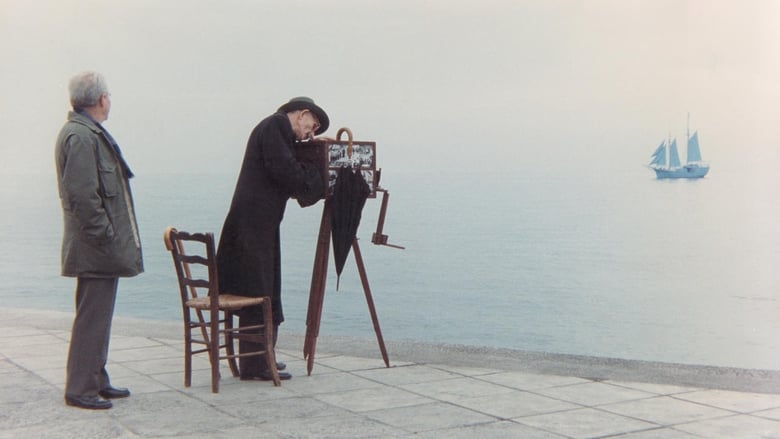
Theo Angelopoulos’s Ulysses’ Gaze is less a direct adaptation of Homer’s Odyssey than a profound, melancholic re-imagining of its spiritual architecture. The film transposes the ancient hero’s decade-long sea voyage home to Ithaca into a contemporary, war-torn odyssey across the fractured landscape of the Balkans. Harvey Keitel’s character, known only as ‘A’, is a Greek-American filmmaker returning to his homeland, but his journey is not toward a physical home or a waiting Penelope. Instead, his Ithaca is an elusive cinematic grail: three undeveloped reels of film shot by the pioneering Manaki brothers, believed to be the first motion pictures ever captured in the region. The epic poem’s structure of a wandering hero encountering mythic obstacles is mirrored in A’s drift through a disintegrating Yugoslavia, where the monsters are not Cyclops or Sirens, but the brutal absurdities of ethnic conflict, border guards, and the ghostly weight of a century of Balkan history.
Angelopoulos radically internalizes the Homeric voyage, collapsing time and memory into a single, fluid stream. The film’s most famous technical feat—a seamless, dreamlike dissolve that carries A and his memories from the present day back to the turn of the century—embodies the director’s approach to adaptation. The ancient themes of nostos (homecoming) and identity are refracted through the lens of cinema itself. A’s search for the Manaki brothers’ lost gaze becomes a metaphor for a region’s lost innocence and a shared cultural origin point before the fractures of nationalism. The epic’s divine interventions are replaced by the capricious hand of history, and Odysseus’s cunning is transformed into the weary, existential persistence of an artist trying to witness and preserve memory against the onslaught of destruction.
Critically, the film is a cornerstone of Angelopoulos’s late style, marked by his signature long takes, elegiac pacing, and a pervasive sense of historical mourning. The casting of Harvey Keitel, an intense American method actor, as the silent, observing Greek director created a fascinating cultural dissonance that underscores the protagonist’s alienation. The journey through Albania, North Macedonia, Bulgaria, Romania, and Serbia becomes a descent into a heart of darkness, where the mythical Scylla and Charybdis are the impossible choices of a civil war. The film’s emotional climax in a besieged, fog-shrouded Sarajevo, where A finally locates the film archive, is a devastating commentary on the siege of culture itself, making the Homeric parallel not just a literary allusion but a raw, contemporary lament for a world dismantling itself.
Selected as Greece’s entry for the 68th Academy Awards, Ulysses’ Gaze divided audiences with its demanding, meditative rhythm but won the Grand Prix du Jury at Cannes. It stands as a masterclass in how to adapt a foundational text not by transposing its plot, but by excavating its soul. Angelopoulos finds the modern Odysseus not in a warrior king, but in a displaced artist navigating the ruins of the 20th century, proving that the most resonant adaptations are often those that dare to treat their source material as a ghostly blueprint rather than a rigid map.

The Odyssey is one of two major epic poems attributed to the ancient Greek poet Homer. Composed in the 8th or 7th century BC, it is a cornerstone of Western literature and one of the oldest surviving works of literary art. The poem is divided into 24 books and follows the Greek hero Odysseus (known as Ulysses in Latin) on his arduous ten-year journey home to Ithaca after the Trojan War. Along the way, he encounters mythical creatures, divine interventions, and numerous trials, while his wife Penelope and son Telemachus fend off suitors vying for his throne.
The epic explores themes of nostos (homecoming), xenia (hospitality), loyalty, cunning, and the relationship between mortals and gods. Odysseus's intelligence and resourcefulness, epitomized by his trick of the Trojan Horse, are central to his character. The poem's structure, with its non-linear narrative and use of flashbacks, has influenced storytelling for millennia.
The Odyssey was originally composed in Homeric Greek and transmitted orally before being written down. It became a foundational text of the Greek literary canon by the 6th century BC and has been translated into countless languages. Its characters, episodes, and phrases have permeated global culture, from the Sirens and Cyclops to the term "odyssey" itself, which now denotes any long, eventful journey.
The poem's enduring legacy includes countless adaptations in literature, theater, film, television, and other media. It has inspired works ranging from James Joyce's Ulysses to modern films and video games, cementing its status as a timeless tale of adventure and the human spirit.