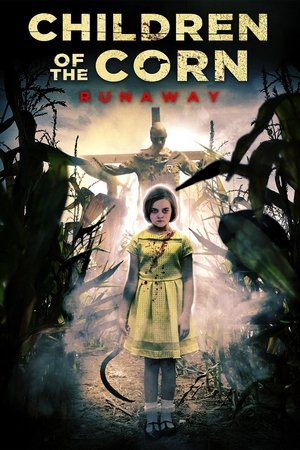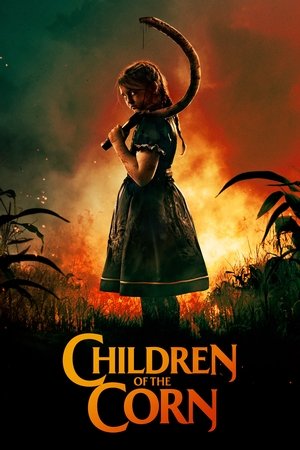
🎬 Children of the Corn V: Fields of Terror (1998)
Part of Children of the Corn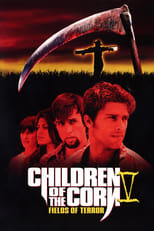
By the time the "Children of the Corn" franchise reached its fifth installment, it had long since abandoned any pretense of faithfully adapting Stephen King's taut, bleak short story. "Fields of Terror," released straight-to-video in 1998, instead uses the core mythology as a springboard for a supernatural slasher aimed squarely at the late-90s teen horror market. Directed and written by Ethan Wiley, the film follows a group of college-aged friends who, after a tragic accident, find themselves stranded in the rural community of Divinity Falls. Here, the familiar trope of killer kids is given a new twist: the children are the wards of Luke Enright, a fanatical adult who has appointed himself the earthly representative of "He Who Walks Behind the Rows."
The film notably shifts the dynamic by making an adult the primary antagonist orchestrating the children's violence, rather than a child preacher like the original story's Isaac. The cult leader this time is a possessed boy named Ezekiel, but the true menace is Enright's twisted paternalism. This installment is also remembered for its eclectic cast of rising stars, featuring early performances from Eva Mendes, Alexis Arquette, and Ahmet Zappa alongside lead Stacy Galina. The presence of these familiar faces has given the film a minor cult afterlife, as fans enjoy spotting actors who would later achieve greater fame navigating the familiar beats of cornfield chases and ritualistic sacrifice.
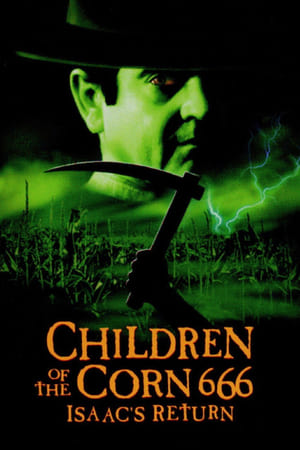
Like its immediate predecessors, "Fields of Terror" bears almost no narrative connection to King's original tale of Burt and Vicky stumbling upon the lost town of Gatlin. Instead, it expands the franchise's internal lore, suggesting that the influence of the malevolent entity in the corn is not confined to a single Nebraska town but can manifest wherever there are forgotten children and corrupt authority figures. The film leans heavily into the direct-to-video aesthetic of its era, prioritizing a fast pace and a series of creative kills over the slow-burn dread that made the source material so effective. While it did little to win over critics or King purists, it served its purpose in keeping the long-running franchise alive for another sequel the following year, "Children of the Corn 666: Isaac's Return."
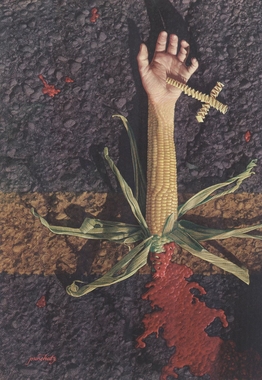
"Children of the Corn" is a horror short story by American author Stephen King, first published in the March 1977 issue of Penthouse magazine. It was later collected in King's 1978 anthology Night Shift. The story is set in the fictional rural town of Gatlin, Nebraska, where all the adults have been murdered by a cult of children who worship a malevolent entity they call "He Who Walks Behind the Rows," which resides in the surrounding cornfields.
The narrative follows Burt and Vicky, a bickering married couple driving cross-country who stumble upon Gatlin and find themselves at the mercy of the murderous children, led by the fanatical boy preacher Isaac and his enforcer Malachi. The story explores themes of religious fanaticism, the corruption of innocence, and the dark underbelly of rural Americana, all set against the claustrophobic and sinister backdrop of endless cornfields.
"Children of the Corn" has become one of King's most enduring and frequently adapted works, spawning a long-running film franchise that began in 1984. The story's central image of sinister children and its unique setting have cemented it as a classic of modern horror fiction, though the original short story is notably bleaker and more contained than many of its cinematic offshoots.
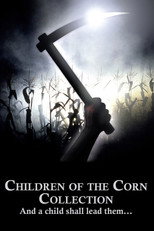
The *Children of the Corn* series is a horror collection rooted in Stephen King's 1977 short story, unfolding primarily in the rural nightmare of Gatlin, Nebraska. The narrative centers on a cult of children who, under the influence of a malevolent entity known as 'He Who Walks Behind the Rows,' murder all the adults in their town and establish a brutal theocracy. The series explores the corruption of innocence, religious fanaticism, and the dark underbelly of the American heartland, transforming pastoral landscapes into arenas of ritualistic sacrifice and primal terror. The iconic imagery of blood-soaked cornfields and cherubic faces twisted by zeal has cemented the collection's place in horror iconography.
The cinematic journey began with the 1984 theatrical adaptation, a modestly budgeted film that became a sleeper hit and established the core mythology. A single theatrical sequel followed nearly a decade later, but the collection truly proliferated through a string of direct-to-video installments under Dimension Films. Unshackled from strict continuity, these sequels ventured into increasingly bizarre and ambitious territory, from an urban harvest in a Chicago housing project to isolated confrontations with the cult across disparate American settings. This erratic evolution created a uniquely fragmented series where narrative coherence often takes a backseat to nightmarish creativity.
Despite its inconsistencies, the collection has maintained a devoted cult following by persistently exploring potent themes of extremism, the terrifying autonomy of youth, and the decay of agrarian myth. The mythology expanded and contracted across sequels, a television remake, and a later reboot that sought to return to King's original, more intimate dread. Each installment adds another layer to the legend of Gatlin, proving that the collection's power lies not in a single story, but in the enduring, archetypal fear of what might be rustling in the corn.