🎬 Children of the Corn IV: The Gathering (1996)
Part of Children of the Corn
By the time the Children of the Corn franchise reached its fourth installment, it had already left the original Gatlin behind for the concrete jungle of Chicago. "The Gathering" attempts a course correction of sorts, bringing the horror back to a rural Nebraska setting, but with a significantly reimagined mythology. Directed by Greg Spence, the film jettisons the simple, chilling premise of Stephen King's short story—a cult of children murdering adults for a cornfield deity—in favor of a supernatural slasher mystery centered on a malevolent spirit possessing the town's youth. The result is a film that feels less like a direct adaptation of King's work and more like a standalone horror movie that borrows the franchise's name and its central image of sinister children.
The film is perhaps most notable today for its cast, featuring an early leading role for Naomi Watts as Grace Rhodes, a medical student who returns home to find the local children succumbing to a bizarre, feverish illness that compels them to kill. Screen legend Karen Black appears as Grace's agoraphobic mother, grounding the film's more outlandish elements with a palpable sense of psychological dread. The script expands the lore of "He Who Walks Behind the Rows" by tying it to a specific tragic event from the town's past—a murdered preacher—transforming the entity from an ancient, unknowable force of nature into a vengeful ghost with a specific, earthly origin. This demystification is a significant departure from the cosmic, pagan horror of the source material.
Critically, "The Gathering" occupies a strange middle ground in the series. It attempts to build a more complex narrative than its predecessors, weaving together themes of childhood trauma, maternal anxiety, and small-town secrets. However, the execution often falls into direct-to-video horror conventions of the era, complete with jump scares and a body count that feels obligatory. The film's connection to King's original story is tenuous at best, functioning more as an original screenplay that was retrofitted with the "Children of the Corn" branding to capitalize on name recognition. For fans of the franchise, it offers a curious, if flawed, detour that prioritizes supernatural mystery over the stark, religious fanaticism that made the original tale so disturbing.
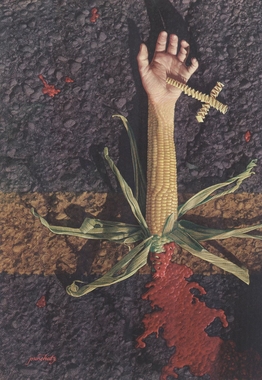
"Children of the Corn" is a horror short story by American author Stephen King, first published in the March 1977 issue of Penthouse magazine. It was later collected in King's 1978 anthology Night Shift. The story is set in the fictional rural town of Gatlin, Nebraska, where all the adults have been murdered by a cult of children who worship a malevolent entity they call "He Who Walks Behind the Rows," which resides in the surrounding cornfields.
The narrative follows Burt and Vicky, a bickering married couple driving cross-country who stumble upon Gatlin and find themselves at the mercy of the murderous children, led by the fanatical boy preacher Isaac and his enforcer Malachi. The story explores themes of religious fanaticism, the corruption of innocence, and the dark underbelly of rural Americana, all set against the claustrophobic and sinister backdrop of endless cornfields.
"Children of the Corn" has become one of King's most enduring and frequently adapted works, spawning a long-running film franchise that began in 1984. The story's central image of sinister children and its unique setting have cemented it as a classic of modern horror fiction, though the original short story is notably bleaker and more contained than many of its cinematic offshoots.
The *Children of the Corn* series is a horror collection rooted in Stephen King's 1977 short story, unfolding primarily in the rural nightmare of Gatlin, Nebraska. The narrative centers on a cult of children who, under the influence of a malevolent entity known as 'He Who Walks Behind the Rows,' murder all the adults in their town and establish a brutal theocracy. The series explores the corruption of innocence, religious fanaticism, and the dark underbelly of the American heartland, transforming pastoral landscapes into arenas of ritualistic sacrifice and primal terror. The iconic imagery of blood-soaked cornfields and cherubic faces twisted by zeal has cemented the collection's place in horror iconography.
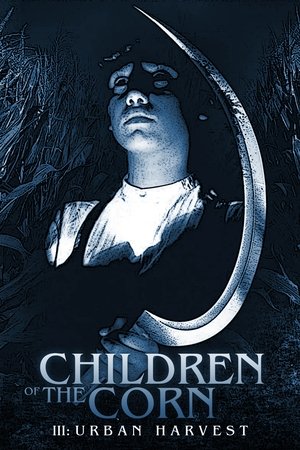
The cinematic journey began with the 1984 theatrical adaptation, a modestly budgeted film that became a sleeper hit and established the core mythology. A single theatrical sequel followed nearly a decade later, but the collection truly proliferated through a string of direct-to-video installments under Dimension Films. Unshackled from strict continuity, these sequels ventured into increasingly bizarre and ambitious territory, from an urban harvest in a Chicago housing project to isolated confrontations with the cult across disparate American settings. This erratic evolution created a uniquely fragmented series where narrative coherence often takes a backseat to nightmarish creativity.
Despite its inconsistencies, the collection has maintained a devoted cult following by persistently exploring potent themes of extremism, the terrifying autonomy of youth, and the decay of agrarian myth. The mythology expanded and contracted across sequels, a television remake, and a later reboot that sought to return to King's original, more intimate dread. Each installment adds another layer to the legend of Gatlin, proving that the collection's power lies not in a single story, but in the enduring, archetypal fear of what might be rustling in the corn.