🎬 Godzilla vs. SpaceGodzilla (1994)
Part of Godzilla Heisei Era
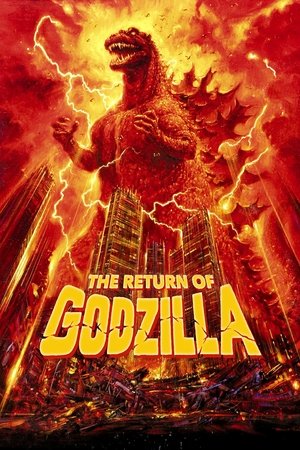
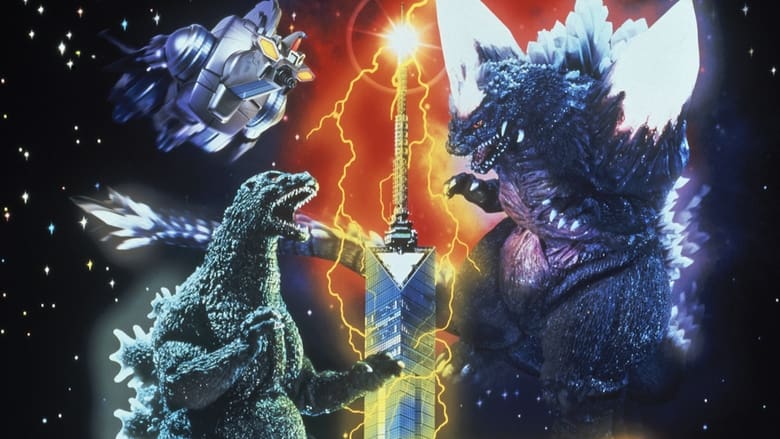
Godzilla vs. SpaceGodzilla is the 21st installment in Toho's long-running Godzilla franchise and the sixth entry in the Heisei series, which began with 1984's The Return of Godzilla. Directed by Kensho Yamashita, the film introduces a formidable new antagonist: SpaceGodzilla, a crystalline creature born from Godzilla's cells that were carried into space and mutated by a black hole. The plot follows the G-Force as they attempt to stop SpaceGodzilla's rampage across Japan, culminating in a battle in Fukuoka where Godzilla must defend his offspring, Little Godzilla, from the extraterrestrial clone.
The film is also notable for bringing back the mecha M.O.G.U.E.R.A. (Mobile Operations Godzilla Universal Expert Robot Aero-type), a drilling and combat robot originally seen in the 1957 Toho sci-fi film The Mysterians. Here, it is reimagined as a weapon built by the United Nations Godzilla Countermeasures Center to combat the monster threat. The special effects, supervised by Kōichi Kawakita, feature elaborate beam battles and the distinctive crystalline formations that SpaceGodzilla uses both offensively and defensively, though the film's pacing and somewhat convoluted origin story for the villain drew mixed reactions from critics.
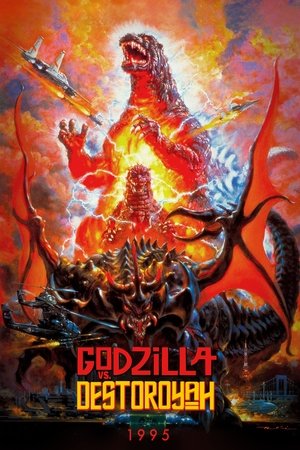
Released in Japanese theaters on December 10, 1994, Godzilla vs. SpaceGodzilla performed respectably at the box office, earning ¥1.65 billion in distributor rentals. The film continued the Heisei era's trend of giving Godzilla a more defined personality and even a familial bond, as the King of the Monsters displays protective instincts toward Little Godzilla. This emotional through-line would carry directly into the next and final film of the Heisei series, Godzilla vs. Destoroyah, which concludes the story arc with devastating consequences.
The Godzilla Heisei Era is a series of Japanese kaiju films produced by Toho Studios from 1984 to 1995, marking the second major continuity in the long-running Godzilla franchise. Ignoring all previous sequels, it serves as a direct sequel to the original 1954 film, reintroducing Godzilla as a destructive force of nature awakened by modern nuclear activity. This era is characterized by a darker, more serious tone compared to the later Shōwa period, with an emphasis on political commentary, genetic engineering, and the consequences of humanity's scientific hubris. The series establishes a cohesive narrative timeline where each film's events directly influence the next, creating a serialized story arc that follows Godzilla's evolving role from antagonist to reluctant anti-hero. The Heisei films are notable for their advanced special effects, utilizing animatronics and suitmation techniques that pushed the boundaries of practical effects at the time. The series also introduced iconic new monsters such as Biollante, SpaceGodzilla, and Destoroyah, while reimagining classic foes like Mechagodzilla and Mothra. Culturally, the Heisei Era revitalized the Godzilla franchise after a decade-long hiatus, appealing to a new generation of fans and reinforcing Godzilla's status as a global pop culture icon. Its legacy endures through its influence on subsequent Godzilla series and its contribution to the kaiju genre's evolution.