🎬 Godzilla vs. Biollante (1989)
Part of Godzilla Heisei Era
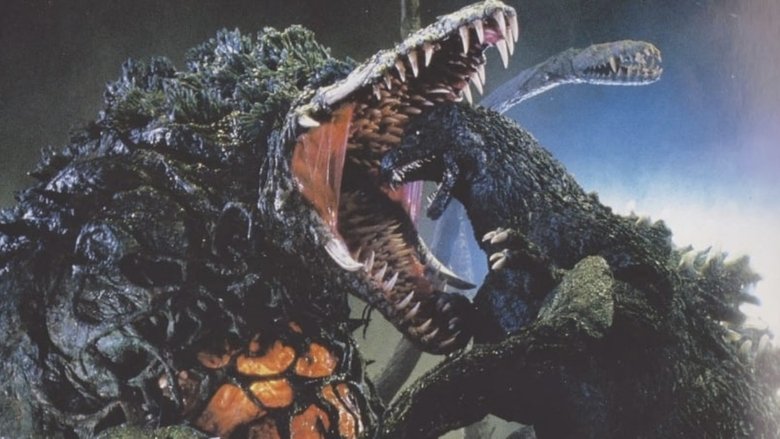
Godzilla vs. Biollante marks a fascinating turning point in the King of the Monsters' storied history. As the second film in the franchise's Heisei era, it directly follows the events of 1984's The Return of Godzilla, ignoring all previous sequels to craft a more serious and continuity-driven narrative. The plot is a unique blend of corporate espionage, genetic engineering, and classic kaiju destruction, as rival biotech firms and a fictional Middle Eastern nation scramble to obtain Godzilla's cells. This scientific meddling gives rise to the titular Biollante, a hauntingly beautiful and tragic creature born from the spliced genes of Godzilla, a rose, and a deceased human scientist's daughter.
The film is notable for its origin story; the concept for Biollante came from a public story-writing contest held by Toho, with the winning entry submitted by a dentist named Shinichiro Kobayashi. This creative gamble resulted in one of the franchise's most visually unique and conceptually ambitious monsters, a massive plant-beast that evolves through several grotesque forms. Director Kazuki Ōmori, who also wrote the screenplay, infused the film with a Cold War-era tension and a touch of bioethical horror, themes that were relatively new for the series at the time. The special effects, now under the direction of Kōichi Kawakita, showcased a more dynamic and beam-heavy style of combat, with Godzilla's new, more cat-like face and powerful atomic breath on full display.
Despite receiving critical acclaim for its story, score by Koichi Sugiyama, and groundbreaking practical effects, Godzilla vs. Biollante was a box office disappointment in Japan. Its release coincided with the phenomenal success of Back to the Future Part II, which drew audiences away. However, the film has since been heavily reappraised and is now considered a high point of the Heisei series by many fans. It also introduced the recurring character Miki Saegusa, played by Megumi Odaka, a psychic schoolgirl who would become a series mainstay, appearing in every subsequent Heisei Godzilla film.
The movie's legacy is defined by its willingness to take risks. It set a crucial template for the rest of the Heisei era, establishing the trend of pitting Godzilla against a succession of evolving, genetically-altered adversaries rather than alien-controlled monsters. The deeply personal connection between Biollante and its human genetic donor adds a layer of pathos rarely seen in the genre, making the climactic battle not just a spectacle of destruction, but a strange, sorrowful family feud on a colossal scale.

The Godzilla Heisei Era is a series of Japanese kaiju films produced by Toho Studios from 1984 to 1995, marking the second major continuity in the long-running Godzilla franchise. Ignoring all previous sequels, it serves as a direct sequel to the original 1954 film, reintroducing Godzilla as a destructive force of nature awakened by modern nuclear activity. This era is characterized by a darker, more serious tone compared to the later Shōwa period, with an emphasis on political commentary, genetic engineering, and the consequences of humanity's scientific hubris. The series establishes a cohesive narrative timeline where each film's events directly influence the next, creating a serialized story arc that follows Godzilla's evolving role from antagonist to reluctant anti-hero. The Heisei films are notable for their advanced special effects, utilizing animatronics and suitmation techniques that pushed the boundaries of practical effects at the time. The series also introduced iconic new monsters such as Biollante, SpaceGodzilla, and Destoroyah, while reimagining classic foes like Mechagodzilla and Mothra. Culturally, the Heisei Era revitalized the Godzilla franchise after a decade-long hiatus, appealing to a new generation of fans and reinforcing Godzilla's status as a global pop culture icon. Its legacy endures through its influence on subsequent Godzilla series and its contribution to the kaiju genre's evolution.