🎬 Spider-Man: Across the Spider-Verse (2023)
Part of Spider-Verse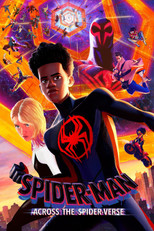
Spider-Man: Across the Spider-Verse is the 2023 sequel to the groundbreaking 2018 animated film Spider-Man: Into the Spider-Verse, continuing the story of Miles Morales as he navigates the infinite possibilities of the multiverse. Based on the Marvel Comics character created by Stan Lee and Steve Ditko in 1962, and specifically drawing from the Miles Morales incarnation introduced by Brian Michael Bendis and Sara Pichelli in 2011, the film expands the Spider-Verse concept to staggering new heights. Directed by Joaquim Dos Santos, Kemp Powers, and Justin K. Thompson, the sequel sends Miles on a journey across multiple dimensions alongside Gwen Stacy, where he encounters the Spider-Society, a vast team of Spider-People led by Miguel O'Hara, the Spider-Man of 2099.
The film is notable for its ambitious visual design, with each of the six universes visited by the characters featuring a distinct and innovative animation style. This artistic approach pushes the boundaries of computer animation, incorporating elements of watercolor, punk zine collage, and classic comic book dot patterns to create a living, breathing comic book experience. The voice cast features returning stars Shameik Moore as Miles and Hailee Steinfeld as Gwen, joined by an ensemble including Oscar Isaac, Issa Rae, Daniel Kaluuya, and Jason Schwartzman as the Spot, a villain whose seemingly minor powers evolve into a multiversal threat.
As the second installment in the Spider-Verse franchise, Across the Spider-Verse deepens the emotional core established in the first film, exploring Miles's struggle to define his own destiny against the expectations of the larger Spider-Society. The film was a massive critical and commercial success, praised for its visual ambition, emotional storytelling, and thematic complexity. At 140 minutes, it was the longest American animated film ever released at the time, a testament to the epic scope of its narrative. The story concludes in the third film, Spider-Man: Beyond the Spider-Verse, which continues directly from the sequel's cliffhanger ending.

Spider-Man is a superhero appearing in American comic books published by Marvel Comics. Created by writer-editor Stan Lee and artist Steve Ditko, the character first appeared in the anthology comic book Amazing Fantasy #15 (August 1962) during the Silver Age of Comic Books. He has since become one of the world's most popular and commercially successful superheroes, serving as Marvel's flagship character and mascot.
The character's secret identity is Peter Parker, a teenage high school student and orphan raised by his Aunt May and Uncle Ben in New York City. Lee and Ditko had the character deal with the struggles of adolescence and financial issues, giving him a relatable, everyman quality that set him apart from other superheroes of the era. Over the decades, the Spider-Man mythos expanded to include the concept of a broader "Spider-Verse," a multiverse containing countless alternate versions of the hero. This included the introduction of Miles Morales in 2011, a teenager of African-American and Puerto Rican descent who takes up the Spider-Man mantle in an alternate universe, which became a central focus for modern multiverse storylines.
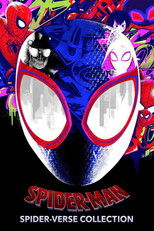
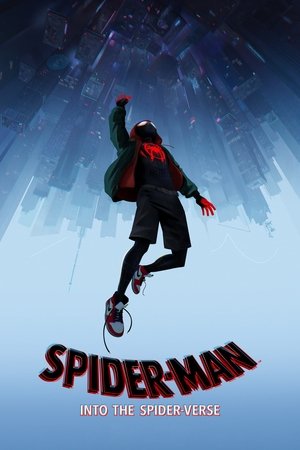
The Spider-Verse animated trilogy is a groundbreaking collection of superhero films that redefined the visual and narrative possibilities of the Spider-Man mythos. Produced by Phil Lord and Christopher Miller, the series centers on Miles Morales, a Brooklyn teenager who takes up the mantle of Spider-Man after the death of his universe's Peter Parker. The first entry, *Spider-Man: Into the Spider-Verse*, introduced audiences to a multiverse teeming with alternate Spider-heroes, including Spider-Gwen, Spider-Man Noir, Peni Parker, and Spider-Ham, all brought together by a dimensional rift. The trilogy's core theme is the universal nature of heroism—the idea that anyone can wear the mask—explored through Miles's journey of self-discovery and his struggle to define his own identity against the weight of legacy and expectation. The films blend heartfelt coming-of-age drama with high-stakes interdimensional adventure, emphasizing family, friendship, and the courage to forge one's own path.\n\nVisually, the Spider-Verse series is a landmark achievement in animation. It pioneered a revolutionary style that combines computer-generated imagery with hand-drawn comic book techniques, including Ben-Day dots, onomatopoeic text, and variable frame rates that evoke the feel of a living comic book. This aesthetic, which varies between characters to reflect their unique origins, creates a dynamic, painterly experience that pushes the boundaries of the medium. The trilogy's innovative approach has influenced a wave of stylized animation across the industry, earning widespread critical acclaim and numerous accolades, including an Academy Award for Best Animated Feature for the first film. Its success demonstrated that mainstream animation could embrace bold, non-photorealistic artistry while achieving massive commercial appeal.\n\nThe narrative arc of the trilogy expands the scope of the multiverse with each installment. Following the origin story of the first film, the second chapter, *Spider-Man: Across the Spider-Verse*, deepens the lore by introducing the Spider-Society, a vast interdimensional organization tasked with preserving the stability of the multiverse. This entry raises the stakes from personal growth to existential questions about fate, sacrifice, and the moral complexities of a predetermined canon. The trilogy is set to conclude with *Spider-Man: Beyond the Spider-Verse*, which promises to resolve the cliffhanger and complete Miles's evolution into a hero who can redefine what it means to be Spider-Man. The series is notable for its serialized storytelling, emotional depth, and its commitment to diverse representation, making it a defining saga in contemporary animation.