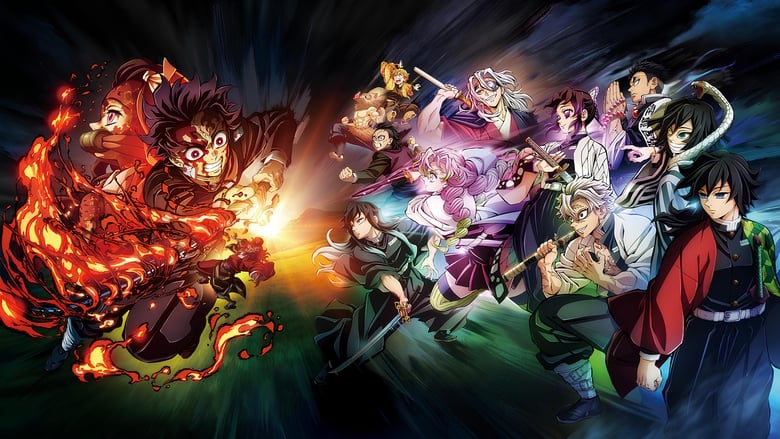
📺 Demon Slayer: Kimetsu no Yaiba (2019)
Part of Demon Slayer: Kimetsu no Yaiba (Compilation)
When Ufotable's adaptation of Demon Slayer: Kimetsu no Yaiba premiered in 2019, it didn't just translate Koyoharu Gotouge's manga to the screen—it elevated it into a sensory phenomenon. The studio, already renowned for its work on the Fate series, applied a signature blend of 2D animation and 3D CGI that gave the Taishō-era setting a textured, almost painterly depth. The most talked-about innovation was the visualization of the Water Breathing techniques, where flowing blue ribbons and crashing waves turned swordplay into a moving ukiyo-e print. This stylistic choice did more than look beautiful; it externalized the internal spiritual energy that the manga could only suggest through linework and speed lines, making the combat legible and breathtaking in equal measure.
The adaptation's pacing proved to be a masterclass in serialized storytelling. Where the manga's early chapters moved briskly through Tanjiro's training, the anime lingered on quiet character moments—the weight of a freshly sharpened blade, the silence of a mountain covered in snow. Episode 19, which intercut Tanjiro's desperate final stand against Rui with a flashback to Nezuko's humanity and a soaring musical cue, became a cultural event overnight. It crystallized the series' emotional core: that violence is always a last resort born from love. The anime also expanded the role of the Hashira earlier than the source material, giving viewers a clearer sense of the Corps' hierarchy and the impossible standards Tanjiro was striving toward.
Voice acting proved crucial to the adaptation's success, with Natsuki Hanae's portrayal of Tanjiro capturing the character's unique blend of ferocity and gentleness. The English dub, led by Zach Aguilar, received rare praise for matching the emotional tenor of the original, helping the series break through to mainstream Western audiences when it began airing on Adult Swim's Toonami block. The adaptation's global reach was unprecedented for a shōnen title without a prior established fanbase outside Japan, setting the stage for the record-shattering Mugen Train film that would follow.
By the time the first season concluded, the anime had not only honored its source material but had arguably become the definitive version of the story for millions. It transformed a popular manga into Japan's highest-grossing media franchise practically overnight, proving that a faithful adaptation could still feel revolutionary when executed with this level of craft and care. The series would go on to win Animation of the Year at the Tokyo Anime Award Festival and set a new benchmark for what television anime could achieve visually and emotionally.

Demon Slayer: Kimetsu no Yaiba is a Japanese manga series written and illustrated by Koyoharu Gotouge. It was serialized in Shueisha's Weekly Shōnen Jump magazine from February 2016 to May 2020, spanning 23 collected volumes. The story is set in Taishō-era Japan and follows Tanjiro Kamado, a kind-hearted boy who returns home one day to find his entire family slaughtered by a demon, with only his younger sister Nezuko surviving — but she has been transformed into a demon herself. Driven by love and a fierce determination, Tanjiro joins the secretive Demon Slayer Corps and embarks on a perilous quest to find a cure for Nezuko and avenge his family.
The manga blends visceral, high-stakes action with deep emotional storytelling, exploring themes of family, loss, and the thin line between humanity and monstrosity. Gotouge's distinctive art style and dynamic fight choreography quickly garnered a massive following. By the time the series concluded, it had become one of the best-selling manga of all time, with over 150 million copies in circulation worldwide. Its cultural impact in Japan and globally has been profound, sparking a renaissance of interest in dark fantasy shōnen narratives and setting new benchmarks for the genre.

The Demon Slayer: Kimetsu no Yaiba compilation films form a series of theatrical releases that re-edit and enhance story arcs from the acclaimed anime television series. Originating from Koyoharu Gotouge's manga, these compilations transform episodic content into cohesive cinematic experiences, often incorporating refined animation and re-scored audio by studio Ufotable. Early entries, such as Sibling's Bond and the Mt. Natagumo Arc, focus on distilling key narrative threads, emphasizing the saga's core themes of familial love and perseverance against demonic adversity. As the series progressed, the compilations evolved to serve a dual purpose: recapping previous seasons while debuting exclusive preview footage of upcoming arcs, effectively bridging television and theatrical releases. This strategy turned seasonal transitions into major cinematic events, conditioning audiences to experience the franchise's climactic moments on the big screen. The collection highlights the series' signature blend of dynamic combat and quiet emotional depth, reinforcing its cultural impact and innovative approach to anime distribution.

Demon Slayer: Kimetsu no Yaiba is a Japanese manga series written and illustrated by Koyoharu Gotouge, which rapidly evolved into a multimedia collection encompassing an acclaimed television anime and a record-breaking theatrical film. Set during Japan's Taisho era, the narrative follows Tanjiro Kamado, a kind-hearted boy who becomes a demon slayer after his family is slaughtered and his sister Nezuko is transformed into a demon. The story weaves intense sword-fighting action with profound emotional depth, exploring themes of familial love, resilience, and the thin line between humanity and monstrosity.
The manga was serialized in Weekly Shonen Jump from 2016 to 2020 and became a cultural phenomenon, praised for its dynamic art style, compelling character arcs, and tightly paced storytelling. Its popularity skyrocketed with the 2019 anime adaptation by studio Ufotable, which garnered global acclaim for its breathtaking animation, fluid combat sequences, and evocative soundtrack. The television series introduced the core cast and the intricate world of the Demon Slayer Corps, setting the stage for the franchise's explosive growth.
The collection's theatrical component is anchored by the 2020 film 'Demon Slayer: Kimetsu no Yaiba – The Movie: Mugen Train', which directly continues the anime's storyline. The film shattered box office records in Japan and internationally, becoming a landmark moment for anime cinema and demonstrating the property's immense cross-generational appeal. This single film, alongside the television series, forms a tightly connected narrative unit that adapts the manga's most pivotal early arcs.
Though modest in the number of its entries compared to sprawling franchises, this collection has left an indelible mark on the anime and manga landscape. Its blend of historical fantasy, visceral action, and heartfelt drama, elevated by Ufotable's masterful production, has cemented 'Demon Slayer' as a defining work of its era, influencing animation standards and captivating a massive worldwide audience.