🎬 Bleach (2018)
Based on manga
Shinsuke Sato’s 2018 live-action Bleach film faced the unenviable task of condensing Tite Kubo’s sprawling supernatural epic into a tight, two-hour feature. Rather than attempting a broad sweep of the manga’s many arcs, the adaptation wisely anchors itself in the foundational “Agent of the Shinigami” storyline, focusing entirely on Ichigo Kurosaki’s fateful meeting with Rukia Kuchiki and his abrupt induction into the world of Soul Reapers and Hollows. This narrative discipline allows the film to function as a self-contained origin story, introducing the core emotional stakes—Ichigo’s lingering guilt over his mother’s death and his fierce desire to protect his family—without getting lost in the Soul Society’s bureaucratic complexities or the later Quincy mythology.
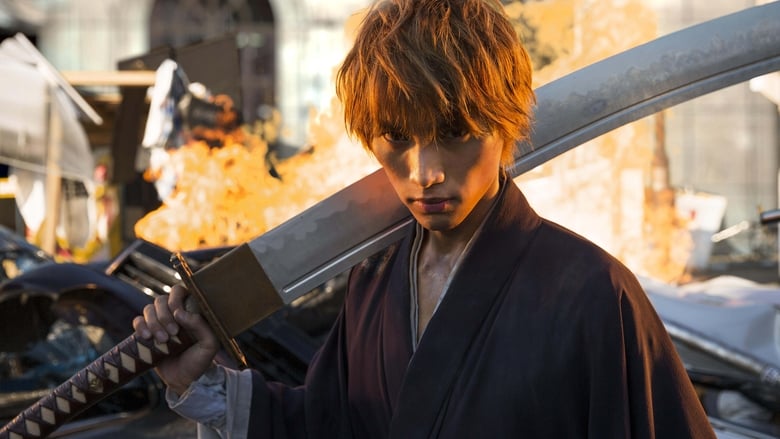
The film makes several notable changes to streamline the source material, some more successful than others. The Grand Fisher, a pivotal figure in Ichigo’s backstory, is reimagined as a more immediate and visually grotesque threat, while supporting characters like Uryū Ishida and Yasutora Sado are reduced to brief cameos, their rich subplots entirely excised. The most significant compression involves Rukia’s arc; her prolonged powerless period from the manga is accelerated, and the internal politics of the Soul Society are only hinted at. Visually, however, the film excels, with Sato bringing his experience from Gantz and I Am a Hero to bear on the creature design. The Hollows are rendered with a blend of practical effects and CGI that captures Kubo’s distinctive, skeletal aesthetic, and the kinetic sword fights, particularly Ichigo’s final clash, translate the manga’s dynamic paneling into fluid, impactful action.
Upon release, the film received a mixed but generally respectful reception, especially from audiences who appreciated its commitment to the spirit of the early manga. Sota Fukushi’s portrayal of Ichigo was widely praised for capturing the character’s blend of punkish defiance and deep-seated vulnerability, while Hana Sugisaki brought a welcome steeliness to Rukia. Critics noted that the film’s breakneck pacing left little room for the humor and quieter character moments that balanced the manga’s intensity, but many acknowledged that as a necessary sacrifice for a standalone film. Its global Netflix release introduced the franchise to a new wave of viewers, serving as a gateway to the original series for those who might have been intimidated by the anime’s 366-episode run.
Ultimately, the 2018 Bleach movie stands as a polished, if incomplete, snapshot of a much larger world. It succeeds as a visual spectacle and a faithful tonal adaptation, even as it leaves vast swaths of Kubo’s universe unexplored. The film’s existence also carried a symbolic weight, arriving just two years after the manga’s conclusion and proving that the franchise still held cultural relevance, paving the way for the eventual, long-awaited anime adaptation of the Thousand-Year Blood War arc that would follow a few years later.

Bleach is a Japanese manga series written and illustrated by Tite Kubo. It was serialized in Shueisha's Weekly Shōnen Jump magazine from August 2001 to August 2016, with its chapters collected into 74 tankōbon volumes. The story follows Ichigo Kurosaki, a teenager with the ability to see ghosts, who accidentally obtains the powers of a Soul Reaper—a celestial death personification—from Rukia Kuchiki. Forced to take on her duties, Ichigo must protect the living world from malevolent lost souls known as Hollows and guide the spirits of the dead to the afterlife.
The series quickly became one of the best-selling manga of all time, with over 130 million copies in circulation worldwide. Kubo's distinctive art style, character designs, and blend of supernatural action with humor and drama earned the series a massive international following. The manga's world-building expands significantly beyond its initial premise, introducing the Soul Society, a complex afterlife bureaucracy, and later the realms of Hueco Mundo and the Quincy army.
Bleach received the Shogakukan Manga Award for shōnen manga in 2005 and has been praised for its dynamic battle sequences and large ensemble cast. The series' influence extends well beyond its original run, with a 2018 live-action film adaptation and a 2021 one-shot sequel chapter that continued the story. The manga's final arc, the Thousand-Year Blood War, was notably not adapted in the original anime run, leaving fans waiting over a decade for its eventual animated conclusion.