📺 Marvel's Avengers (2013)
Based on comic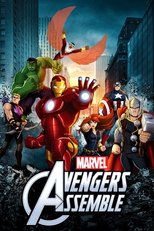
Premiering in 2013 on Disney XD, "Marvel's Avengers" (officially titled "Avengers Assemble") was a direct and deliberate attempt to translate the blockbuster energy of the 2012 live-action film into a weekly animated series. Replacing the critically adored "The Avengers: Earth's Mightiest Heroes," this new show, developed by the Man of Action collective, streamlined the team's roster to mirror the cinematic lineup exactly: Iron Man, Captain America, Thor, Hulk, Black Widow, and Hawkeye. The most significant structural change was the introduction of Falcon as the audience surrogate, a fresh recruit whose perspective grounded the cosmic and global threats in a relatable, rookie experience. This was a clean break from the source material's tradition of a constantly rotating roster, opting instead for a stable, movie-faithful core to capitalize on brand synergy.
The series took a highly kinetic, action-comedy approach, prioritizing fast-paced banter and explosive set pieces over the more serialized, character-driven storytelling of its predecessor. While the comics often explore the deep ideological rifts between its members, this adaptation leaned heavily into a "found family" dynamic where squabbling was quickly resolved with a quip and a team-up maneuver. The first season's central arc, involving Red Skull transferring his consciousness into Captain America's body using Hydra tech and MODOK, exemplifies the show's preference for high-concept, villain-centric plots that could be resolved within a tight episodic framework, a far cry from the sprawling, multi-issue sagas of the 1963 comics.
Running for 127 episodes across five seasons, it became the longest-running Marvel animated series, a testament to its popularity with a new generation of viewers. The show evolved significantly over its run, eventually rebranding and shifting its focus to include characters like Black Panther, Captain Marvel, and Ms. Marvel, slowly expanding its world beyond the initial movie mandate. While purists sometimes lamented the loss of the deeper, more complex lore found in the comics and the previous animated series, "Avengers Assemble" succeeded in its core mission: delivering a vibrant, accessible, and consistently entertaining gateway to Earth's Mightiest Heroes for a post-MCU audience.

The Avengers are a superhero team appearing in American comic books published by Marvel Comics. Created by writer-editor Stan Lee and artist/co-plotter Jack Kirby, the team made its debut in The Avengers #1, cover-dated September 1963. Labeled 'Earth's Mightiest Heroes,' the original roster brought together some of Marvel's most popular characters—Iron Man, Ant-Man, the Hulk, Thor, and the Wasp—with Captain America joining the team in issue #4 after being discovered frozen in ice.
The concept was groundbreaking for its time: an all-star ensemble of established heroes from separate solo titles who occasionally assemble to face threats too great for any single one of them. This distinguished the Avengers from teams like the X-Men, whose members were created specifically to function as a group. The rotating roster became a hallmark of the series, allowing lesser-known characters such as Hawkeye, Quicksilver, and the Scarlet Witch to gain prominence alongside marquee names.
Over the decades, the Avengers have grown into one of Marvel's flagship properties, anchoring massive crossover events and spawning numerous spin-off titles including West Coast Avengers, Young Avengers, and New Avengers. The team's core dynamic—flawed individuals learning to work together despite clashing egos and ideologies—has proven endlessly adaptable, resonating across generations of readers.
The franchise's cultural footprint expanded dramatically in the 21st century, culminating in a blockbuster film series that began in 2008 and redefined the modern cinematic landscape. The comics remain in publication, continually reinventing the team's lineup and mission for new eras while maintaining the foundational idea that even the mightiest heroes are stronger together.