📺 DreamWorks Dragons (2012)
Part of How to Train Your Dragon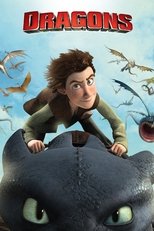
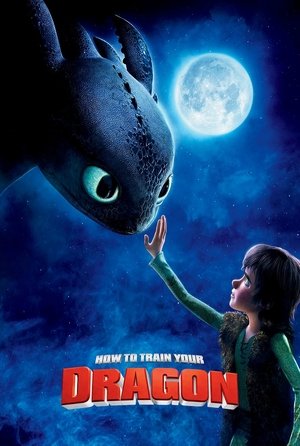
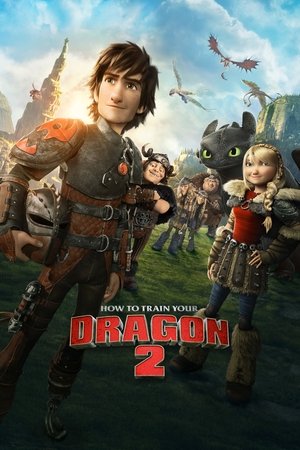
DreamWorks Dragons is an American animated television series that expands the world of the How to Train Your Dragon franchise, serving as a narrative bridge between the 2010 feature film and its 2014 sequel. The series is based on the film, which itself was loosely adapted from Cressida Cowell's beloved children's book series that began in 2003. While the books feature a smaller, more mischievous Toothless and a Hiccup who relies on wit and language skills, the television series follows the film's established continuity where dragons and Vikings have formed an uneasy but growing alliance on the island of Berk.
The show originally aired on Cartoon Network, making it the first DreamWorks Animation series to premiere on that network rather than Nickelodeon. It debuted with a one-hour preview in August 2012 before its official premiere in September. The first two seasons were subtitled Riders of Berk and Defenders of Berk, running for a combined 40 episodes. The series was later revived on Netflix under the subtitle Race to the Edge, which debuted in June 2015 and ran for six additional seasons, significantly deepening the mythology and character arcs before the events of the second film.
Many of the original film's voice cast returned, including Jay Baruchel as Hiccup and America Ferrera as Astrid, though some roles were recast for the television format. The series was intentionally developed with a darker, more serialized tone than typical animated spin-offs, with executive producer Tim Johnson noting the goal was to match the emotional depth of the theatrical films. This approach allowed the show to explore the expanding dragon world, introduce new species, and develop the teenage characters in ways the films could not, earning it a dedicated fanbase and critical praise for its animation quality and storytelling ambition.
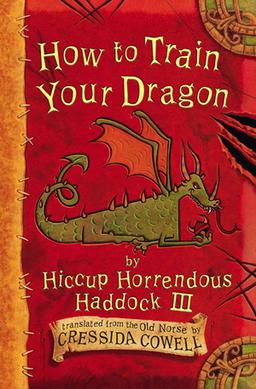
How to Train Your Dragon is a series of twelve children's books written by British author Cressida Cowell. Set in a fictional Viking world, the books chronicle the coming-of-age adventures of Hiccup Horrendous Haddock III, a young Viking who is not your typical hero. Rather than being naturally strong or fierce, Hiccup relies on his intellect, empathy, and ability to speak the dragon language Dragonese to overcome challenges. The series begins with Hiccup and other boys from the Hairy Hooligan tribe capturing and training their own dragons as a rite of passage, leading him to bond with a small, stubborn dragon named Toothless.
The first book was published in 2003 by Hodder Children's Books in the United Kingdom, with Little, Brown and Company handling the American editions. Cowell both wrote and illustrated the novels, filling them with her distinctive, energetic drawings. The series concluded in 2015 with the twelfth and final installment. The books are notable for their unique blend of humor, heart, and adventure, as well as their deeper themes of growing up, the loss of innocence, and the complex relationship between humans and nature.
By the time the series was complete, it had sold over seven million copies worldwide and had been translated into numerous languages. The books' popularity established them as a modern classic of children's literature, praised for their clever subversion of traditional heroic tropes and their poignant, bittersweet conclusion that sees the dragons eventually leave the human world.
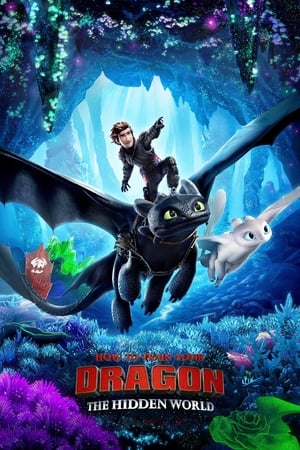
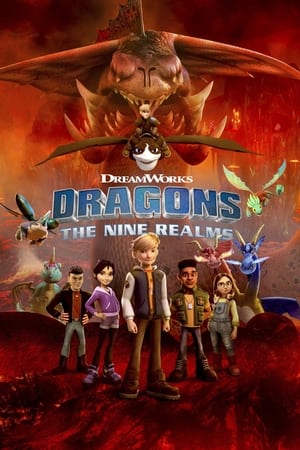
Beyond the core film trilogy, the world of Berk has been expanded through television series that explore the interim periods between the movies. Shows like *Dragons: Riders of Berk* and *Dragons: Race to the Edge* delve deeper into the dragon riders' adventures and the discovery of new species, enriching the lore and developing secondary characters. A later series, *Dragons: The Nine Realms*, takes a significant leap forward in time, introducing a new cast of characters who rediscover dragons in the modern world, thereby extending the franchise's thematic legacy of discovery and coexistence. These extensions, along with short films and holiday specials, have transformed the initial film into a broader narrative universe, though the emotional and narrative heart remains firmly rooted in the original trilogy's complete story arc.