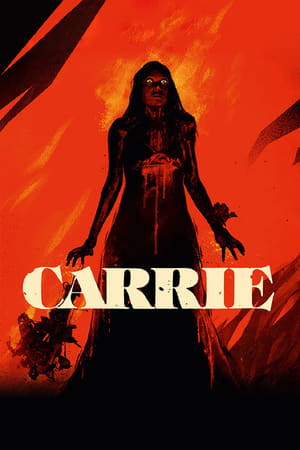
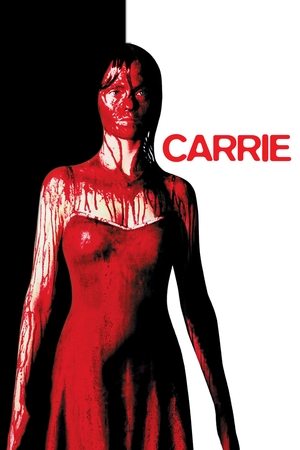
🎬 Carrie (2013)
Based on novel
Kimberly Peirce’s 2013 reimagining of Stephen King’s debut novel arrived in a curious cultural moment, caught between reverence for Brian De Palma’s iconic 1976 film and a Hollywood landscape hungry for darker, grittier reboots. Rather than a strict adaptation of the book, this version explicitly remakes De Palma’s film while attempting to draw fresh blood from King’s text, updating the setting with smartphones, cyberbullying, and a more psychologically grounded Carrie White. Chloë Grace Moretz brings a different energy to the role than Sissy Spacek’s ethereal fragility—her Carrie is more visibly awkward and yearning, a girl whose desire to fit in feels achingly contemporary even as her home life remains a gothic nightmare of religious abuse.
The film’s most notable departure is its treatment of Margaret White, played with ferocious intensity by Julianne Moore. Where previous versions painted Margaret as a shrieking zealot, Peirce and screenwriter Roberto Aguirre-Sacasa delve deeper into her pathology, framing her self-harm and paranoia as symptoms of a fractured mind rather than pure fanaticism. This psychological shading extends to Carrie herself, whose telekinesis is presented less as a supernatural curse and more as a traumatic manifestation of repressed rage—a choice that aligns with the novel’s themes but sometimes undercuts the operatic horror of the prom sequence. The infamous blood dump and subsequent rampage are rendered with modern visual effects, yet many critics felt the digital polish robbed the climax of its raw, visceral power.
Upon release, the film faced an uphill battle against nostalgia. Reviews were decidedly mixed, with many dismissing it as an unnecessary retread that failed to justify its existence beyond a studio’s IP mining. Even positive notices, which praised the performances and the modern updates, often carried the caveat that it added little to the conversation De Palma started. The prom massacre, expanded to show Carrie’s powers with greater scope, divided audiences—some appreciated the spectacle, while others missed the claustrophobic terror of the original. Commercially, it performed modestly, grossing $84 million worldwide against a $30 million budget, enough to avoid disaster but not to spawn the franchise revival MGM and Screen Gems likely hoped for.
In hindsight, the 2013 Carrie stands as a fascinating artifact of its era’s remake culture, a film caught between honoring a masterwork and updating a story for a generation raised on YouTube humiliation and school shooting anxieties. Its greatest strength may be its cast—Moretz and Moore commit fully to their roles, and Judy Greer brings warmth as the sympathetic gym teacher—but the film ultimately illustrates the challenge of adapting material already defined by a canonical predecessor. For King completists, it offers an interesting, if flawed, alternate take on a familiar nightmare.

Carrie is the debut novel by acclaimed horror author Stephen King, first published in 1974 by Doubleday. The story centers on Carrie White, a shy and socially isolated high school girl living under the domineering influence of her fanatically religious mother. Enduring relentless bullying from her peers, Carrie's life takes a dark turn when she discovers her telekinetic powers during her first menstrual period, setting the stage for a explosive climax at her senior prom.
King wrote the novel in a burst of inspiration while working as a high school teacher, nearly discarding the draft before his wife retrieved it from the trash. The book explores themes of repression, adolescent cruelty, religious fanaticism, and the destructive power of unleashed rage. It blends supernatural horror with psychological depth, marking King's entry into a career that would redefine the genre.
Upon release, Carrie became a massive bestseller, launching King's career and establishing him as a master of modern horror. Its cultural impact endures through its iconic imagery and exploration of outsider vengeance, influencing countless works in literature, film, and popular culture.