🎬 Fullmetal Alchemist: The Sacred Star of Milos (2011)
Part of Fullmetal Alchemist
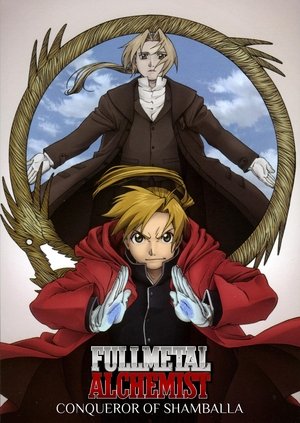
Released in 2011, "Fullmetal Alchemist: The Sacred Star of Milos" occupies a unique and sometimes debated space within the franchise's animated canon. Unlike "Conqueror of Shamballa," which served as a direct sequel to the divergent 2003 anime series, "The Sacred Star of Milos" was produced following the manga-faithful "Fullmetal Alchemist: Brotherhood." This creates a fascinating narrative puzzle for fans, as the film's visual style and core characterizations are clearly inherited from "Brotherhood," yet its story is a completely original side-adventure that slots into the middle of that series' timeline. The film whisks the Elric brothers away from their familiar Amestrian haunts to the border city of Table City, a location steeped in a bitter, generations-long conflict between Amestris and the neighboring nation of Creta.
The film's greatest strength lies in its willingness to expand the world Hiromu Arakawa created, focusing on a corner of the map only briefly mentioned in the source material. The story centers on Julia Crichton, a young alchemist from the oppressed Milosian people, whose quest for vengeance and the legendary Philosopher's Stone draws Ed and Al into a complex web of political intrigue and rebellion. This shift in focus allows the film to explore the manga's core themes of cyclical hatred and the human cost of war from a ground-level perspective, showing how the military ambitions of a state like Amestris can devastate peripheral cultures. The animation, handled by Bones, is notably cinematic, featuring fluid, acrobatic action sequences that distinguish it from the weekly television series.
However, the film's reception was mixed, largely due to its handling of alchemy's established rules. The climax introduces a visually spectacular but controversial form of alchemy that seems to bypass the fundamental law of Equivalent Exchange, a cornerstone of the franchise's internal logic. This creative choice, while dramatic, felt jarring to many purists who admired the series for its rigidly defined magic system. Despite this, "The Sacred Star of Milos" remains a compelling artifact for its bold attempt to tell a standalone, feature-length story within a beloved universe, prioritizing a new cast of characters and a distinct, almost European-flavored political thriller tone over a simple retread of the Elrics' personal journey.
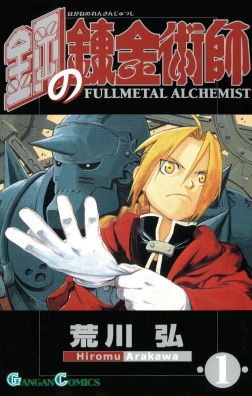
Fullmetal Alchemist is a Japanese manga series written and illustrated by Hiromu Arakawa. It was serialized in Square Enix's Monthly Shōnen Gangan magazine from July 2001 to June 2010, spanning 27 tankōbon volumes. The story is set in a fictional early 20th-century world where alchemy is a widely practiced and scientifically governed art. It follows the Elric brothers, Edward and Alphonse, who commit the ultimate taboo of human transmutation in an attempt to resurrect their deceased mother, resulting in Edward losing an arm and a leg and Alphonse's soul being bound to a suit of armor. Their journey to find the legendary Philosopher's Stone to restore their bodies becomes a sprawling epic that explores themes of sacrifice, war, morality, and the consequences of playing god.
The manga is renowned for its intricate plot, well-developed characters, and a unique magic system based on the principle of Equivalent Exchange. Arakawa's work masterfully blends action, comedy, and deep philosophical questions, earning widespread critical acclaim. It became one of the best-selling manga series of all time, with over 80 million copies in circulation worldwide, and is considered a modern classic of the shōnen genre.
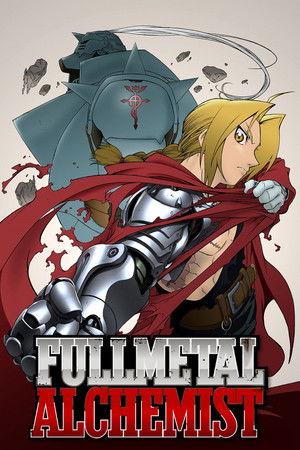
Its immense popularity led to a massive media franchise, most notably two distinct anime television series: a 2003 adaptation that diverged into an original storyline, and the 2009 series Fullmetal Alchemist: Brotherhood, which follows the manga's narrative more faithfully. The franchise also includes animated films, original video animations, light novels, and video games, cementing its status as a global cultural phenomenon.
Fullmetal Alchemist is a Japanese manga series written and illustrated by Hiromu Arakawa, serialized in Square Enix's Monthly Shōnen Gangan from 2001 to 2010. Set in a steampunk-inspired world where alchemy is a precise science governed by the law of equivalent exchange, the story follows brothers Edward and Alphonse Elric after a failed human transmutation leaves them physically scarred and searching for the legendary Philosopher's Stone to restore their bodies. The manga's intricate plotting, moral complexity, and blend of dark fantasy, adventure, and political intrigue quickly established it as a modern classic of the shōnen genre.
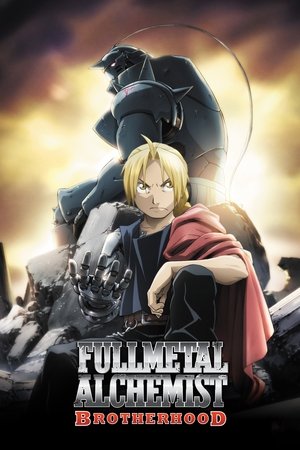
The property expanded into a multimedia franchise encompassing two distinct anime adaptations, animated films, light novels, video games, and a live-action film trilogy. The 2003 anime series diverged from the still-ongoing manga to craft its own conclusion, followed by the film Conqueror of Shamballa. A second, more faithful adaptation, Fullmetal Alchemist: Brotherhood, aired from 2009 to 2010 and was accompanied by the film The Sacred Star of Milos. This dual adaptation history is a defining feature of the franchise, offering fans two acclaimed but narratively separate interpretations of the same core premise.
At its heart, Fullmetal Alchemist explores profound themes of sacrifice, redemption, the cost of ambition, and the cyclical nature of violence. The principle of equivalent exchange serves as both a scientific law and a philosophical anchor, challenging characters to weigh the value of human life against their deepest desires. The series also examines war, genocide, religious corruption, and the bonds of family, all while maintaining a tone that balances visceral action with moments of genuine warmth and humor.
Commercially, the manga has sold over 80 million copies worldwide, making it one of the best-selling manga series of all time. Both anime adaptations received widespread critical acclaim, with Brotherhood frequently cited among the greatest anime ever produced. The franchise's cultural impact extends beyond Japan, earning a devoted international fanbase and influencing subsequent works in the dark fantasy and steampunk genres. Its enduring legacy is a testament to Arakawa's masterful storytelling and the universal resonance of its central question: what are you willing to give up to get what you want?