📺 Fullmetal Alchemist (2003)
Part of Fullmetal Alchemist
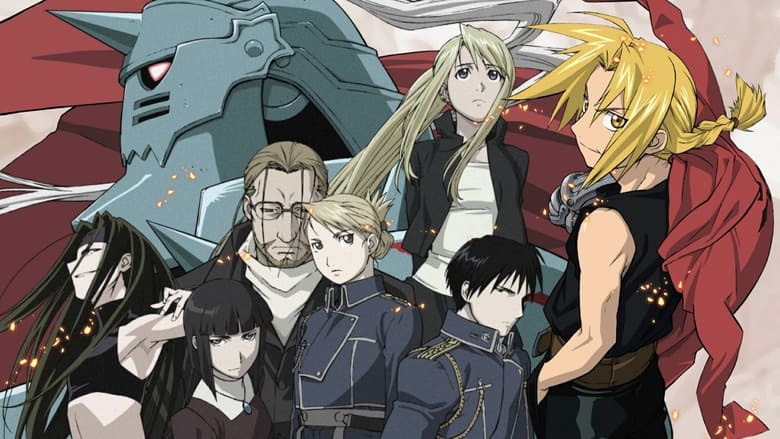
The 2003 adaptation of Fullmetal Alchemist stands as a fascinating case study in the art of adaptation, one born from a unique creative pact between the original author and the animation studio. With Hiromu Arakawa’s manga still in its early serialization, she famously requested that the anime team at Bones craft their own original narrative rather than attempt a faithful retelling that would inevitably hit a dead end. This directive gave director Seiji Mizushima and screenwriter Shō Aikawa the creative license to treat the manga’s early chapters as a springboard, establishing the core tragedy of the Elric brothers before steering the story into a completely divergent, darker, and more insular mythology. The result is a series that shares a premise and a cast with its source material but explores fundamentally different truths about its world, transforming the homunculi from artificial humans into the tragic, alchemical byproducts of failed human transmutation.
This narrative fork leads to some of the adaptation’s most memorable and melancholic inventions. The series deepens the emotional weight of equivalent exchange by introducing a parallel world—our own reality, on the other side of the Gate of Truth—as the ultimate source of alchemical energy, a revelation that reframes the entire magic system as a parasitic drain on a world of real human conflict, specifically London during the First World War. This metaphysical twist, entirely absent from the manga, culminates in an ending that separates the brothers across dimensions, a bittersweet conclusion that prioritizes emotional resolution over a tidy, triumphant reunion. It’s a bold, philosophical swing that reinterprets the series’ core themes of sacrifice and consequence through a lens of cosmic horror and historical tragedy.
Despite its radical departures, the 2003 series was met with widespread critical acclaim and played a monumental role in igniting the global anime boom of the mid-2000s. Its mature storytelling, coupled with a haunting score by Michiru Oshima, resonated deeply with audiences, proving that a loose adaptation could be a masterpiece in its own right. The series’ success on Adult Swim in the United States introduced a generation of Western viewers to the franchise’s complex moral landscape. While the later Fullmetal Alchemist: Brotherhood would arrive to deliver the complete, manga-faithful saga, the 2003 version endures not as a placeholder but as a distinct, artistically valid work—a somber, character-driven drama that dared to ask “what if?” and answered with a story that was both heartbreaking and unforgettable.
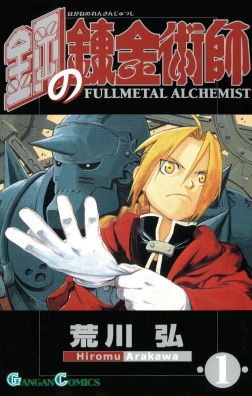
Fullmetal Alchemist is a Japanese manga series written and illustrated by Hiromu Arakawa. It was serialized in Square Enix's Monthly Shōnen Gangan magazine from July 2001 to June 2010, spanning 27 tankōbon volumes. The story is set in a fictional early 20th-century world where alchemy is a widely practiced and scientifically governed art. It follows the Elric brothers, Edward and Alphonse, who commit the ultimate taboo of human transmutation in an attempt to resurrect their deceased mother, resulting in Edward losing an arm and a leg and Alphonse's soul being bound to a suit of armor. Their journey to find the legendary Philosopher's Stone to restore their bodies becomes a sprawling epic that explores themes of sacrifice, war, morality, and the consequences of playing god.
The manga is renowned for its intricate plot, well-developed characters, and a unique magic system based on the principle of Equivalent Exchange. Arakawa's work masterfully blends action, comedy, and deep philosophical questions, earning widespread critical acclaim. It became one of the best-selling manga series of all time, with over 80 million copies in circulation worldwide, and is considered a modern classic of the shōnen genre.
Its immense popularity led to a massive media franchise, most notably two distinct anime television series: a 2003 adaptation that diverged into an original storyline, and the 2009 series Fullmetal Alchemist: Brotherhood, which follows the manga's narrative more faithfully. The franchise also includes animated films, original video animations, light novels, and video games, cementing its status as a global cultural phenomenon.
Fullmetal Alchemist is a Japanese manga series written and illustrated by Hiromu Arakawa, serialized in Square Enix's Monthly Shōnen Gangan from 2001 to 2010. Set in a steampunk-inspired world where alchemy is a precise science governed by the law of equivalent exchange, the story follows brothers Edward and Alphonse Elric after a failed human transmutation leaves them physically scarred and searching for the legendary Philosopher's Stone to restore their bodies. The manga's intricate plotting, moral complexity, and blend of dark fantasy, adventure, and political intrigue quickly established it as a modern classic of the shōnen genre.
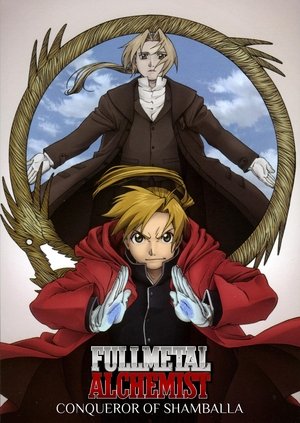
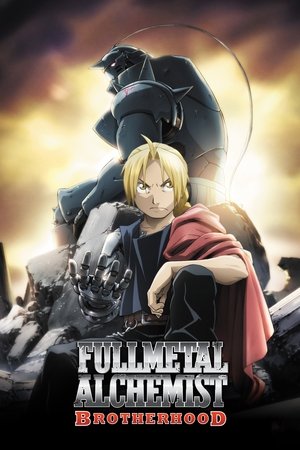
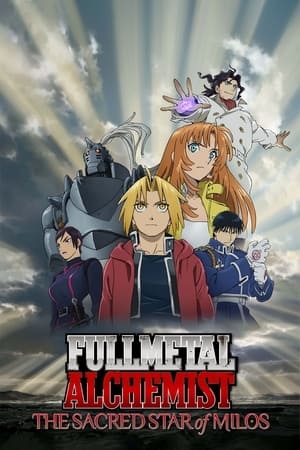
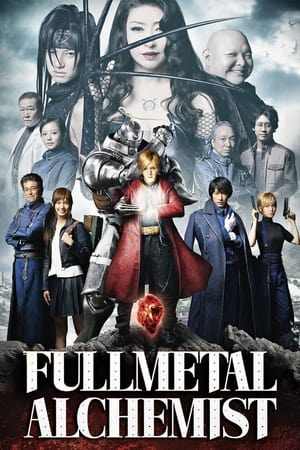
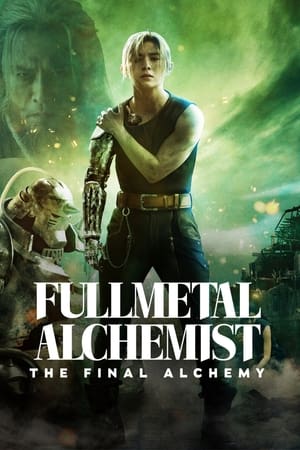
The property expanded into a multimedia franchise encompassing two distinct anime adaptations, animated films, light novels, video games, and a live-action film trilogy. The 2003 anime series diverged from the still-ongoing manga to craft its own conclusion, followed by the film Conqueror of Shamballa. A second, more faithful adaptation, Fullmetal Alchemist: Brotherhood, aired from 2009 to 2010 and was accompanied by the film The Sacred Star of Milos. This dual adaptation history is a defining feature of the franchise, offering fans two acclaimed but narratively separate interpretations of the same core premise.
At its heart, Fullmetal Alchemist explores profound themes of sacrifice, redemption, the cost of ambition, and the cyclical nature of violence. The principle of equivalent exchange serves as both a scientific law and a philosophical anchor, challenging characters to weigh the value of human life against their deepest desires. The series also examines war, genocide, religious corruption, and the bonds of family, all while maintaining a tone that balances visceral action with moments of genuine warmth and humor.
Commercially, the manga has sold over 80 million copies worldwide, making it one of the best-selling manga series of all time. Both anime adaptations received widespread critical acclaim, with Brotherhood frequently cited among the greatest anime ever produced. The franchise's cultural impact extends beyond Japan, earning a devoted international fanbase and influencing subsequent works in the dark fantasy and steampunk genres. Its enduring legacy is a testament to Arakawa's masterful storytelling and the universal resonance of its central question: what are you willing to give up to get what you want?