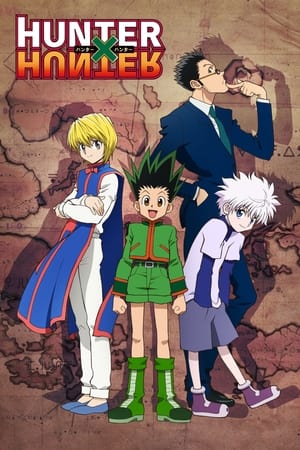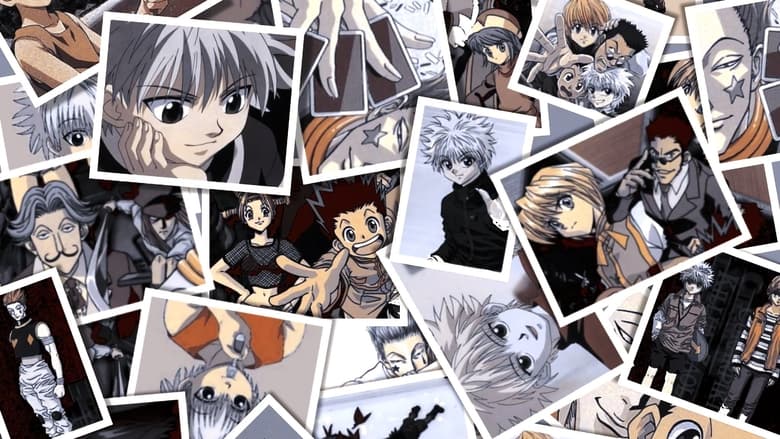
📺 Hunter x Hunter (1999)
Based on manga
The 1999 adaptation of Hunter x Hunter, directed by Kazuhiro Furuhashi at Nippon Animation, stands as a fascinating, moodier interpretation of Yoshihiro Togashi's manga, one that isn't afraid to linger in the shadows. Airing from 1999 to 2001, this 62-episode series covers the story from the Hunter Exam arc through the Yorknew City arc, concluding with a brief, anime-original filler arc in place of the Greed Island story that the 2011 version would later adapt more faithfully. Its most immediate distinction is a tonal one: the color palette is darker, the pacing is more deliberate, and the soundtrack is often melancholic, giving the adventure a sense of underlying melancholy that perfectly complements the series' darker psychological turns. This version also takes its time with the early material, adding entire episodes of character-building content, such as a deeper look at Gon's life on Whale Island and an expanded, more harrowing journey through the exam's early phases.
Where this adaptation truly carves its own identity is in its willingness to embellish and reinterpret. It doesn't just animate the manga; it adds texture. The relationship between Killua and Gon is given more quiet, contemplative moments, and Kurapika's quest for vengeance is steeped in an even more somber, almost noirish atmosphere. The series also introduces an anime-original character, Anita, during the Hunter Exam, a move that remains divisive among purists but underscores the creative team's desire to flesh out the world on their own terms. The depiction of violence and psychological trauma, while censored compared to the manga, is often handled with a directorial flair that makes it feel more psychologically impactful than simple gore, using stark lighting and lingering shots to convey dread.
Critically, the 1999 series is often praised for its artistic direction and the emotional weight of its key scenes, particularly during the Yorknew City arc, where the Phantom Troupe's menace feels uniquely oppressive. Its cel-animated aesthetic provides a tangible, hand-crafted warmth that many fans still prefer for the story's more intimate moments. However, its reception is inevitably tied to its successor; the 2011 Madhouse adaptation's more comprehensive and faster-paced retelling has overshadowed it for many newer fans. Yet, the 1999 version is not merely a historical footnote. It is a distinct artistic statement, a darker, more atmospheric lens through which to experience the foundational arcs of Togashi's world, and it remains a beloved, essential watch for those who want to see a different side of Gon's journey, one where the adventure feels less like a grand shōnen epic and more like a beautiful, dangerous, and deeply personal fairy tale.
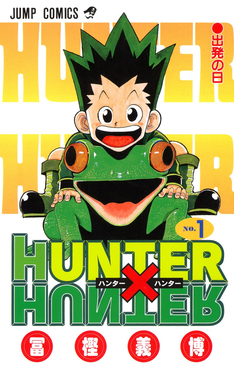
Hunter × Hunter is a Japanese manga series written and illustrated by Yoshihiro Togashi. It began serialization in Shueisha's Weekly Shōnen Jump magazine in March 1998 and has been collected into numerous tankōbon volumes. The story follows Gon Freecss, a young boy who discovers his supposedly dead father is actually a legendary Hunter, an elite member of humanity licensed to track down secret treasures, rare beasts, or even other individuals. Gon sets out to pass the grueling Hunter Examination and find his father, making friends and facing increasingly dangerous threats along the way.
Togashi's work is renowned for its intricate power system called Nen, complex character arcs, and a narrative that frequently subverts shōnen genre conventions. The manga has experienced several extended hiatuses due to the author's health, which has only added to its legendary status among fans. Despite this, it remains one of Weekly Shōnen Jump's best-selling series, with over 84 million copies in circulation worldwide.