📺 Sonic Underground (1999)
Based on video game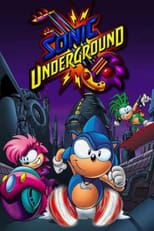
Sonic Underground is the third and final Sonic the Hedgehog animated series produced by DIC Entertainment, following Adventures of Sonic the Hedgehog and the more serious Sonic the Hedgehog (often referred to as SatAM). Premiering in 1999, the show took the franchise in a wildly different direction by introducing a musical format and a completely original backstory. In this continuity, Sonic is a prince of Mobius and has two siblings he never knew about: a sister named Sonia and a brother named Manic. The triplets were separated at birth after the evil Dr. Robotnik overthrew their mother, Queen Aleena, forcing her into hiding.
The core premise revolves around the prophecy of the Council of Four, which states that when the three siblings reunite with their mother, they will be able to defeat Robotnik once and for all. Each episode features the trio traveling across Mobius in a van, searching for Queen Aleena while helping resistance fighters and performing musical numbers. Sonic wields a medallion that transforms into a guitar, Sonia has a keyboard, and Manic plays the drums, with each song serving as a narrative device to advance the plot or reveal character emotions.
While the show retained the core elements of the 1991 Sega Genesis game—Sonic's super speed, the conflict with Robotnik, and the animal-populated world of Mobius—it diverged significantly from established game lore. The introduction of siblings and a royal lineage was unique to this series and has never been incorporated into the main video game canon. The series ran for a single season of forty episodes and, despite its short life, has maintained a cult following for its bizarre premise, catchy soundtrack, and the sheer audacity of its departure from traditional Sonic storytelling.
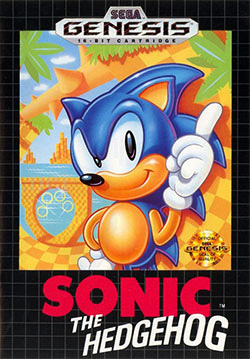
Sonic the Hedgehog is a landmark platform video game developed by Sonic Team and published by Sega for the Sega Genesis console. Released in 1991, the game was created in response to Sega's need for a company mascot to rival Nintendo's Mario. After an internal design contest, artist Naoto Ohshima's design of a blue hedgehog was chosen, and the character's attitude and speed became the core of the game's identity. The game is known for its fast-paced side-scrolling action, where players control Sonic as he runs, jumps, and spins through colorful zones to stop the evil Dr. Robotnik from collecting the Chaos Emeralds and turning animals into robots.
The title was a critical and commercial smash, effectively establishing the Sega Genesis as a serious competitor in the 16-bit console market. Its technical showcase was a novel engine that allowed Sonic's sprite to move smoothly along curved, sloping terrain, giving a sense of momentum and speed that was unprecedented at the time. The game's soundtrack, composed by Masato Nakamura of the J-pop band Dreams Come True, also received widespread acclaim for its catchy, energetic melodies that perfectly complemented the on-screen action.
Sonic the Hedgehog launched one of the most successful and enduring video game franchises in history. The original game's blend of accessible gameplay, 'cool' character design, and technical prowess defined a generation of platformers and cemented Sonic as a pop culture icon. Its success spawned numerous sequels, spin-offs, animated series, comic books, and a massive merchandising empire, making the blue blur a globally recognized figure for decades.