The Lawnmower Man
Collection 🎬 Collection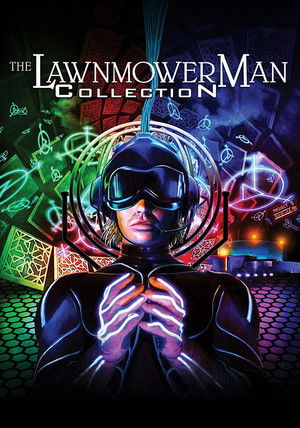
The Lawnmower Man series is a two-film collection that emerged from the early 1990s wave of cyberpunk and virtual reality-themed cinema. Loosely inspired by a Stephen King short story of the same name—though King successfully sued to have his name removed from the project—the films quickly diverged into their own distinct narrative territory. The series taps into the era's burgeoning fascination with computer-generated imagery and the existential dread of a digitally mediated future, functioning as a modern techno-gothic fable about the monstrous evolution of a simple mind granted godlike powers within a synthetic realm. It asks prescient questions about the nature of intelligence, the corruption of power, and the dissolution of the physical self.
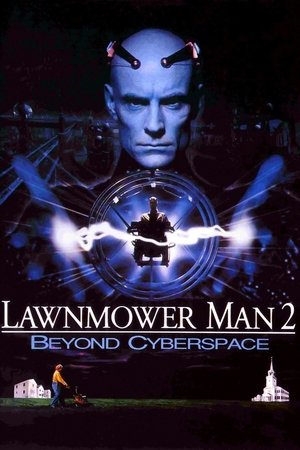
The 1992 original established the core premise with a Pygmalion narrative turned nightmare, as a scientist's experiments in cognitive enhancement transform a gentle, intellectually disabled gardener into a vengeful digital deity. Its visual language, groundbreaking for its time, rendered cyberspace as a surreal, polygonal playground that becomes the character's kingdom and his weapon. The 1996 sequel, Lawnmower Man 2: Beyond Cyberspace, radically escalated the scope from psychological thriller to a dystopian, globe-spanning cyberpunk adventure, replacing the introspective horror with a more action-oriented battle for control of a worldwide virtual network. This shift reflects a broader cultural pivot from fearing the solitary computer user to fearing a fully interconnected, vulnerable global grid.
Despite its uneven execution and the vast gulf in style between its two entries, the collection endures as a cult touchstone for its ambitious, if dated, visual effects and its prophetic core. Long before the metaverse became a corporate buzzword, The Lawnmower Man was grappling with the concept of a reality entirely constructed from data, where a human mind could transcend its biological limits and achieve a terrifying form of digital apotheosis. The series' legacy lies less in its narrative cohesion and more in its role as a cultural harbinger, a cautionary spectacle that vividly imagined a world where the ultimate frontier was not outer space, but the boundless, malleable, and deeply dangerous landscape inside the machine.