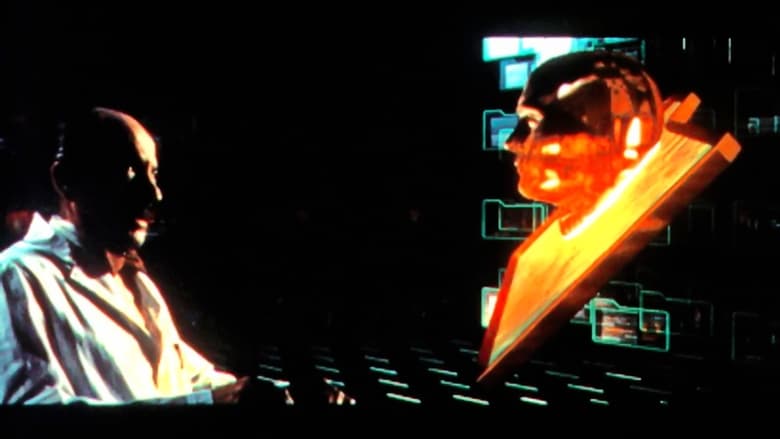
🎬 Lawnmower Man 2: Beyond Cyberspace (1996)
Part of The Lawnmower Man
Lawnmower Man 2: Beyond Cyberspace stands as one of the most bizarre sequels in 1990s cinema, a film that doubles down on the original movie's complete abandonment of Stephen King's source material. While the 1992 film at least borrowed King's title and the faintest whisper of a sinister lawn care premise before rocketing off into virtual reality territory, this 1996 follow-up jettisons even that tenuous connection entirely. There are no lawnmowers, no pagan rituals, and no grass-eating horrors to be found. Instead, the film plunges headlong into a dystopian cyberpunk Los Angeles, complete with hacker teens living in subway tunnels and a villainous corporate plot to control the world through a single operating system. The only lingering link to King's short story is the surname of a teenage hacker named Peter Parkette, a distant echo of the suburban homeowner Harold Parkette from the original tale.
The film resurrects Jobe Smith, the intellectually disabled gardener turned digital god from the first movie, now played by Matt Frewer after Jeff Fahey declined to return. Found barely alive and reconstructed with a new face and amputated legs, Jobe is plugged into a corporate database to help perfect the Chiron Chip, a device capable of dominating all computer-dependent societies. The plot follows Dr. Benjamin Trace, the chip's original inventor, as he teams up with the now-teenage Peter to stop Jobe and the corporate tycoon Jonathan Walker from achieving global digital domination. It is a far cry from King's claustrophobic suburban nightmare about a man watching his lawnmower devour more than just grass.
Upon release, the film was met with near-universal derision from both critics and audiences, who found its cyberpunk aesthetic already dated and its narrative a pale imitation of the first film's modest ambitions. The absence of Pierce Brosnan's Dr. Lawrence Angelo and the recasting of Jobe further alienated fans of the original. Where the 1992 Lawnmower Man had at least sparked a cultural conversation about virtual reality's potential and dangers, the sequel felt like a direct-to-video afterthought, a cash-in that misunderstood what little charm its predecessor possessed. It remains a curious artifact of the era's fascination with cyberspace, but one that has almost entirely faded from the cultural memory, remembered mainly as a cautionary example of how far a franchise can drift from its roots.

"The Lawnmower Man" is a short horror story by American author Stephen King, first published in the May 1975 issue of the men's magazine Cavalier. It was later collected in King's 1978 anthology Night Shift. The story centers on Harold Parkette, a suburban homeowner who hires a bizarre lawn care service to deal with his overgrown yard, only to witness a grotesque and terrifying ritual involving a self-propelled lawnmower and a naked man who crawls behind it, devouring the grass clippings.
The tale is a classic example of King's early short fiction, blending suburban mundanity with shocking, surreal horror. The story explores themes of hidden savagery beneath civilized surfaces, the intrusion of the unnatural into everyday life, and the ancient, pagan concept of sacrifice to dark forces. The lawnmower itself becomes an agent of a mysterious "boss" and a god-like entity called Pan, suggesting that modern machinery can serve primal, bloody purposes.
Though the story is brief and relatively simple in its narrative, it has become one of King's more infamous works due to its disturbing imagery and the stark contrast between its banal setting and its nightmarish events. Its notoriety was amplified by the 1992 film adaptation, which took only the title and the barest concept of a sinister lawnmower and crafted an entirely original science fiction narrative about virtual reality and technological transcendence, creating one of the most famous divergences between a King story and its cinematic counterpart.

The Lawnmower Man series is a two-film collection that emerged from the early 1990s wave of cyberpunk and virtual reality-themed cinema. Loosely inspired by a Stephen King short story of the same name—though King successfully sued to have his name removed from the project—the films quickly diverged into their own distinct narrative territory. The series taps into the era's burgeoning fascination with computer-generated imagery and the existential dread of a digitally mediated future, functioning as a modern techno-gothic fable about the monstrous evolution of a simple mind granted godlike powers within a synthetic realm. It asks prescient questions about the nature of intelligence, the corruption of power, and the dissolution of the physical self.
The 1992 original established the core premise with a Pygmalion narrative turned nightmare, as a scientist's experiments in cognitive enhancement transform a gentle, intellectually disabled gardener into a vengeful digital deity. Its visual language, groundbreaking for its time, rendered cyberspace as a surreal, polygonal playground that becomes the character's kingdom and his weapon. The 1996 sequel, Lawnmower Man 2: Beyond Cyberspace, radically escalated the scope from psychological thriller to a dystopian, globe-spanning cyberpunk adventure, replacing the introspective horror with a more action-oriented battle for control of a worldwide virtual network. This shift reflects a broader cultural pivot from fearing the solitary computer user to fearing a fully interconnected, vulnerable global grid.
Despite its uneven execution and the vast gulf in style between its two entries, the collection endures as a cult touchstone for its ambitious, if dated, visual effects and its prophetic core. Long before the metaverse became a corporate buzzword, The Lawnmower Man was grappling with the concept of a reality entirely constructed from data, where a human mind could transcend its biological limits and achieve a terrifying form of digital apotheosis. The series' legacy lies less in its narrative cohesion and more in its role as a cultural harbinger, a cautionary spectacle that vividly imagined a world where the ultimate frontier was not outer space, but the boundless, malleable, and deeply dangerous landscape inside the machine.