📺 Harley Quinn (2019)
Part of Harley Quinn Franchise
The 2019 animated series "Harley Quinn" is less a straightforward adaptation of any single comic book run and more a gleefully profane, blood-spattered distillation of the character's entire modern evolution. Showrunners Justin Halpern, Patrick Schumacker, and Dean Lorey took the core premise established in the source material—a brilliant psychiatrist corrupted by the Joker—and detonated it in the very first episode. The series opens with Harley finally realizing the toxic, one-sided nature of her relationship and unceremoniously dumping the Clown Prince of Crime. This is not the story of her fall, but of her chaotic, stumbling rise. The show bypasses the traditional origin story to focus on Harley's quest to build her own criminal empire and, more importantly, her own identity outside of the Joker's shadow, a thematic throughline that has defined the character in comics since her break from him.
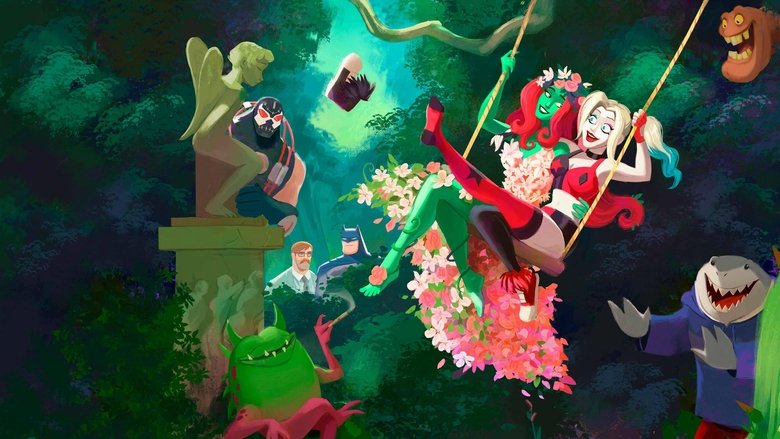
The series makes a significant and celebrated change by centering Harley's deep, complex relationship with Poison Ivy from the very beginning. While their romance was a slow-burn development in the comics, the show positions Ivy as Harley's anchor, best friend, and eventual romantic partner, making their love story the true emotional backbone of the entire series. This adaptation fully embraces the chaotic, R-rated potential of its premise, filling Gotham City with a crew of lovable, deeply flawed D-list supervillains like a pathetic, scene-stealing Clayface and a surprisingly sensitive King Shark. The humor is razor-sharp and deeply referential, skewering the self-seriousness of superhero tropes while maintaining a surprising amount of heart and genuine character growth for its lead.
Critically, "Harley Quinn" has been a massive success, praised for its sharp writing, stellar voice cast led by Kaley Cuoco's perfectly unhinged performance, and its unapologetically queer narrative. It navigates Harley's emancipation not just from the Joker, but from the narrative role of sidekick, allowing her to become a chaotic anti-hero in her own right. The show's move from the defunct DC Universe platform to HBO Max after its second season signaled its popularity and cultural footprint, proving that a hyper-violent, emotionally intelligent cartoon about a woman finding herself through mayhem could find a massive, devoted audience and become one of the most acclaimed entries in the DC canon.

Harley Quinn is a fictional character and supervillain appearing in American comic books published by DC Comics. She was created by writer Paul Dini and artist Bruce Timm, making her debut not in a comic book, but in the acclaimed television series Batman: The Animated Series. Her first appearance was in the episode "Joker's Favor," which aired on September 11, 1992. Originally conceived as a one-off henchwoman for the Joker, the character's instant popularity led to her becoming a recurring figure in the DC Animated Universe.
The character's origin story, later fleshed out in comics, reveals her as Dr. Harleen Quinzel, a promising psychiatrist at Arkham Asylum. She becomes fascinated with her patient, the Joker, and is manipulated into falling in love with him, eventually breaking him out and adopting the costumed persona of Harley Quinn. Her name is a playful nod to the Harlequin character from the 16th-century Italian commedia dell'arte. For years, she was defined by her toxic, co-dependent relationship with the Joker, serving as his sidekick and love interest.
Harley Quinn was officially integrated into the mainstream DC Comics universe in 1999 with the one-shot comic Batman: Harley Quinn #1. Over the following decades, she evolved far beyond the Joker's girlfriend. Writers developed her into a more independent anti-hero, exploring her deep friendship and romantic partnership with Poison Ivy, her membership in the Suicide Squad, and her solo adventures as a chaotic force for good (or at least, for herself) in Gotham City's criminal underworld. She has become one of DC's most popular and commercially successful characters, headlining multiple solo comic series and appearing across virtually all media.

The Harley Quinn animated collection centers on the eponymous DC Comics character, reimagining her as a profane, chaotic antihero navigating life, love, and villainy in Gotham City. Originating with the 2019 adult animated series, this grouping takes a satirical and ultraviolent approach to the superhero genre, focusing on Harley’s messy emancipation from the Joker and her journey toward self-actualization. The tone blends irreverent humor with genuine emotional depth, exploring themes of toxic relationships, queer identity, and found family against a neon-soaked backdrop of criminal absurdity.
The flagship series establishes a vibrant ensemble cast, including Poison Ivy, King Shark, and Clayface, who form an unconventional support system for Harley’s exploits. Its success led to the spin-off Kite Man: Hell Yeah!, which shifts focus to a perennial Z-list villain attempting to run a low-rent bar for fellow misfits. This expansion maintains the collection’s signature blend of vulgar comedy and heartfelt storytelling, proving that even the most ridiculous characters can anchor compelling narratives.
Though modest in size, the collection has been praised for its sharp writing, voice acting, and willingness to lampoon superhero conventions while delivering sincere character arcs. It stands as a distinctive entry in DC’s animated offerings, demonstrating how a sidekick can evolve into the chaotic center of her own critically acclaimed corner of the universe.