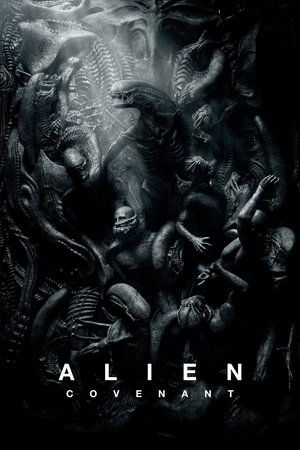
🎬 Alien: Covenant - Prologue: Phobos (2017)
Part of Alien
"Alien: Covenant - Prologue: Phobos" is a short film released in 2017 as a promotional tie-in and narrative bridge to Ridley Scott's feature film "Alien: Covenant." The piece serves as a prequel vignette, depicting the final moments of a group of colonists aboard the Covenant's sister ship, the Phobos, as they undergo a routine hypersleep drill that descends into chaos and terror.
The short focuses on a claustrophobic, character-driven horror scenario rather than the grander sci-fi horror of the main film. It introduces a new crew and setting, expanding the universe of the Alien prequel series by showing that the dangers faced by the Covenant crew were not isolated incidents. The production was part of a larger marketing campaign that included several short films, each designed to flesh out the backstory and build anticipation for the theatrical release.
Directed by Toby Dye, the short was produced by RSA Films in association with 20th Century Fox. It was released online as part of the "Alien: Covenant" viral marketing campaign, which also included the prologue "Last Supper" and the short "The Crossing." These pieces were praised by fans for their high production value and for adding depth to the film's mythology, effectively functioning as canonical extensions of the story rather than mere advertisements.
The Prometheus collection is a series of science fiction horror films that serves as a prequel arc to the larger Alien franchise. Initiated by director Ridley Scott, who returned to the universe he helped create with the original 1979 film, this collection explores the origins of the iconic Xenomorph creature and the mysterious race of beings known as the Engineers. The narrative begins with a team of explorers who follow an ancient star map to a distant moon, seeking the origins of humanity, only to uncover a dark and dangerous secret that connects to the broader Alien mythology. The story then continues with a colonization mission that encounters the consequences of that earlier expedition, bridging the gap between the prequel events and the classic Alien timeline.
Thematically, the collection delves into profound questions about creation, faith, and the nature of humanity. It draws heavily on the myth of Prometheus, the Titan who stole fire from the gods to give to mankind, mirroring the films' exploration of forbidden knowledge and the catastrophic price of hubris. The Engineers, as creators of both humanity and the deadly biological weapon that becomes the Xenomorph, embody a cruel and indifferent god-like force, while the synthetic android David represents a new form of life grappling with its own purpose and superiority over its makers. These philosophical underpinnings elevate the horror and science fiction elements into a meditation on existential dread.
Visually and tonally, the collection is marked by Ridley Scott's signature grand scale and meticulous world-building. The films feature vast, desolate alien landscapes, intricate biomechanical designs, and a palpable sense of isolation. While the first entry leans heavily into atmospheric horror and discovery, the subsequent film intensifies the body horror and philosophical conflict, particularly through the character of David. The collection is noted for its ambitious attempt to expand the Alien universe beyond its slasher-in-space roots into a more epic and mythological narrative, though its reception has been polarized among fans and critics.
As a narrative bridge, the Prometheus collection enriches the existing Alien saga by providing a backstory for the derelict spacecraft and the Space Jockey from the original film. It recontextualizes the Xenomorph not merely as a predatory alien but as the result of a deliberate, ancient experiment gone wrong. Despite its incomplete state—with a planned third installment to directly link to Alien remaining unrealized—the collection stands as a significant and visually stunning chapter in the franchise, characterized by its ambition to ask big questions amidst the terror of the unknown.