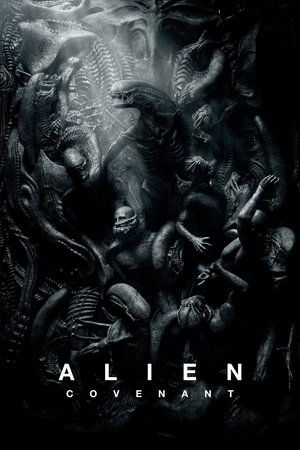
🎬 Alien (1979)
Part of Alien
Alien is a landmark 1979 science fiction horror film directed by Ridley Scott that fundamentally reshaped both genres. The story follows the commercial towing vessel Nostromo, whose seven-member crew is awakened from stasis to investigate a mysterious transmission from a desolate planetoid. There, they encounter a derelict alien spacecraft filled with strange, leathery eggs. When a parasitic organism latches onto crew member Kane, it sets off a terrifying chain of events as a predatory xenomorph stalks the ship's corridors, picking off the crew one by one. The film is renowned for its slow-burn tension, claustrophobic atmosphere, and the shocking "chestburster" scene, which became one of cinema's most iconic moments.
Sigourney Weaver's portrayal of Ellen Ripley broke new ground, presenting a resourceful and resilient female protagonist who defied the era's typical gender roles in action and horror films. The supporting cast, including Tom Skerritt, John Hurt, and Ian Holm, delivered grounded performances that heightened the film's gritty, blue-collar realism. The visual design, heavily influenced by Swiss artist H. R. Giger, created a biomechanical nightmare that felt disturbingly organic and sexualized, setting it apart from the cleaner, more technological sci-fi of the time. Giger's creature design, along with concept art by Ron Cobb and Chris Foss, gave the film a unique and enduring aesthetic.
Upon release, critical reception was mixed, with some praising its technical mastery and others criticizing its intense violence and horror elements. However, its reputation grew rapidly, and it won the Academy Award for Best Visual Effects, along with multiple Saturn Awards and a Hugo Award. The film was a significant box office success, grossing nearly $79 million domestically against an $11 million budget, cementing its status as a commercial and cultural phenomenon.
Alien launched a sprawling franchise that includes three direct sequels directed by James Cameron, David Fincher, and Jean-Pierre Jeunet, as well as the prequel films Prometheus and Alien: Covenant, and a crossover series with the Predator franchise. Its influence extends far beyond its own series, inspiring countless imitators in film, video games, and literature. The character of Ripley remains a feminist icon, and the xenomorph is universally recognized as one of the greatest movie monsters ever created.
The Prometheus collection is a series of science fiction horror films that serves as a prequel arc to the larger Alien franchise. Initiated by director Ridley Scott, who returned to the universe he helped create with the original 1979 film, this collection explores the origins of the iconic Xenomorph creature and the mysterious race of beings known as the Engineers. The narrative begins with a team of explorers who follow an ancient star map to a distant moon, seeking the origins of humanity, only to uncover a dark and dangerous secret that connects to the broader Alien mythology. The story then continues with a colonization mission that encounters the consequences of that earlier expedition, bridging the gap between the prequel events and the classic Alien timeline.
Thematically, the collection delves into profound questions about creation, faith, and the nature of humanity. It draws heavily on the myth of Prometheus, the Titan who stole fire from the gods to give to mankind, mirroring the films' exploration of forbidden knowledge and the catastrophic price of hubris. The Engineers, as creators of both humanity and the deadly biological weapon that becomes the Xenomorph, embody a cruel and indifferent god-like force, while the synthetic android David represents a new form of life grappling with its own purpose and superiority over its makers. These philosophical underpinnings elevate the horror and science fiction elements into a meditation on existential dread.
Visually and tonally, the collection is marked by Ridley Scott's signature grand scale and meticulous world-building. The films feature vast, desolate alien landscapes, intricate biomechanical designs, and a palpable sense of isolation. While the first entry leans heavily into atmospheric horror and discovery, the subsequent film intensifies the body horror and philosophical conflict, particularly through the character of David. The collection is noted for its ambitious attempt to expand the Alien universe beyond its slasher-in-space roots into a more epic and mythological narrative, though its reception has been polarized among fans and critics.
As a narrative bridge, the Prometheus collection enriches the existing Alien saga by providing a backstory for the derelict spacecraft and the Space Jockey from the original film. It recontextualizes the Xenomorph not merely as a predatory alien but as the result of a deliberate, ancient experiment gone wrong. Despite its incomplete state—with a planned third installment to directly link to Alien remaining unrealized—the collection stands as a significant and visually stunning chapter in the franchise, characterized by its ambition to ask big questions amidst the terror of the unknown.