📺 The Mist (2017)
Based on novel
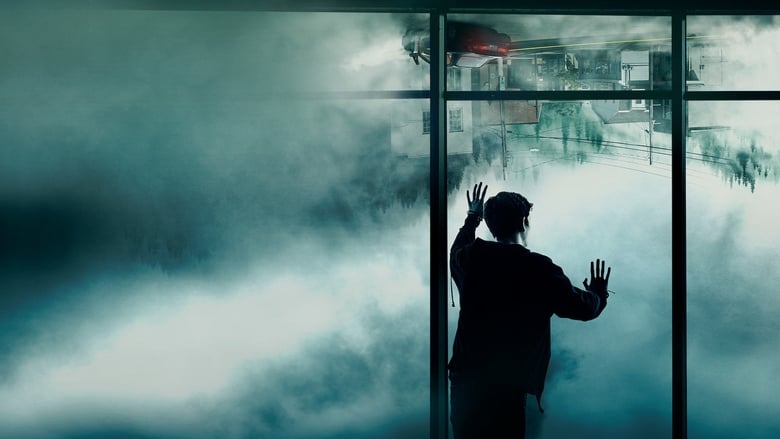
When Spike TV brought Stephen King's 'The Mist' to the small screen in 2017, it made a bold creative choice that immediately set it apart from both the novella and Frank Darabont's acclaimed 2007 film adaptation: the monsters were largely internal. Developed by Christian Torpe, the series shifts the horror from Lovecraftian creatures lurking in the fog to a more psychological, almost purgatorial threat where the mist manifests each character's deepest fears, guilt, and traumas. This fundamental change transformed the story from a siege narrative about external predators into a fragmented character drama exploring how personal demons can be just as lethal as any tentacled beast.
The series relocates the action from Bridgton to Bridgeville, Maine, and splinters the survivors across three primary locations—a shopping mall, a church, and a hospital—rather than containing them in a single supermarket. This structural divergence allows for a broader ensemble cast led by the Copeland family, but it also dilutes the claustrophobic pressure-cooker tension that made the source material so effective. The iconic figure of Mrs. Carmody, the religious fanatic who drives the novella's most harrowing human conflict, is reduced to a brief guest appearance, with her apocalyptic fervor largely replaced by more diffuse interpersonal conflicts and the mist's hallucinatory visions. The infamous ending of the 2007 film, which King himself preferred to his own, is also absent, as the series was designed to unfold over multiple seasons that never materialized.
Critical reception was decidedly mixed, with many reviewers praising the atmospheric direction and strong performances—particularly from Frances Conroy as the enigmatic Nathalie Raven—while lamenting the slow pacing and the decision to prioritize psychological angst over visceral horror. The series struggled to satisfy King devotees who expected the creature-feature terror of the original, while simultaneously not fully committing to its own more cerebral premise. After one ten-episode season, Spike cancelled the show, leaving its many character arcs and the true nature of the mist unresolved. Despite its short life, 'The Mist' remains a fascinating, if flawed, experiment in adaptation—one that dared to ask what Stephen King's story would look like if the real monsters were the ones we carry inside ourselves.
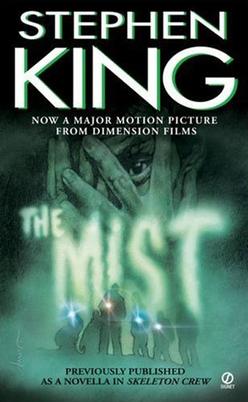
The Mist is a science fiction horror novella by Stephen King, first published in 1980 as part of the Dark Forces anthology and later collected in the 1985 volume Skeleton Crew. King wrote the story in the summer of 1976, inspired by a trip to his local supermarket after a thunderstorm, during which he imagined prehistoric animals and giant insects besieging the building. The narrative is set in the small town of Bridgton, Maine, and follows artist David Drayton, who shelters with his young son in a supermarket as a dense, otherworldly mist descends, concealing deadly Lovecraftian creatures. Beyond the external threat, the story explores how ordinary people react under extreme pressure. As fear and paranoia spread, the survivors fracture into factions, with the rational protagonist increasingly pitted against a growing mob led by the fanatical Mrs. Carmody, who preaches that sacrifice is the only path to salvation.
The novella addresses themes of man-made fears, religious fundamentalism, and the fragility of social order. Critics have praised it as one of King's most iconic and tightly constructed works, noting its cinematic quality. The Mist was nominated for a World Fantasy Award and a Locus Award in 1981. It has since been adapted into multiple media, but the original story remains a classic of psychological and cosmic horror, demonstrating King's ability to ground supernatural terror in vivid, relatable human dynamics.