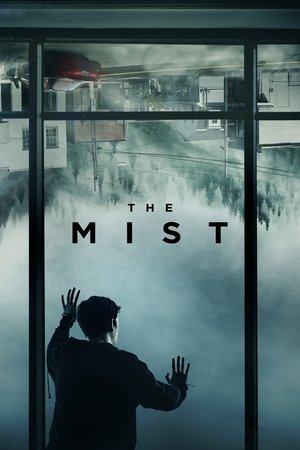
🎬 The Mist (2007)
Based on novel
Frank Darabont’s 2007 adaptation of Stephen King’s The Mist stands as a masterclass in translating cosmic horror to the screen while deepening the source material’s psychological terror. Darabont, who had previously earned acclaim for his faithful yet cinematic takes on King with The Shawshank Redemption and The Green Mile, took a markedly different approach here. He preserved the novella’s claustrophobic supermarket setting and its central conflict between reason and fanaticism, embodied by the rational David Drayton and the increasingly unhinged Mrs. Carmody. However, Darabont made the deliberate choice to strip away the story’s framing device and present the events in stark, immediate terms, trapping the audience alongside the characters with no promise of retrospective safety.
The film’s most significant and controversial departure is its ending, which diverges completely from King’s ambiguous, open-ended conclusion. In the novella, David and a small group escape the supermarket and drive into the mist-shrouded unknown, clinging to a fragile hope. Darabont’s finale, by contrast, delivers a devastating gut punch that recontextualizes the entire narrative as a brutal meditation on despair and the cost of losing faith. King himself famously praised this change, declaring it so powerful that anyone who spoiled it should be “hung by the neck until dead.” This new ending transforms the story from a tale of survival into a harrowing tragedy, cementing the film’s reputation as one of the bleakest mainstream horror movies of its era.
The adaptation also amplifies the novella’s social commentary, using the supermarket microcosm to explore how fear erodes civility and empowers demagogues. Marcia Gay Harden’s chilling performance as Mrs. Carmody elevates the character from a nuisance in the book to a genuinely terrifying force, her religious extremism gaining traction as the creature attacks escalate. The film’s Lovecraftian monsters, rendered through a mix of practical effects and early CGI, remain largely faithful to King’s descriptions—impossibly large tentacles, insectile predators, and towering behemoths that suggest an indifferent, alien ecosystem. Shot on a modest budget in Louisiana, the film relies on suggestion and sound design as much as visual effects, maintaining a pervasive sense of dread that honors the novella’s emphasis on what remains unseen in the mist.
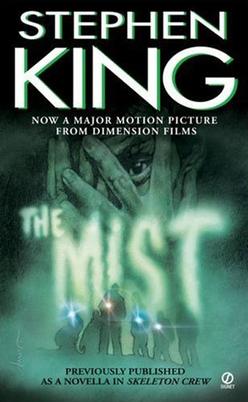
The Mist is a science fiction horror novella by Stephen King, first published in 1980 as part of the Dark Forces anthology and later collected in the 1985 volume Skeleton Crew. King wrote the story in the summer of 1976, inspired by a trip to his local supermarket after a thunderstorm, during which he imagined prehistoric animals and giant insects besieging the building. The narrative is set in the small town of Bridgton, Maine, and follows artist David Drayton, who shelters with his young son in a supermarket as a dense, otherworldly mist descends, concealing deadly Lovecraftian creatures. Beyond the external threat, the story explores how ordinary people react under extreme pressure. As fear and paranoia spread, the survivors fracture into factions, with the rational protagonist increasingly pitted against a growing mob led by the fanatical Mrs. Carmody, who preaches that sacrifice is the only path to salvation.
The novella addresses themes of man-made fears, religious fundamentalism, and the fragility of social order. Critics have praised it as one of King's most iconic and tightly constructed works, noting its cinematic quality. The Mist was nominated for a World Fantasy Award and a Locus Award in 1981. It has since been adapted into multiple media, but the original story remains a classic of psychological and cosmic horror, demonstrating King's ability to ground supernatural terror in vivid, relatable human dynamics.