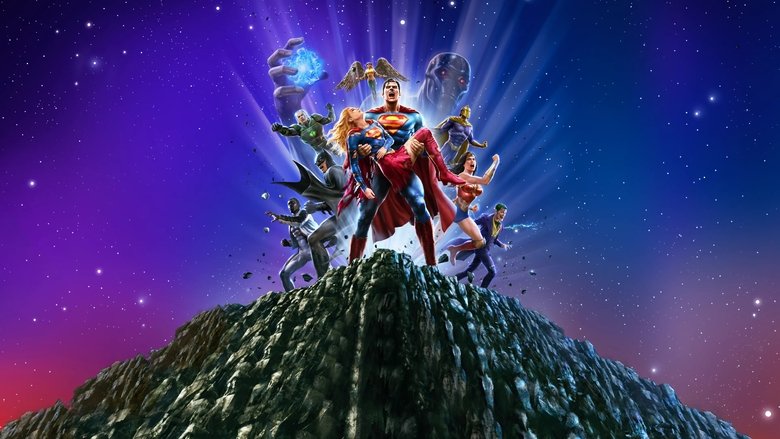
🎬 Justice League: Crisis on Infinite Earths Part Three (2024)
Part of Justice League (Tomorrowverse)
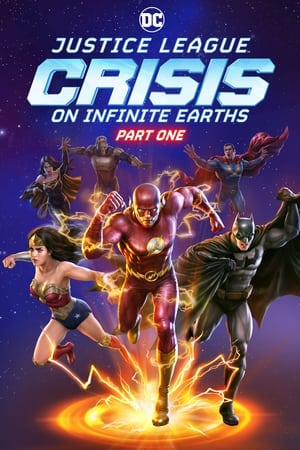
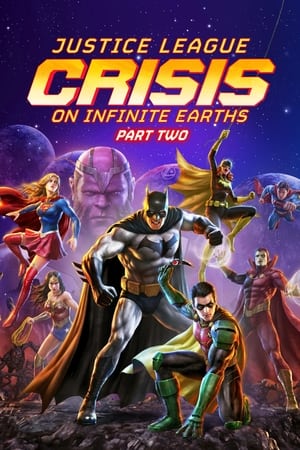
Justice League: Crisis on Infinite Earths Part Three is the epic conclusion to the Tomorrowverse animated trilogy, adapting DC Comics' legendary 1985–1986 crossover event Crisis on Infinite Earths by Marv Wolfman and George Pérez. Released on July 16, 2024, and directed by Jeff Wamester from a script by Jim Krieg, the film brings to a close not only the three-part Crisis saga but also the entire Tomorrowverse shared animated universe that began with Superman: Man of Tomorrow in 2020. The film is dedicated to both George Pérez and Kevin Conroy, the iconic voice of Batman who passed away in 2022.
In this final chapter, the Anti-Monitor — now fully revealed as the ultimate threat to all existence — wages an unrelenting assault on the surviving Earths trapped in a pocket dimension called the Bleed. With time itself shattered, heroes from across the multiverse's past, present, and future join the Justice League for a desperate last stand. The film weaves together an enormous cast of DC characters, with voice performances from Jensen Ackles as Batman, Darren Criss as Superman, Stana Katic as Wonder Woman, Matt Bomer as the Flash, and Meg Donnelly as Supergirl, among many others. The story grapples with themes of sacrifice, identity, and what it means to exist when reality itself is being rewritten.
While the animated adaptation takes significant liberties with the source material — condensing and reimagining the sprawling 12-issue saga into a focused three-part narrative — it retains the core emotional beats that made the original so resonant. Supergirl's heroic sacrifice, the cosmic horror of the Anti-Monitor, and the philosophical weight of watching entire universes blink out of existence all carry over from the page. The Tomorrowverse version also incorporates elements unique to its own continuity, including the consequences of Constantine's time-meddling and the ultimate fate of the multiverse being tied to a single, unified Monoverse.
As the 56th entry in the DC Universe Animated Original Movies line and the final installment of the Tomorrowverse, Crisis on Infinite Earths Part Three serves as both a conclusion and a tribute — to the characters, to the fans, and to the creative legacy of Wolfman and Pérez, whose 1985 masterpiece fundamentally reshaped what superhero comics could achieve.

Crisis on Infinite Earths is a landmark 12-issue limited series published by DC Comics from April 1985 to March 1986. Written by Marv Wolfman and illustrated by George Pérez, it was conceived as a way to celebrate DC's 50th anniversary while simultaneously streamlining the publisher's notoriously convoluted multiverse — a sprawling collection of parallel Earths that had accumulated over decades of storytelling. The series brought together virtually every major DC hero and villain from across all realities to face the Anti-Monitor, a cosmic entity bent on destroying all of existence.
The story is famous for its unprecedented scope and for permanently altering the DC Universe. It featured the deaths of major characters including Supergirl and the Flash (Barry Allen), moments that shocked readers and signaled that no character was safe. By its conclusion, the multiverse had collapsed into a single unified timeline, a narrative reset that allowed DC to reboot many of its flagship titles with fresh creative directions. The series also introduced key concepts like the Monitor, Harbinger, and Pariah that have echoed through DC lore ever since.
Crisis on Infinite Earths is widely regarded as one of the most influential comic book events ever published. It established the template for the modern crossover event — a high-stakes, universe-spanning story with lasting consequences — that both Marvel and DC would emulate for decades. Its legacy includes multiple sequels, spiritual successors, and adaptations across television and animation, cementing its place as a foundational text of superhero mythology.

The Tomorrowverse is a shared universe of animated superhero films produced by Warner Bros. Animation and DC Entertainment. It serves as a successor to the DC Animated Movie Universe, launching with a fresh continuity and a distinct retro-futuristic aesthetic inspired by classic comic book artwork. The overarching narrative explores the formation of the Justice League and the escalating cosmic threats they face, building toward a multiversal crisis.
This collection of films is characterized by its interconnected storytelling, where events in one film directly influence subsequent entries. The visual style is notably cleaner and more streamlined than its predecessor, emphasizing bold lines and a vibrant color palette. The stories often draw inspiration from iconic DC Comics storylines, reinterpreting them to fit the new animated continuity.
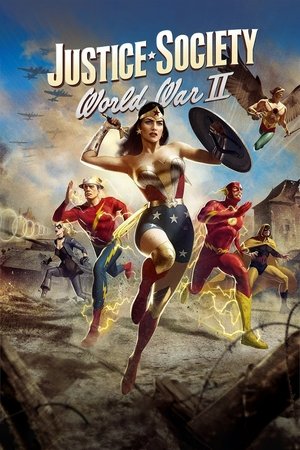
The Tomorrowverse places a strong emphasis on legacy and the concept of heroism across different eras. It introduces alternate realities and historical teams like the Justice Society of America, weaving them into the fabric of the modern heroes' journey. The narrative arc gradually expands from Earth-bound conflicts to galaxy-spanning wars, ultimately culminating in a reality-shattering event that tests the limits of the Justice League's unity and power.