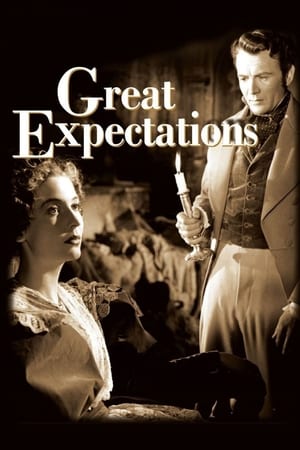
📺 Great Expectations (2011)
Based on novel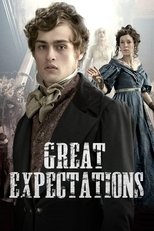
Charles Dickens's 1861 novel Great Expectations has been adapted for screen and stage countless times, but the 2011 BBC television adaptation stands out for its dark, atmospheric take on the classic bildungsroman. Written by Sarah Phelps and directed by Brian Kirk, this three-part miniseries stars Douglas Booth as the adult Pip, alongside Gillian Anderson as a strikingly youthful Miss Havisham, Ray Winstone as the convict Magwitch, and Vanessa Kirby as Estella. The production was noted for its gothic visual style and Anderson's casting, which at age 43 broke from the tradition of much older actresses portraying the jilted bride.
The adaptation condenses Dickens's sprawling novel into roughly three hours, focusing on the core relationship between Pip and his mysterious benefactor. While it retains the key plot points—Pip's childhood encounter with Magwitch, his rise in society, and his unrequited love for Estella—it streamlines subplots and emphasizes psychological tension over period detail. The series was first broadcast on BBC One over Christmas 2011 and later aired on PBS in the United States as part of Masterpiece Theatre.
Critical reception was generally positive, with particular praise for the performances of Anderson and Winstone, as well as the show's cinematography and production design. The series earned four Creative Arts Emmy Awards for Outstanding Art Direction, Cinematography, Costumes, and Main Title Design. It remains one of the more distinctive adaptations of the novel, offering a moody and modern sensibility while staying faithful to Dickens's themes of class, ambition, and moral growth.

Great Expectations is the thirteenth novel by the English author Charles Dickens and his penultimate completed novel. It was first published as a serial in Dickens's weekly periodical All the Year Round, from 1 December 1860 to August 1861, and later published in book form in three volumes by Chapman & Hall in October 1861.
The novel is a bildungsroman that follows the life of an orphan nicknamed Pip, from his humble beginnings in the marshes of Kent to his mysterious acquisition of wealth and his life as a gentleman in London. The story is narrated in the first person by Pip himself, recounting his encounters with a cast of unforgettable characters, including the escaped convict Abel Magwitch, the eccentric and jilted bride Miss Havisham, and the beautiful but cold-hearted Estella.
Set in the early to mid-19th century, Great Expectations explores themes of social class, ambition, wealth and poverty, love and rejection, and the possibility of moral redemption. It is celebrated for its vivid imagery, complex plot, and deep psychological insight into its characters. The novel is widely regarded as one of Dickens's greatest works and a masterpiece of Victorian literature, praised for its narrative voice, its blend of humour and Gothic elements, and its trenchant social commentary.
Since its publication, Great Expectations has never been out of print and has become a cornerstone of English literature. It has been translated into numerous languages and adapted extensively across various media, including film, television, and theatre, cementing its place in global popular culture.