🎬 The Lego Movie (2014)
Part of Lego
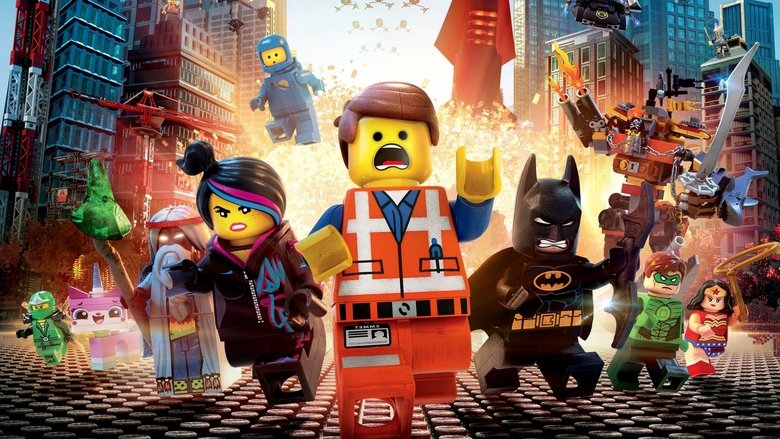
When Phil Lord and Christopher Miller set out to make a movie based on a beloved plastic brick, they faced a seemingly impossible challenge: how do you craft a narrative from a product with no inherent story? Their ingenious solution was to build the film’s entire philosophy around the very nature of the toy itself, creating a vibrant, chaotic world that celebrates both the joy of following instructions and the anarchic thrill of creative destruction. The 2014 film centers on Emmet Brickowski, a perfectly ordinary, rule-following construction worker who is mistakenly identified as the prophesied “Special,” the most important person in the universe. This premise allowed the filmmakers to cleverly satirize the chosen-one narrative while simultaneously delivering a genuinely heartfelt version of it, all rendered in a stunning, stop-motion-inspired CGI style that made every frame look like a living, breathing brickfilm.
The movie’s most audacious stroke is its third-act twist, which recontextualizes the entire adventure as a metaphorical battle playing out in the real-world basement of a father and son. The tyrannical Lord Business is revealed to be the avatar of “The Man Upstairs,” a dad who meticulously preserves his Lego sets with Kragle (Krazy Glue), while the master builders represent his son’s desire for imaginative, unscripted play. This meta-narrative leap transformed the film from a clever toy commercial into a surprisingly moving parable about the tension between order and creativity, and the importance of play across generations. It’s a risky gambit that pays off emotionally, grounding the plastic mayhem in a relatable family dynamic and giving weight to every silly joke and dazzling set piece that came before it.
Visually, the film was a groundbreaking achievement. The animation team, led by Chris McKay, developed a proprietary system to mimic the imperfections of stop-motion, ensuring that every character moved with the limited articulation of a real minifigure and every explosion was composed of individual digital bricks. This commitment to a tactile, handcrafted aesthetic extended to the film’s humor, which fires at a relentless pace, blending rapid-fire pop-culture references with absurdist visual gags that reward repeat viewings. The voice cast, including Chris Pratt’s boundless optimism as Emmet, Will Arnett’s gravelly, self-serious Batman, and Liam Neeson’s schizophrenic Good Cop/Bad Cop, fully commits to the lunacy, making the characters feel iconic in their own right.
Upon release, “The Lego Movie” was hailed as a near-instant classic, with critics praising its wit, visual invention, and unexpected depth. It grossed over $468 million worldwide and spawned a franchise, but its greatest legacy is how it redefined what a brand adaptation could be. Rather than a cynical cash-in, it became a benchmark for how to translate the spirit of a plaything into a story with genuine heart and brains, proving that with the right creative team, everything can indeed be awesome.

Lego is a renowned line of colorful interlocking plastic bricks and construction toys created by Danish carpenter Ole Kirk Christiansen and his company in 1932. Initially produced as wooden toys, the transition to plastic in 1949 marked the birth of the classic Lego brick design, patented in 1958. The name 'Lego' derives from the Danish words 'leg godt,' meaning 'play well,' reflecting its core purpose of fostering creativity and imaginative play.
Over decades, Lego expanded into themed sets, minifigures, and licensed properties encompassing everything from vehicles and buildings to fantastical worlds like space exploration and medieval castles. Its modular system allows endless building possibilities, appealing to children and adults alike. Lego's cultural impact is immense, promoting problem-solving, spatial reasoning, and storytelling through play, while becoming a global phenomenon with billions of pieces produced annually.
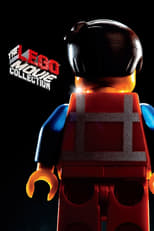
This animated media collection brings the iconic construction toy brand to life through a series of theatrically released films that share a distinctive visual style and self-aware comedic tone. Originating with a critically acclaimed and commercially successful debut in 2014, the grouping quickly established itself as a clever, fast-paced adventure that blends brick-based animation with sharp, meta-humor. The films are built on a foundation of creative storytelling that celebrates individuality, teamwork, and the limitless potential of imagination, all rendered in a unique CGI style that mimics stop-motion and the physical constraints of Lego bricks. While the entries share a universe, they vary in focus—from the original's ensemble cast to character-driven spin-offs—creating a loosely connected series rather than a tightly serialized saga. The collection is anchored by the core theatrical films, which include a direct sequel and two spin-off features, each exploring different corners of the Lego multiverse. At its core, the series explores themes of creativity versus conformity, encouraging audiences of all ages to embrace their unique perspectives. The narrative style often features meta-commentary and playful critiques of modern mass culture, while maintaining a heartfelt message about believing in oneself and the value of collaboration. By transforming everyday building blocks into dynamic characters and sprawling landscapes, the collection captures the nostalgic joy of play while delivering sophisticated animation and witty dialogue. Culturally, the collection has left a notable mark on popular entertainment, demonstrating the viability of toy-based intellectual properties when approached with genuine artistic vision and emotional depth. Its success spawned video games, theme park attractions, television series, and short films, though the theatrical grouping itself remains a focused set of four features. The films are celebrated for their vibrant visuals, memorable catchphrases, and an enduring celebration of creative play that resonates with both children and adults.