📺 Gen V (2023)
Part of The Boys Franchise
Gen V takes the savage, corporate-controlled world of The Boys and channels it through the anxiety-ridden halls of a college campus, creating a spin-off that feels both fresh and disturbingly familiar. Loosely adapting the comic's 'We Gotta Go Now' story arc, the series transplants the franchise's signature cocktail of ultraviolence and satire into Godolkin University, an elite institution where young supes compete not just for grades, but for a coveted spot in The Seven. This shift in setting allows the show to explore the pressures of young adulthood—identity, ambition, and the desperate need for validation—through the lens of characters who can crush a car with their bare hands. The adaptation smartly uses the university's ranking system as a metaphor for social media clout and the relentless pursuit of fame, a theme only hinted at in the original comic's broader critique of celebrity culture.
The series introduces a new generation of superpowered students, led by Marie Moreau, a hemokinetic with a traumatic past, whose journey from hopeful freshman to reluctant rebel anchors the narrative. While the comic's 'We Gotta Go Now' arc focused on the G-Men, a clear parody of the X-Men, Gen V expands this concept into a full ecosystem of academic pressure and institutional corruption. The show doesn't shy away from the source material's grotesque body horror—a character with shrinking powers accidentally expanding inside a sexual partner is a standout, cringe-inducing moment—but it grounds these shocks in genuine character development. The mysterious 'Woods,' a secret underground lab where students are experimented on, serves as the season's central conspiracy, echoing the comics' theme of Vought treating supes as disposable assets rather than people.
Critically, Gen V was praised for its young cast's performances, particularly Jaz Sinclair and the late Chance Perdomo, who brought emotional depth to the absurdity. The show deftly balances its standalone story with connective tissue to the parent series, featuring cameos from established characters that never feel forced. Its exploration of gender identity through the shapeshifter Jordan Li and the psychological toll of being a child star in the supe world added layers of social commentary that resonated with audiences. The first season's success led to a swift renewal, with the second season premiering in 2025, setting its story against the backdrop of Homelander's political ascendancy and pushing the characters into an even more militarized version of Godolkin.
Tragically, the series was canceled in 2026 after two seasons, leaving its story of a brewing human-supe war unfinished. This abrupt end mirrors the chaotic, often unfair world the show depicted so well, where promising futures can be snuffed out by corporate decisions. Despite its short run, Gen V stands as a compelling expansion of The Boys universe, proving that the franchise's cynical heart could beat just as strongly in a coming-of-age story as it did in a middle-aged revenge fantasy.

The Boys is an American comic book series written by Garth Ennis and illustrated by Darick Robertson. It was first published by WildStorm Productions, an imprint of DC Comics, in 2006 before moving to Dynamite Entertainment after the first six issues due to content concerns. The series ran for 72 issues, concluding in 2012. Set in a world where superheroes exist and are largely controlled by the powerful corporation Vought International, the story follows a CIA-backed black ops team known as 'The Boys,' led by the ruthless Billy Butcher. Their mission is to monitor, police, and, when necessary, violently take down corrupt and out-of-control 'Supes.' The comic is renowned for its extreme violence, dark satire, and unflinching critique of celebrity culture, corporate greed, and the military-industrial complex, deconstructing the superhero genre by imagining what would happen if beings with god-like power were subject to no real accountability.

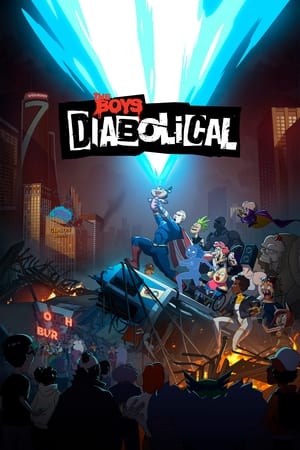
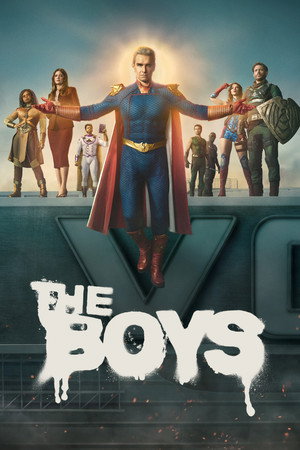
The Boys is a transmedia collection that originated from the comic book series by Garth Ennis and Darick Robertson, later adapted into a live-action television universe developed by Eric Kripke. The collection presents a darkly satirical take on the superhero genre, envisioning a world where superpowered individuals, known as 'Supes,' are corporate-managed celebrities rather than altruistic protectors. Central to its narrative is the conflict between the titular vigilante group, led by Billy Butcher, and the corrupt superheroes of Vought International, most notably the unstable and terrifying Homelander. The collection explores themes of unchecked power, media manipulation, political corruption, and the commodification of trauma, using extreme violence and pitch-black humor to deconstruct the very concept of heroism. Its cultural significance lies in its timely critique of celebrity worship and institutional failure, offering a visceral antidote to sanitized, corporate-driven superhero narratives that dominate global pop culture. The live-action series quickly gained acclaim for its sharp writing and fearless social commentary, establishing a distinct identity that balances shocking spectacle with poignant character studies. The narrative universe has since expanded through interconnected stories that deepen its mythology while maintaining its satirical edge. The animated anthology series *The Boys Presents: Diabolical* broadens the scope with varied artistic styles, revealing the collateral damage of Compound-V across different timelines. The college-set spin-off *Gen V* shifts focus to a younger generation of Supes, exploring indoctrination and the manufacturing of celebrity heroes through a bloody, coming-of-age mystery. An upcoming prequel, *Vought Rising*, aims to explore the company's mid-century origins, further enriching the collection's history. Through these expansions, The Boys has evolved into a cohesive and incisive body of work that refuses easy moral binaries, consistently challenging audiences to question the line between hero and monster in a world where image is everything.