📺 Salem's Lot (2004)
Based on novel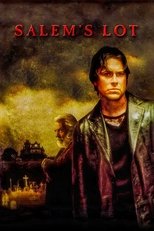
TNT's 2004 adaptation of 'Salem's Lot arrived in a very different television landscape than its celebrated 1979 predecessor, and it wasn't shy about making changes. Directed by Mikael Salomon, this two-night miniseries boldly transplants Stephen King's quintessential New England vampire story from the sleepy 1970s into the post-9/11 2000s, complete with cell phones and a grittier, more self-aware tone. The most radical departure is the framing device: the story is told in flashback by a hospitalized Ben Mears, played by Rob Lowe, who has just attacked a priest in a Detroit homeless shelter. This immediately signals that this version is less interested in the slow, creeping dread of a town succumbing to darkness and more in the psychological and spiritual wreckage left in its wake.
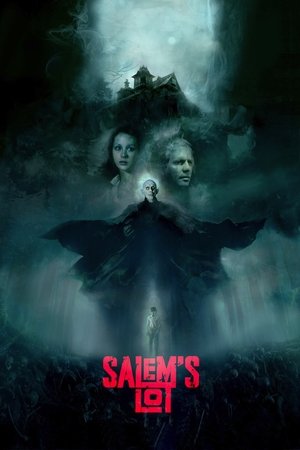
The miniseries reimagines several key characters and relationships. Donald Callahan, the alcoholic priest from the novel, is here a recovering addict running a shelter, and his crisis of faith becomes a central pillar of the narrative, culminating in a direct, physical confrontation with the vampire Kurt Barlow that diverges sharply from the book's more ambiguous fate. Barlow himself, played with theatrical menace by Rutger Hauer, is a far cry from the silent, Nosferatu-like monster of the '79 film; he is articulate, seductive, and engages in philosophical debates with his prey. The character of Straker is also reconceived, with Donald Sutherland bringing a folksy, insidious charm to the familiar, making him a more active and unsettling presence in the town's corruption.
While the 2004 version retains the core beats of King's novel—the Marsten House as a locus of evil, the gradual vampiric infection of the town, the small band of survivors making a last stand—it streamlines the sprawling cast and accelerates the pacing. The romance between Ben and Susan Norton is given a more modern, slightly cynical edge, and the ending is significantly altered, offering a more definitive, albeit bleak, resolution to the vampire plague. The miniseries leans heavily into the novel's themes of addiction and the banality of evil, using the vampire takeover as a metaphor for a community already hollowed out by its own secrets and sins.
Critical reception was mixed, with many praising the performances—particularly Sutherland's creepy turn and Andre Braugher's grounded portrayal of teacher Matt Burke—but lamenting the loss of the slow-burn atmosphere that made the original adaptation a classic. For a new generation, however, this 'Salem's Lot served as a slick, accessible entry point to King's mythology, emphasizing character drama and theological horror over pure monster scares. It stands as a fascinating, flawed experiment in adaptation, proving that even the most familiar stories can be reshaped to reflect the anxieties of a new era.

'Salem's Lot is a 1975 horror novel by American author Stephen King, his second published book. The story follows writer Ben Mears, who returns to the small town of Jerusalem's Lot, Maine, where he lived as a child, only to discover that the residents are gradually being turned into vampires. The novel explores themes of small-town decay, the loss of innocence, and the nature of evil, drawing inspiration from Bram Stoker's Dracula by asking what would happen if the legendary vampire came to modern-day America.
King wrote the novel as a darker, more ambitious follow-up to his debut Carrie, and it quickly became a bestseller. It was nominated for the World Fantasy Award for Best Novel in 1976 and has since been recognized as one of the most influential vampire novels of the 20th century. The book's depiction of a community slowly succumbing to a supernatural threat has become a template for countless horror stories.
The novel introduced the character of Kurt Barlow, a sophisticated and ancient vampire who arrives in the town under the guise of an antique dealer, along with his human familiar Richard Straker. The gradual takeover of the town, the transformation of its citizens, and the desperate fight of a small group of survivors have made 'Salem's Lot a cornerstone of modern horror literature and one of King's most enduring works.