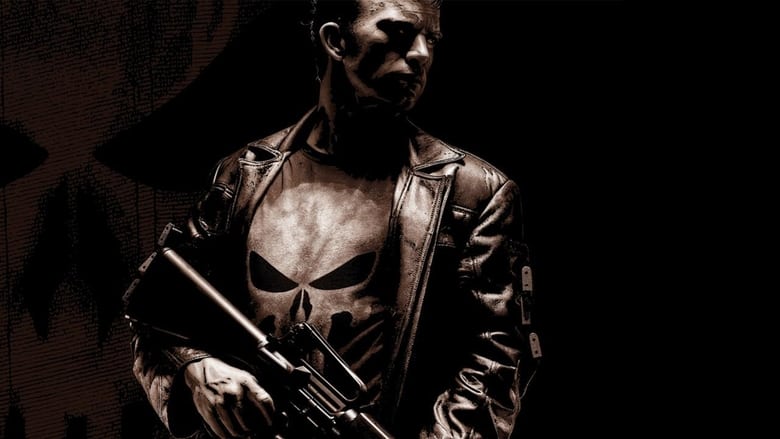
🎬 The Punisher (2004)
Part of Punisher
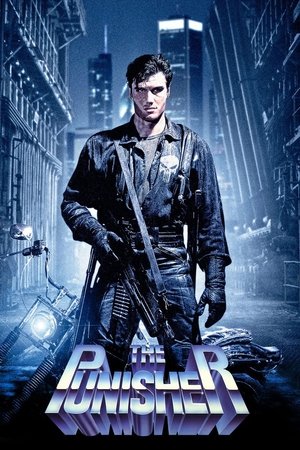
The 2004 film The Punisher marked the second big-screen adaptation of Marvel's skull-emblazoned vigilante, following the 1989 direct-to-video version starring Dolph Lundgren. This time, Thomas Jane stepped into the role of Frank Castle, an undercover FBI agent whose final operation goes horribly wrong, leading to the massacre of his entire extended family at a Puerto Rican reunion. The film draws heavily from two acclaimed comic storylines: the 1994 miniseries The Punisher: Year One, which explores Castle's early days as a vigilante, and Garth Ennis's 2000-01 Welcome Back, Frank, which reintroduced the character with a darkly comedic edge.
Directed by Jonathan Hensleigh in his directorial debut, the film takes a grounded, crime-thriller approach rather than a superhero spectacle. John Travolta plays the villainous Howard Saint, a money-laundering kingpin whose son is killed during Castle's botched sting operation. The Tampa, Florida setting gives the film a sun-bleached, noir-ish atmosphere distinct from the typical New York backdrop of the comics. While the movie takes liberties with the source material—most notably by having Castle's family killed at a reunion rather than in Central Park—it retains the core of the character: a man broken by loss who wages a calculated, brutal war on organized crime.
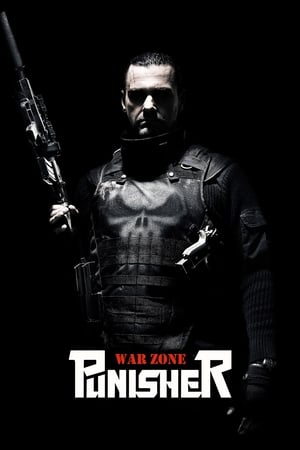
The Punisher received mixed-to-negative reviews upon release, with critics divided over its unflinching violence and somber tone. It earned $54.7 million worldwide against a $33 million budget, a modest return that nonetheless spawned interest in a sequel. Creative differences led Thomas Jane and Jonathan Hensleigh to depart the follow-up, which eventually became the 2008 reboot Punisher: War Zone starring Ray Stevenson. Despite its lukewarm reception, the 2004 film has developed a cult following among fans who appreciate its gritty, character-driven approach and Jane's committed performance.
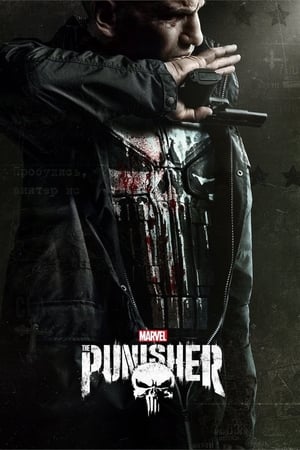
The Punisher would later find greater success on television, with Jon Bernthal's acclaimed portrayal in Netflix's Daredevil and his own spin-off series. The 2004 film remains an interesting artifact of early-2000s comic book cinema—a period when studios were still figuring out how to translate darker Marvel properties to the screen before the MCU established its dominant template.

The Punisher is a fictional antihero created by writer Gerry Conway and artists John Romita Sr. and Ross Andru, first appearing in The Amazing Spider-Man #129 in February 1974. The character, whose real name is Frank Castle, is a vigilante who wages a one-man war on crime using lethal methods, driven by the brutal murder of his wife and children by the mob. Unlike most Marvel heroes, the Punisher has no superpowers, relying instead on military training, an arsenal of weapons, and an unyielding determination.
The character was initially introduced as a foil for Spider-Man but quickly gained popularity, leading to his own limited series in the 1980s and an ongoing title in the 1990s. The Punisher's iconic skull emblem, originally designed by John Romita Sr., has become one of the most recognizable symbols in comic book culture. Over the decades, writers like Garth Ennis have defined the character's voice, blending gritty crime drama with dark humor and intense violence.
The Punisher's cultural impact extends beyond comics, sparking debate about vigilantism and justice. His stories often explore the psychological toll of trauma and the moral ambiguity of extrajudicial violence. The character has remained a staple of Marvel Comics for over fifty years, appearing in numerous series, crossovers, and alternate universe tales.
The Punisher film collection comprises a series of standalone, unconnected adaptations of the Marvel Comics antihero Frank Castle. Originating in the late 1980s, these films each offer a distinct interpretation of the character, reflecting the evolving cinematic landscape and the enduring, gritty appeal of a vigilante who operates entirely outside the law. Unlike a traditional franchise with a continuous narrative, this collection is defined by its reboots, with each entry presenting a new actor and a fresh take on the character's origin and methodology. The core narrative remains consistent: a former military man, traumatized by the murder of his family, wages a one-man war on crime using lethal force, symbolized by his iconic skull emblem. The collection's lack of interconnected continuity allows each film to function as a self-contained exploration of vengeance and justice, experimenting with tone from 1980s action to psychological thriller and stylized, ultra-violent spectacle. While none of the films achieved major commercial or critical success upon release, they have collectively cultivated a cult following, appreciated for their distinct, often underrated, contributions to the comic book movie genre. The collection stands as a testament to the character's provocative nature, which has repeatedly drawn filmmakers to attempt capturing his brutal, uncompromising essence on screen.