🎬 Bloodsport (1988)
Part of Bloodsport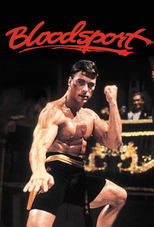
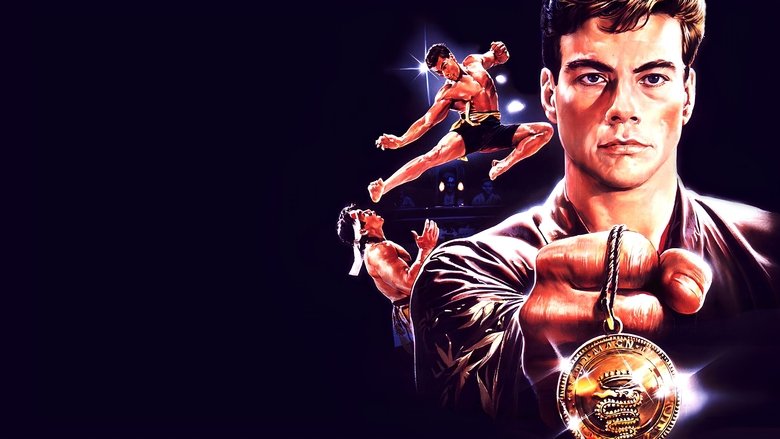
Bloodsport is a 1988 American martial arts film that famously launched Jean-Claude Van Damme to stardom, but its most fascinating element has always been its purported basis in reality. The film was marketed as a true story, following U.S. Army Captain Frank Dux as he goes AWOL to compete in the Kumite, a secret, no-holds-barred fighting tournament in Hong Kong. The real Frank Dux served as the film's fight choreographer and technical advisor, and the screenplay was directly adapted from the larger-than-life claims he had been telling for years, most notably in a November 1980 Black Belt magazine article.
The true story behind Bloodsport is, ironically, one of the great hoaxes in martial arts cinema. The real Frank Dux claimed to have been trained as a ninja by a Japanese master, to have won a secret 60-round tournament in the Bahamas in 1975, and to have later worked on covert missions for the CIA. However, investigations by the Los Angeles Times and others found no evidence for the Kumite's existence, and Dux's military records revealed he never left the United States during his service. Screenwriter Sheldon Lettich later admitted that Dux had fabricated his entire legend, a fact that only adds to the film's mystique.
Despite its dubious origins, Bloodsport became a massive commercial success, grossing $50 million worldwide on a shoestring budget of less than $2.5 million. The film's gritty, tournament-style structure and Van Damme's athletic charisma—showcased in his signature splits and spinning kicks—helped revitalize the American martial arts film genre in the late 1980s. The movie also featured a memorable villain in Bolo Yeung's Chong Li and a surprisingly tender subplot involving Dux's friendship with fellow fighter Ray Jackson, played by Donald Gibb.
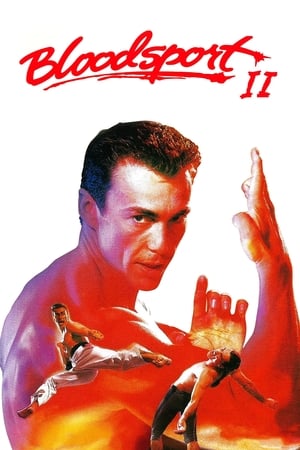
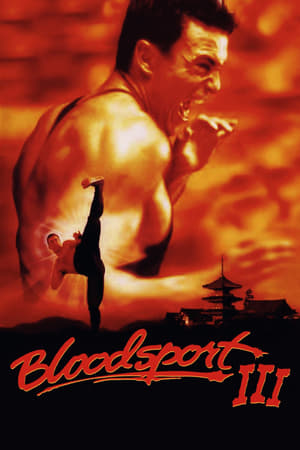
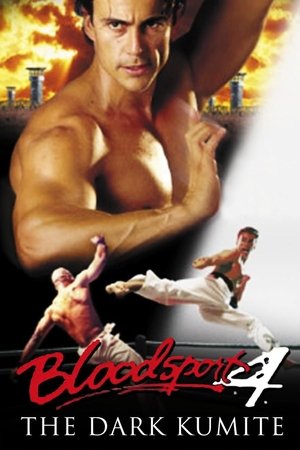
The legacy of Bloodsport extends beyond its box office success. It has been credited as an early influence on the development of mixed martial arts, inspiring future fighters with its depiction of an international, multi-discipline combat tournament. The film spawned several sequels within the Bloodsport collection, though none featured Van Damme, and it remains a beloved cult classic that perfectly encapsulates the excess and earnestness of 1980s action cinema.

Frank William Dux is a Canadian-American martial artist and fight choreographer whose self-professed life story served as the basis for the 1988 film Bloodsport. Born in Toronto in 1956, Dux claims he was trained as a ninja in Japan by a master named Senzo Tanaka, and that in 1975 he secretly participated in and won a clandestine, full-contact mixed martial arts tournament called the Kumite, held in the Bahamas. He further asserts that he set multiple world records during the tournament, including the fastest knockout and most consecutive knockouts.
Dux's extraordinary tales first reached a wide audience through a feature article in the November 1980 issue of Black Belt magazine, where he detailed his experiences in the supposed underground fighting circuit. He later expanded on his life story in his 1996 memoir, The Secret Man: An American Warrior's Uncensored Story, which also included claims of working as a covert operative for the Central Intelligence Agency on secret missions in Southeast Asia.
Virtually all of Frank Dux's major claims have been heavily disputed and widely debunked. Investigations by the Los Angeles Times and other outlets found no evidence for the existence of the Kumite or his ninja master, and his military records show he never served overseas or received the medals he claimed. Despite the controversy, his colorful and unverifiable story captured the imagination of screenwriters and became the foundation for a cult classic martial arts film, cementing his bizarre legacy in pop culture.
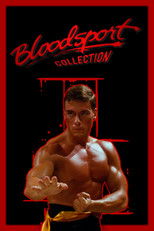
The Bloodsport collection is a series of American martial arts action films that began in the late 1980s, capitalizing on the era's fascination with underground combat and Eastern fighting disciplines. Inspired by the disputed claims of martial artist Frank Dux, the original story introduced audiences to the secretive, no-holds-barred tournament known as the Kumite, where elite fighters from around the world compete in a brutal test of skill and endurance. The narrative framework established a template of honor-bound warriors facing corrupt officials, personal vendettas, and the physical demands of full-contact competition, all set against an exotic, clandestine backdrop. The series was shaped by key creative figures like Sheldon Lettich, who helped define its blend of visceral fight choreography and straightforward storytelling. Over time, the collection expanded through direct-to-video sequels that continued to explore the Kumite's legacy, shifting focus to new protagonists while retaining the core elements of tournament structure and cross-cultural martial arts clashes. Though the later entries did not achieve the same cultural impact as the original, they sustained the series' presence in the home video market and among dedicated genre enthusiasts. Thematically, the collection consistently examines the tension between personal glory and ethical conduct, as fighters must often choose between victory at any cost and adherence to a code of honor passed down by their mentors. This moral dimension, coupled with the spectacle of diverse fighting styles—from Muay Thai and Capoeira to traditional kung fu—gives the series a distinct identity within the broader landscape of action cinema. Culturally, the Bloodsport collection holds a notable place in the popularization of mixed martial arts concepts in Western media before the rise of organizations like the UFC. Its influence can be seen in subsequent tournament-based films and video games, and it contributed to the international stardom of its lead performers. While critical reception has varied, the collection endures as a cult favorite, appreciated for its earnest portrayal of martial arts philosophy and its energetic, unpolished fight sequences that capture a formative period in action filmmaking.