🎬 Scarface (1983)
Remake of
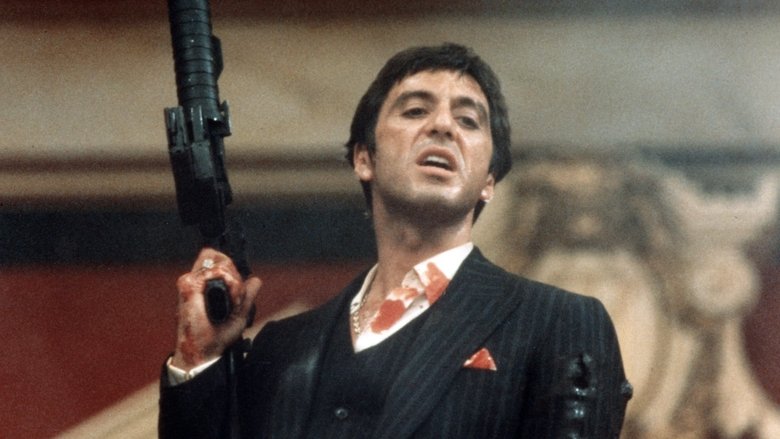
Brian De Palma's 1983 Scarface is less a faithful adaptation of Armitage Trail's novel than a radical reinvention of it, transposing the story from Prohibition-era Chicago to the sun-drenched, blood-soaked world of 1980s Miami. Oliver Stone's screenplay replaces the Italian-American Tony Guarino with Tony Montana, a Cuban refugee who arrives during the Mariel boatlift and claws his way up through the cocaine trade. The shift in ethnicity, geography, and narcotic of choice was not cosmetic — it reflected a new American underworld, and it transformed the story into a blistering allegory about the dark side of the American Dream during the Reagan era.
The production itself was nearly as turbulent as its protagonist's rise. Sidney Lumet was originally set to direct but departed over creative differences, wanting a more explicitly political film and balking at the sheer volume of violence. De Palma stepped in, and Stone — himself battling cocaine addiction at the time — wrote the script in Paris, far from his suppliers, channeling his personal experience into the material. Al Pacino, who had developed the project with producer Martin Bregman, delivered a performance of operatic intensity, crafting Tony Montana as a snarling, tragic antihero whose ambition outpaces his judgment. Michelle Pfeiffer's casting as Elvira was hard-won by Bregman over the objections of Pacino and De Palma, and her icy, detached performance became one of the film's most memorable elements.
Upon release, Scarface was savaged by many critics, who found it excessive, vulgar, and nihilistically violent — the film famously struggled with the MPAA over its X rating before securing an R. Yet time has been extraordinarily kind to it. The film's unflinching excess has come to be seen as the point, a grotesque mirror held up to greed-fueled capitalism. Its influence on hip-hop culture alone is staggering — Montana became a patron saint of aspirational swagger — and lines like "Say hello to my little friend" have passed permanently into the cultural lexicon. What began as a critical punching bag is now widely regarded as one of the defining crime films of its era, a garish, violent, and weirdly mythic saga that honors Trail's original themes of ambition and self-destruction while burning its own unmistakable path.

Scarface is a 1930 crime novel by American author Armitage Trail, the pen name of Maurice Coons. The story follows Tony Guarino, a ruthless Italian-American gangster who rises to power in the Prohibition-era Chicago underworld through violence and cunning. The novel was inspired by the real-life exploits of Al Capone, and its title refers to the facial scar that both the fictional protagonist and Capone bore.
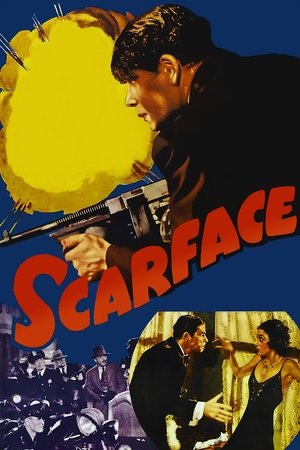
The novel was published in 1929 and quickly gained attention for its gritty, unflinching portrayal of organized crime. Though not a major bestseller upon release, it became influential after being adapted into the classic 1932 film Scarface, directed by Howard Hawks. Trail's work is considered an early example of the hardboiled crime genre, and its themes of ambition, corruption, and violent downfall have resonated through multiple adaptations, cementing its place in American popular culture.