🎬 Exorcist II: The Heretic (1977)
Part of The Exorcist
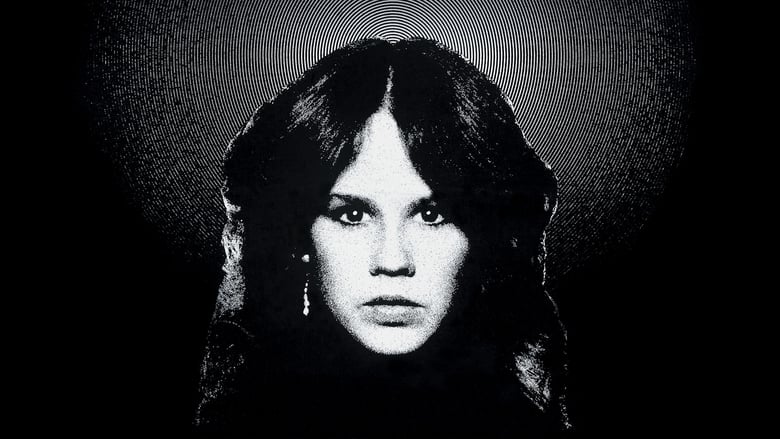
Exorcist II: The Heretic is the 1977 sequel to the groundbreaking 1973 film The Exorcist, which itself was adapted from William Peter Blatty's 1971 novel of the same name. Directed by John Boorman and written by William Goodhart, the film picks up four years after the original, with a now sixteen-year-old Regan MacNeil (Linda Blair) still recovering from her demonic ordeal. The plot follows Father Philip Lamont (Richard Burton) as he investigates the death of Father Merrin and uncovers a connection between Regan and a demonic force in Africa.
Despite a strong cast that included Louise Fletcher, Max von Sydow, and James Earl Jones, the film was widely panned by critics and audiences alike. Its bizarre mix of science fiction, mysticism, and horror, along with a meandering plot, led many to consider it one of the worst sequels ever made. The negative reception was so severe that it stalled the franchise for over a decade, until the more faithful The Exorcist III was released in 1990, adapted from Blatty's own novel Legion.
Interestingly, Exorcist II: The Heretic was rushed into production by Warner Bros. after the success of Fox's The Omen in 1976, hoping to capitalize on the renewed interest in demonic horror. The film's troubled production included multiple script rewrites and a director who later admitted he had no affinity for the original material. While it remains a curiosity for horror completists, it is largely remembered as a cautionary tale of how not to craft a sequel to a beloved classic.

The Exorcist is a 1971 horror novel by American writer William Peter Blatty. The book details the demonic possession of eleven-year-old Regan MacNeil, the daughter of a famous actress, and the two priests who attempt to exorcise the demon. Inspired by a 1949 case of demonic possession and exorcism that Blatty heard about while he was a student at Georgetown University, the novel became a literary phenomenon upon its release, spending over a year on the New York Times bestseller list. Blatty's work explores profound themes of faith, doubt, and the nature of evil, blending visceral horror with theological inquiry. The novel's success spawned a major film adaptation and numerous sequels, cementing its place as a cornerstone of modern horror literature.
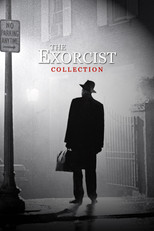
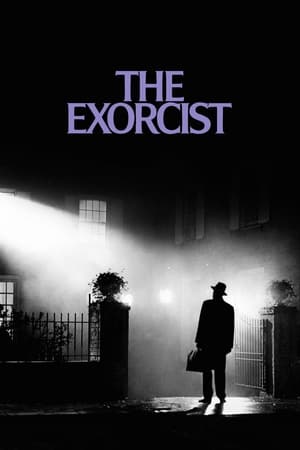
The Exorcist collection stands as one of horror cinema's most enduring and psychologically complex explorations of faith, evil, and the supernatural. Originating from William Peter Blatty's 1971 novel—itself inspired by a reported case of demonic possession in the 1940s—the series transformed a single story of a possessed child into a multi-generational meditation on spiritual warfare. The 1973 film adaptation, directed by William Friedkin, shattered box office records and earned ten Academy Award nominations, including a historic Best Adapted Screenplay win, proving that horror could achieve both critical acclaim and mainstream cultural impact. Its unflinching depiction of innocence corrupted by an ancient demonic force, Pazuzu, grounded the supernatural in a starkly realistic world of medical skepticism and clerical doubt, making the impossible feel terrifyingly real. This foundation established a thematic template that subsequent entries would revisit, challenge, and expand upon over the following decades.\n\nThe collection's evolution has been marked by bold creative swings and notorious production struggles, reflecting the difficulty of following a landmark original. Exorcist II: The Heretic took a surreal, metaphysical approach that polarized audiences, while The Exorcist III, written and directed by Blatty himself, returned to the psychological dread and theological weight of the first film, earning critical reappraisal over time. The early 2000s saw an unprecedented situation where two competing prequels—Exorcist: The Beginning and Dominion: Prequel to the Exorcist—were produced back-to-back, each offering a radically different vision of Father Merrin's first encounter with Pazuzu. This unusual chapter in the collection's history underscores the property's persistent, almost obsessive hold on filmmakers and audiences alike.\n\nAcross its entries, The Exorcist collection consistently probes the fragility of belief and the intimate nature of evil. Rather than relying solely on shock, the films often frame possession as a crisis of faith, where the battle for a soul is both physical and existential. The demonic presence is not merely a monster but a mocking, intelligent force that exploits human weakness and despair. This thematic depth allows the collection to function as more than a series of horror films; it is a sustained inquiry into the limits of science, the necessity of hope, and the terrifying possibility that darkness is not an external threat but something that can take root within the most vulnerable. The recent legacy sequel, The Exorcist: Believer, attempts to reintroduce these questions to a new generation, demonstrating that the image of a child transformed by an ancient, mocking evil remains a potent and deeply unsettling mirror for contemporary anxieties.\n\nCulturally, the collection has left an indelible mark on the horror genre and beyond. The original film's imagery—the levitation, the head rotation, the projectile vomit—has become iconic shorthand for supernatural terror, endlessly referenced and parodied. Yet the collection's true legacy lies in its willingness to treat spiritual dread with seriousness, paving the way for later horror works that blend visceral scares with philosophical weight. Despite the varying reception of its sequels and prequels, the series endures because its central conflict refuses to age: the fear of losing control, of innocence defiled, and of a universe where malevolent forces are both eternal and deeply personal. The Exorcist collection remains a cinematic chronicle of spiritual crisis, a long, dark hallway echoing with questions about what we believe when confronted with the unthinkable.