🎬 The Man in the Iron Mask (1939)
Based on novel
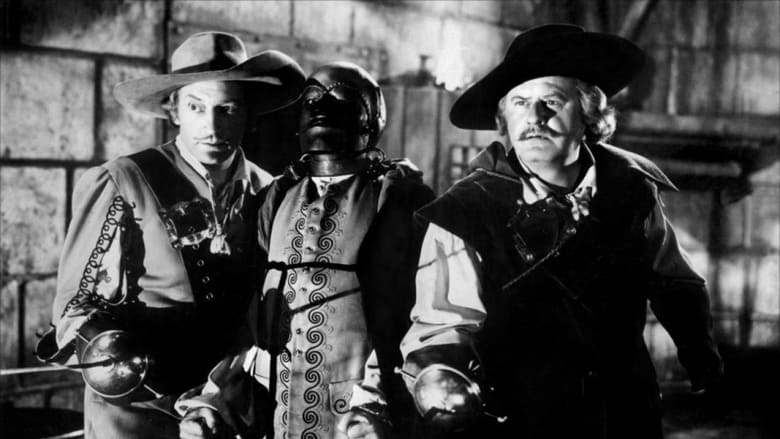
James Whale’s 1939 adaptation of The Man in the Iron Mask stands as a fascinating, if wildly unfaithful, interpretation of Alexandre Dumas’s sprawling novel. Rather than attempting to capture the melancholic twilight of the musketeers depicted in The Vicomte de Bragelonne, the film invents an entirely new origin story for the mysterious twin. In Dumas’s tale, Philippe is the legitimate, secretly imprisoned elder brother of Louis XIV, a political threat hidden away for the stability of France. Whale’s screenplay, however, transforms him into a younger twin born mere minutes after Louis, swiftly spirited away to Gascony to be raised by d’Artagnan himself. This foundational change shifts the narrative from a complex political conspiracy involving the ambitious Fouquet and the aging musketeers into a more streamlined, swashbuckling tale of switched identities and palace intrigue.
The film compresses the novel’s vast scope, focusing almost exclusively on the final section’s legend while discarding the intricate subplots of Louise de La Vallière and the restoration of Charles II. Louis Hayward delivers a memorable dual performance as the cruel, foppish Louis XIV and the kind-hearted, naive Philippe, a casting trick that allows the film to explore the nature versus nurture theme absent from the book. The aging musketeers, particularly Warren William’s d’Artagnan, are reimagined not as weary veterans confronting their obsolescence but as active, vigorous defenders of justice who orchestrate the central body-swap. This pivot toward a more conventional Hollywood adventure narrative sacrifices the novel’s elegiac tone for a satisfying, if simplistic, tale of good triumphing over tyranny.
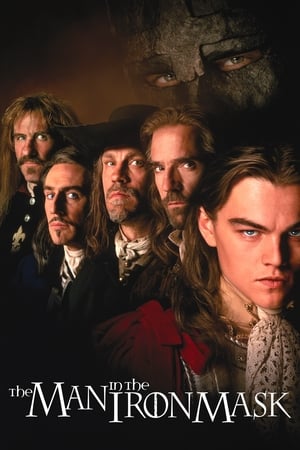
Released during Hollywood’s golden year of 1939, the film was directed by James Whale, who brought a touch of his gothic horror sensibility from Frankenstein to the masked prisoner’s plight. The production is notable for featuring the screen debut of British horror icon Peter Cushing in a minor role as a messenger. The film’s lush score by Lud Gluskin and Lucien Moraweck earned an Academy Award nomination for Best Original Score, though it lost to Herbert Stothart’s work on The Wizard of Oz. While not a major box office phenomenon, it established a template for future adaptations by cementing the dramatic twin-switch as the central plot device, a conceit that would be echoed in later versions, most notably the 1998 film starring Leonardo DiCaprio.
Critically, the film was received as a lavish and entertaining costume drama, praised for its pacing and Hayward’s performance, though purists of Dumas’s work noted the extreme liberties taken with the source material. By jettisoning the novel’s melancholic meditation on aging and loyalty, Whale’s version functions more as a standalone historical fantasy than a direct adaptation. It transforms the enigmatic prisoner from a tragic footnote in a grand saga into the heroic center of his own story, a choice that, while dramatically effective, fundamentally alters the spirit of Dumas’s final musketeer chronicle.

The Vicomte de Bragelonne, Its Ten Years Later (French: Le Vicomte de Bragelonne ou Dix ans plus tard) is a historical adventure novel by French author Alexandre Dumas, published serially from 1847 to 1850. It forms the third and longest installment in Dumas's D'Artagnan Romances, following The Three Musketeers and Twenty Years After. Written in collaboration with Auguste Maquet, the novel spans three volumes and over 260 chapters, chronicling the adventures of the aging musketeers Athos, Porthos, Aramis, and D'Artagnan during the early reign of King Louis XIV.
The story delves into political intrigue at the court of Versailles, including the construction of the opulent palace, the machinations of Superintendent of Finances Nicolas Fouquet, and the legendary mystery of the Man in the Iron Mask—a prisoner whose identity fuels conspiracy theories. Blending swashbuckling action, romance, and historical fiction, it explores themes of loyalty, honor, ambition, and the clash between old nobility and absolute monarchy. The novel draws from real historical events and figures, embellished with Dumas's signature flair for dramatic duels, secret plots, and larger-than-life heroes.
As a cornerstone of 19th-century French literature, The Vicomte de Bragelonne has had enduring cultural impact, inspiring numerous adaptations across film, television, and theater. Its rich tapestry of characters and the enigmatic Iron Mask legend have cemented its place in popular imagination, influencing perceptions of the musketeers' legacy.