🎬 El Camino: A Breaking Bad Movie (2019)
Part of Breaking Bad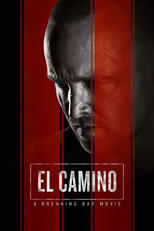
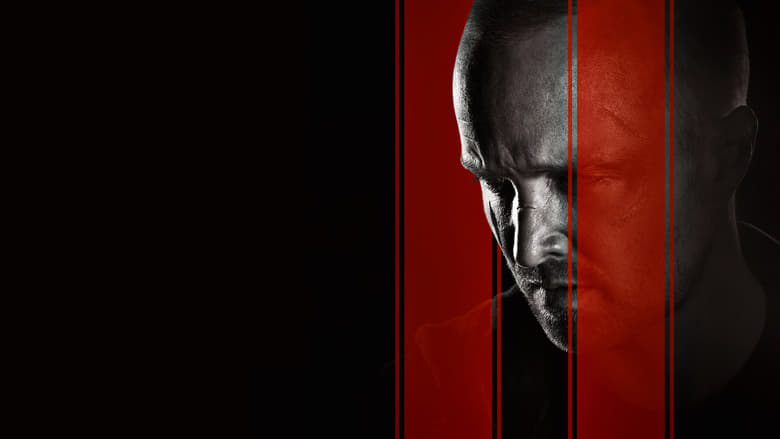
El Camino: A Breaking Bad Movie is a 2019 American neo-Western crime thriller that serves as a direct sequel and epilogue to the acclaimed television series Breaking Bad. Written, directed, and co-produced by series creator Vince Gilligan in his feature film directorial debut, the story picks up immediately after the events of the series finale, following the fugitive Jesse Pinkman as he grapples with his traumatic past and desperately seeks a path to freedom and a fresh start.
Aaron Paul reprises his Emmy-winning role as Jesse Pinkman, delivering a powerful performance that anchors the film's tense, character-driven narrative. The movie features the return of several key Breaking Bad actors, including Jesse Plemons as the chilling Todd Alquist, Krysten Ritter as Jane Margolis, and a poignant appearance by Robert Forster as Ed Galbraith, the vacuum repairman who specializes in new identities. Forster's performance is particularly bittersweet, as he passed away on the very day of the film's release, making it one of his final on-screen roles.
Produced in secret under the code name 'Greenbrier,' the project was kept tightly under wraps until a surprise trailer dropped on Netflix in August 2019, generating massive excitement among fans. Principal photography took place in New Mexico over nearly 50 days, capturing the stark, sun-baked landscapes that were so integral to the original series. The film was released globally on Netflix and received a limited theatrical run, earning critical praise for its suspenseful storytelling, Paul's performance, and its ability to provide a satisfying, meditative closure to Jesse Pinkman's harrowing journey.

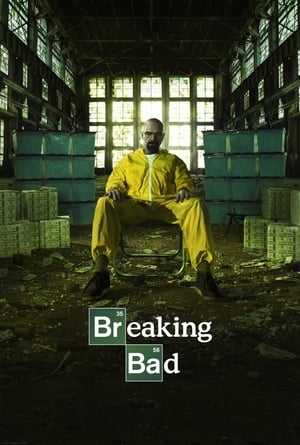
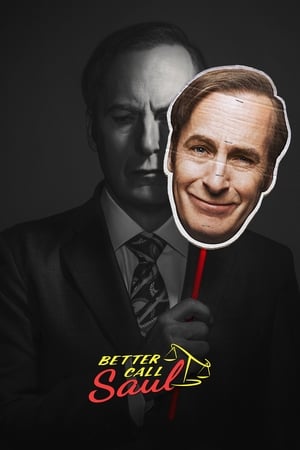
The Breaking Bad collection is an American neo-Western crime saga created by Vince Gilligan, unfolding primarily in Albuquerque, New Mexico. It traces the moral decay of individuals entangled in the methamphetamine trade, examining how pride, desperation, and secrecy can transform ordinary people into agents of their own destruction. Across its interconnected narratives, the collection asks fundamental questions about identity, consequence, and the limits of self-justification, all delivered through a blend of suspense, dark humor, and unflinching tragedy. The stark desert landscapes of Albuquerque serve as more than a setting—they mirror the isolation and inner desolation of characters living on the margins of society.\n\nThe collection spans multiple decades of storytelling, moving backward and forward in time to explore a shared criminal ecosystem from different perspectives. It began with the flagship series *Breaking Bad* (2008–2013), which follows Walter White’s transformation from a mild-mannered chemistry teacher into a ruthless drug kingpin. This was followed by the prequel series *Better Call Saul* (2015–2022), which deepens the backstory of the morally compromised lawyer Saul Goodman and introduces new, richly drawn figures whose fates intertwine with the original narrative. The feature film *El Camino: A Breaking Bad Movie* (2019) provides a coda to one of the central characters, offering closure while remaining firmly rooted in the collection’s thematic concerns.\n\nWidely regarded as a pinnacle of the so-called golden age of television, the Breaking Bad collection has earned extensive critical acclaim and numerous awards. Its meticulous visual style, deliberate pacing, and layered character work set a benchmark for serialized storytelling. The collection’s approach to expansion—where supporting players evolve into protagonists of their own tragedies—demonstrates how a shared universe can grow through intimacy and psychological depth rather than spectacle. This narrative architecture has inspired dedicated fan culture, academic analysis, and a lasting influence on the medium’s ambition.\n\nBeyond its core live-action works, the collection’s cultural footprint extends to short-form animation, companion talk shows, video games, and an international adaptation, each reflecting its broad resonance. At its heart, the Breaking Bad collection remains a profound examination of human fallibility, charting the ripple effects of choices made in the shadows and the steep price of believing the ends justify the means.