
🎬 The King of Kings (2025)
Based on novel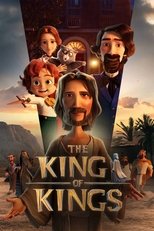
The King of Kings (2025) is an animated Christian film written and directed by Seong-ho Jang, loosely inspired by Charles Dickens's posthumously published children's book The Life of Our Lord. The film employs a creative framing device: Charles Dickens, voiced by Kenneth Branagh, begins to tell his son Walter a story but is interrupted by the boy's rowdy imagination. To settle him, Dickens relates the story of Jesus Christ, promising a king greater than any earthly ruler. As the tale unfolds, Walter—reluctant at first—becomes captivated, picturing himself and his cat Willa journeying alongside Jesus through the Gospels.
The cast features a star-studded lineup including Oscar Isaac as Jesus, with Uma Thurman, Mark Hamill, Pierce Brosnan, Roman Griffin Davis, Forest Whitaker, and Ben Kingsley also lending their voices. The narrative moves through the Nativity, Christ's ministry, miracles, and the Passion, while Dickens explains the meaning of Jesus's sacrifice through the story of Adam and Eve and original sin. The film blends Dickens's real-life manuscript—written for his own children and kept private until 1934—with the visual language of animation to make the biblical story accessible to modern families.
Released by Angel Studios on April 11, 2025, The King of Kings received mixed reviews from critics but proved a box office success, grossing over $83 million. The adaptation takes considerable liberties with its source material, transforming a straightforward written Gospel summary into a layered narrative about storytelling, parental love, and the power of encountering Jesus through a child's eyes. Though some critics found the tonal shifts jarring, audiences connected with its earnest message and heartfelt performances.

The Life of Our Lord is a retelling of the life of Jesus of Nazareth written by Charles Dickens exclusively for his young children. Dickens composed the manuscript between 1846 and 1849, reading it aloud to his family each Christmas, and it was kept strictly private during his lifetime. He forbade publication and directed that it be held within the family until the last of his children had died.
The book presents a simple and accessible account of Jesus's birth, ministry, miracles, death, and resurrection, written with warmth and moral clarity. It opens with Dickens's direct address to his children, expressing his wish that they know about the history of Jesus Christ, whom he describes as the kindest and most gentle person who ever lived.
The manuscript remained unpublished for decades, passed down through the family after Dickens's death in 1870. It was finally published in 1934, revealing a personal and devotional side of the celebrated author. Though less known than his novels, The Life of Our Lord reflects Dickens's deep Christian faith and his commitment to teaching his children moral values, and it has since been appreciated as an intimate work of religious literature.