📺 The Handmaid's Tale (2017)
Part of The Handmaid's Tale Franchise
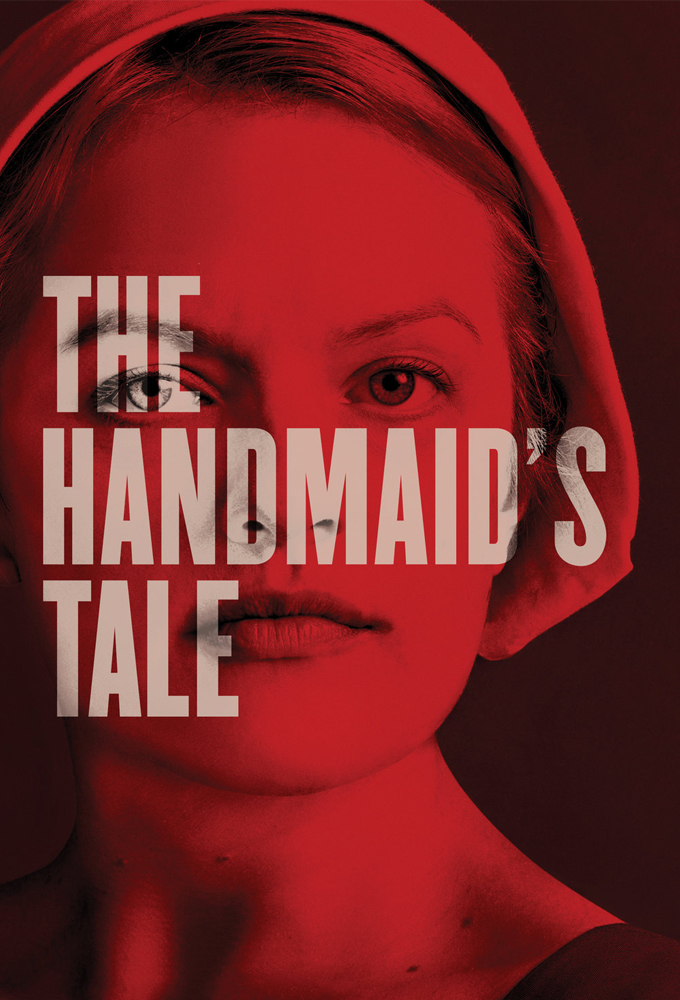
When Hulu premiered Bruce Miller's adaptation of Margaret Atwood's seminal novel in April 2017, it arrived with an almost eerie prescience, its crimson cloaks and white bonnets immediately becoming a global symbol of feminist resistance. The series wisely expands the novel's tightly focused first-person narrative, pulling back the curtain on a Gilead that Offred could only glimpse from her circumscribed existence. By giving names and backstories to characters who were ciphers in the book—transforming the chauffeur Nick into a complex intelligence asset, and elevating the minor character of Moira into a beacon of defiant rebellion—the show builds a richer, more politically intricate world. Crucially, it also centers the story on the experiences of characters of color, a dimension largely absent from Atwood's original vision, most notably through the harrowing journey of Moira, played with fierce vulnerability by Samira Wiley.
The first season hews closely to the novel's plot, often lifting Atwood's chillingly poetic prose directly into Elisabeth Moss's interior voiceovers, but subsequent seasons venture boldly into uncharted territory. Freed from the novel's ambiguous ending, the series follows June Osborne's evolution from traumatized survivor to a hardened revolutionary leader, a transformation that has polarized critics and fans alike. The show's visual language, with its saturated palettes and claustrophobic close-ups, translates the novel's psychological horror into a visceral, almost unbearable viewing experience. This aesthetic, coupled with a soundtrack that weaponizes pop songs as acts of sonic defiance, created a cultural phenomenon that earned the series eight Primetime Emmy Awards in its first season, including Outstanding Drama Series—a landmark moment that established Hulu as a serious contender in the streaming wars.
As the series progressed beyond Atwood's original text, it faced the challenge of sustaining its narrative momentum without the novel's taut structure. The later seasons delve deeper into the geopolitical mechanics of Gilead, the Canadian refugee experience, and the moral complexities of resistance, sometimes drawing criticism for prolonging June's captivity. Yet this expansion allowed the show to explore themes only hinted at in the book, such as the complicity of women in patriarchal systems through the chillingly pious Aunt Lydia, brilliantly reimagined by Ann Dowd. The series' willingness to sit in discomfort, to deny easy catharsis, and to mirror real-world erosions of reproductive rights cemented its status not just as an adaptation, but as an urgent, ongoing cultural dialogue with its source material, one that will conclude with a sixth and final season before spawning a sequel series based on Atwood's own literary follow-up, The Testaments.

The Handmaid's Tale is a dystopian novel by Canadian author Margaret Atwood, first published in 1985 by McClelland and Stewart. Set in the near-future Republic of Gilead, a totalitarian theonomy that has replaced the United States, the story follows Offred, a woman forced into the role of a Handmaid—a fertile woman assigned to bear children for the ruling elite. The novel explores themes of female subjugation, loss of identity, and the weaponization of religion and reproductive rights.
The novel was inspired by historical events and regimes that controlled women's bodies, and Atwood has stated that every atrocity depicted in the book has a real-world precedent. It won the Governor General's Award for English-language fiction in 1985 and the first Arthur C. Clarke Award in 1987, and was shortlisted for the Booker Prize. The book became a modern classic, frequently taught in schools and universities, and has remained a touchstone in discussions of feminism and authoritarianism.
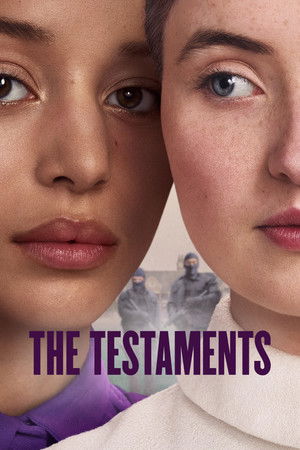
A sequel novel, The Testaments, was published in 2019 and won the Booker Prize, continuing the story fifteen years after the events of the original novel.
A foundational pillar of modern speculative fiction, The Handmaid's Tale collection explores the terrifyingly plausible descent of a democratic society into a totalitarian theocracy. Originating with Margaret Atwood’s seminal 1985 novel, the narrative introduced Gilead, a dystopian regime built on environmental collapse and plummeting birth rates, where fertile women are forced into ritualized sexual servitude. The story, told through the unflinching testimony of one such Handmaid, Offred, quickly transcended its literary origins to become a powerful and enduring symbol of resistance against patriarchal control. The collection’s chilling power lies not in futuristic technology, but in its methodical depiction of a system that subjugates women by seizing control of their bodies, language, and identities.
The collection’s cultural impact magnified exponentially with its adaptation into a critically acclaimed television series, which expanded the world beyond the confines of the original novel. While the first season offered a faithful, harrowing visualization of Atwood’s book, subsequent seasons ventured into uncharted narrative territory, detailing the violent internal mechanics of Gilead and the wider web of international diplomacy and refugee crises it creates. This visual medium deepened the psychological horror, transforming the characters into global icons of fury and endurance, and the show’s signature crimson Handmaid’s robes and white bonnets became a universal shorthand for protest against the erosion of women’s rights worldwide.
The narrative arc finds its natural completion with The Testaments, Atwood’s Booker Prize-winning sequel that shifts the perspective from a single trapped Handmaid to a multi-generational chorus of women. By jumping fifteen years into the future, the saga evolves from a story of survival into a masterful spy thriller chronicling the regime’s internal rot and eventual downfall. Together, the works form a cohesive, terrifying, and ultimately hopeful diptych about how totalitarianism is not just imposed from the top down but can be brought down from within. The collection stands as a monumental literary and cultural touchstone, a multi-layered examination of power, complicity, and the indispensable act of bearing witness.