🎬 Five Nights at Freddy's (2023)
Part of Five Nights at Freddy's
The 2023 film adaptation of Five Nights at Freddy's brings Scott Cawthon's indie horror phenomenon to the big screen after nearly a decade of development. Produced by Blumhouse Productions and directed by Emma Tammi, the film stars Josh Hutcherson as Mike Schmidt, a troubled young man who takes a security job at the abandoned Freddy Fazbear's Pizza. The movie draws primarily from the lore of the first game while incorporating elements from across the series, including the central mystery of murdered children whose spirits possess the restaurant's animatronic mascots.
The journey from game to film was notoriously difficult. Warner Bros. initially acquired the rights in 2015, with Gil Kenan attached to direct. After years of stalled development and creative differences, the project moved to Blumhouse in 2017. Chris Columbus was later brought on to write and direct, but he too departed the project. Emma Tammi finally took the helm in 2022, co-writing the screenplay with Cawthon and Seth Cuddeback. Cawthon's deep involvement as a writer and producer ensured the film remained faithful to the spirit and intricate mythology of the games, a key concern for the franchise's passionate fanbase.
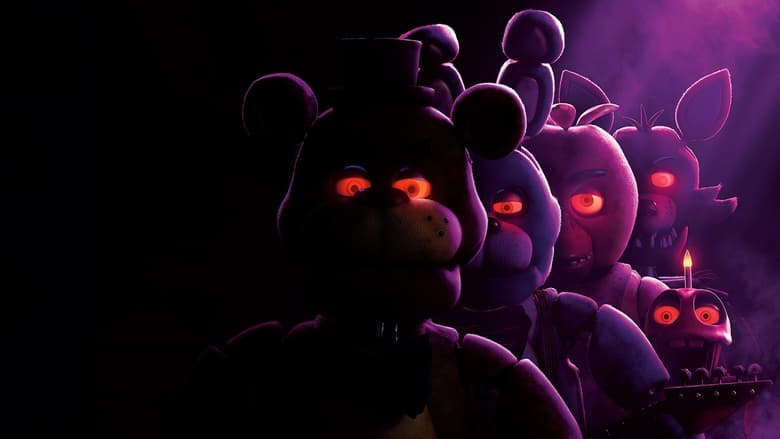
The film expands significantly on the game's minimalist narrative, giving Mike a personal backstory involving a younger sister and a traumatic past that ties directly into the pizzeria's dark history. Matthew Lillard delivers a memorable performance as the career counselor Steve Raglan, whose true identity as the serial killer William Afton is a major reveal for fans. The practical effects used to bring Freddy, Bonnie, Chica, Foxy, and the sinister Golden Freddy to life were created by Jim Henson's Creature Shop, lending the animatronics a tangible, physical presence that honors the source material's lo-fi horror roots.
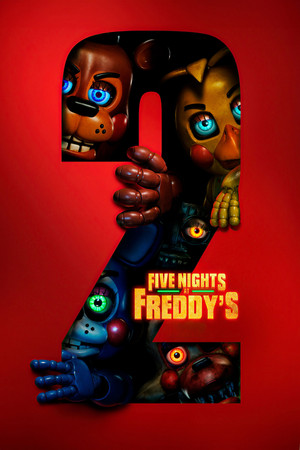
Despite mixed critical reviews, Five Nights at Freddy's was a massive commercial success, grossing over $290 million worldwide against a $20 million budget, making it Blumhouse's highest-grossing film. It resonated strongly with the game's dedicated fanbase, who appreciated the deep-cut lore references and cameo appearances by YouTube personalities associated with the franchise. A sequel, Five Nights at Freddy's 2, is already in development, promising to adapt the events of the second game and further explore the haunted history of Freddy Fazbear's Pizza.

Five Nights at Freddy's is an indie point-and-click survival horror video game created by Scott Cawthon. It was first released for Windows in August 2014, and quickly became a viral sensation due to its unique gameplay mechanics and deeply unsettling atmosphere. The player assumes the role of a night security guard at Freddy Fazbear's Pizza, a dilapidated family restaurant reminiscent of Chuck E. Cheese's. Armed only with a limited power supply and a network of security cameras, the player must survive five nights (and later, additional custom nights) while avoiding homicidal animatronic characters that roam the building after hours.
The game's horror relies not on action or combat, but on resource management, jump scares, and a pervasive sense of dread. The animatronics—Freddy Fazbear, Bonnie the Bunny, Chica the Chicken, and Foxy the Pirate Fox—become more active and unpredictable as the nights progress. Cawthon's minimalist storytelling, conveyed through phone messages from a previous guard and environmental clues, hints at a much darker backstory involving the disappearance of children and the possible supernatural possession of the mascots.
Five Nights at Freddy's spawned a massive multimedia franchise, including numerous sequels, spin-off games, novels, and a feature film. It is widely credited with revitalizing the indie horror genre in the mid-2010s and inspiring a wave of similar games. The series is known for its intricate, fan-driven lore, which has been pieced together over years through hidden minigames, cryptic newspaper clippings, and Cawthon's own cryptic hints.
The Five Nights at Freddy's series is a multimedia horror collection that originated in 2014 with the release of the first video game by independent developer Scott Cawthon. Conceived as a pivot from a poorly received family-friendly project, the series introduced a tense survival experience where players must endure night shifts while monitoring malfunctioning animatronic characters. The core gameplay loop—managing limited power and using security cameras to track threats—created a uniquely claustrophobic atmosphere that quickly captivated audiences. This foundation of resource management and jump scares established a new benchmark for indie horror, proving that a simple premise could deliver profound psychological dread.
The collection is celebrated for its intricate, environmental storytelling. Rather than relying on explicit exposition, the narrative is woven through cryptic minigames, audio logs, and subtle visual details scattered across its entries. This approach has fostered a dedicated community of theorists and content creators who meticulously piece together a dark backstory involving corporate negligence, tragic accidents, and supernatural possession. The lore's complexity and ambiguity have become a hallmark, transforming each release into a communal puzzle that extends far beyond the screen.
Over time, the property has expanded significantly beyond its gaming roots. The series has grown to include novels, graphic novels, and a wide array of merchandise, all contributing to its cultural footprint. The transition to film, beginning with the 2023 adaptation, marked a new chapter, bringing the animatronic horror to a broader audience while retaining the core elements that defined the games. This evolution demonstrates the adaptability of the concept, moving from a single indie title to a recognizable name in horror entertainment.
The enduring appeal of the series lies in its ability to blend accessible mechanics with a deeply unsettling premise. Its influence is evident in the wave of similar survival-horror experiences that followed, as well as in the vibrant fan culture that continues to produce art, theories, and fan games. By turning a critical setback into a creative triumph, the collection stands as a testament to the power of atmospheric design and community engagement in modern storytelling.