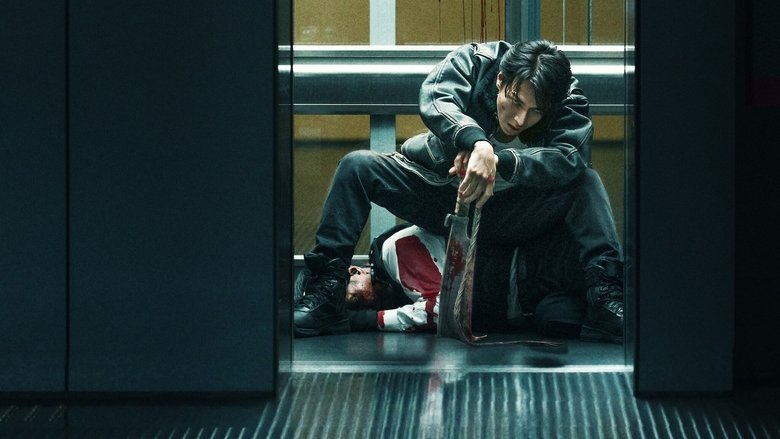
🎬 Demon City (2025)
Based on manga
Demon City (2025) is a Japanese live-action film directed by Seiji Tanaka and starring Toma Ikuta as Shuhei Sakata. The film is an adaptation of the manga series Oni Goroshi (鬼ゴロシ) by Masamichi Kawabe, which was serialized in Weekly Manga Goraku from July 2020 to November 2024. The manga ran for 15 volumes and established itself as a gritty revenge thriller in the seinen action genre.
The film follows the same core premise as the manga: Sakata, a former hitman, sees his family murdered by five Oni-masked assailants and is left for dead. After spending 12 to 15 years in a coma or prison hospital (depending on the version), he recovers and embarks on a violent quest for vengeance. The adaptation was produced by Netflix and released on February 27, 2025, with a runtime of 107 minutes. The film's score was composed by Tomoyasu Hotei, known for his work on Kill Bill.
While the film stays true to the manga's dark tone and revenge narrative, live-action adaptations of manga often condense or rearrange storylines from the source material. The manga's longer serialization allowed for more extensive character development and subplots, while the film focuses on the central revenge arc. Demon City joins a long tradition of Japanese live-action manga adaptations, bringing Kawabe's violent vision to a global audience through Netflix's streaming platform.

First serialized in 2020, Masato Hisa’s *Oni Goroshi* (literally "Demon Killer") is a brutal and atmospheric crime manga that plunges the reader into a world of festering generational trauma and cyclical violence. The story follows Shuuhei, a man who returns to his desolate, snow-choked hometown after a decade-long prison sentence, only to find the place frozen in time, still suffocating under the iron grip of the local yakuza family. What initially presents as a straightforward revenge thriller—a man seeking bloody retribution against the demons who destroyed his life—rapidly curdles into a far more complex and nihilistic exploration of guilt. Hisa masterfully subverts the catharsis typically associated with the genre, revealing that the true horror isn’t just the monstrous acts of the gangsters, but the inescapable, toxic masculinity and inherited hatred that binds both the victim and the perpetrator.
The manga distinguishes itself through its oppressive, cinematic atmosphere, where the howling winter wind and stark, heavy inks are as oppressive as the human monsters lurking within the panels. Rather than indulging in heroic bloodshed, *Oni Goroshi* interrogates the very soul of vengeance, questioning whether a man can retain his humanity when he willingly descends into a hell of his own making. Its cultural impact lies in its uncompromising bleakness; it is a slow-burn psychological horror dressed in crime drama clothing, resonating deeply with readers for its refusal to offer easy answers. By framing the yakuza not as honourable outlaws but as parasitic demons feeding on a dying rural community, the 2020 manga tapped into a modern anxiety about societal decay, making the work a chilling, essential read for those who appreciate their noir fiction pitch-black and devoid of sentimentality.