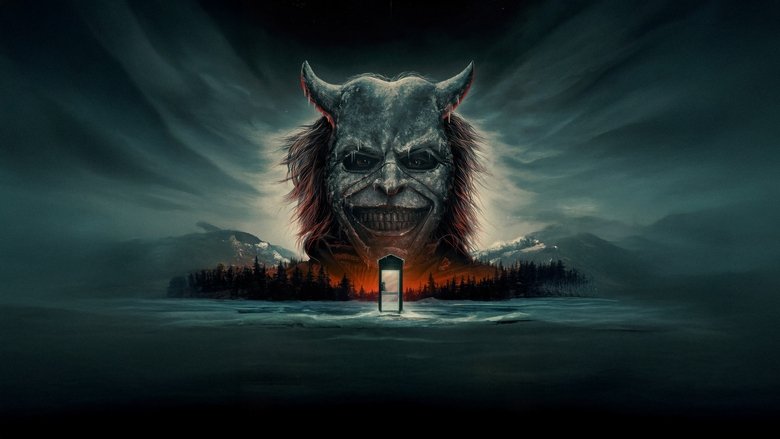
🎬 Black Phone 2 (2025)
Part of The Black Phone
"Black Phone 2" is the 2025 sequel to the 2021 hit supernatural horror film "The Black Phone," both directed by Scott Derrickson and co-written by Derrickson with C. Robert Cargill. The original film was itself an adaptation of Joe Hill's acclaimed short story of the same name, first published in 2005 in the collection "20th Century Ghosts." While the first film closely followed Hill's narrative of a kidnapped boy receiving calls from a killer's previous victims on a disconnected phone, the sequel expands the mythology beyond the source material, crafting an original story that continues the lives of the survivors.
Set in 1982, four years after the events of the first film, "Black Phone 2" follows siblings Finney Blake and Gwen, along with their friend Ernesto, as they travel to Alpine Lake Camp to investigate a series of murders from 1957. The film introduces a new supernatural layer by revealing that Gwen's mother Hope experienced similar psychic visions decades earlier, deepening the lore around the family's connection to the dead. Mason Thames, Madeleine McGraw, Jeremy Davies, and Ethan Hawke all reprise their roles, with Hawke's Grabber returning as a ghostly presence haunting the camp. Demián Bichir joins the cast, adding new dimensions to the expanding story.
The sequel premiered at Fantastic Fest in September 2025 and was released theatrically by Universal Pictures in October, earning generally positive reviews and grossing over $130 million worldwide on a $30 million budget. Critics praised the film for successfully building on the first installment's tense atmosphere while exploring the trauma and aftermath of the characters' experiences. The decision to move beyond the original short story's confines allowed Derrickson and Cargill to craft a broader narrative that functions both as a direct continuation and a standalone supernatural mystery.
As the second entry in "The Black Phone" film series, this sequel demonstrates how a compact short story can spawn a full-fledged franchise. Where Joe Hill's tale ended with Finney's escape, the films have built an entire world around the concept of psychic connections to murder victims. "Black Phone 2" leans further into the mythology, transforming what began as a tightly contained horror premise into a saga about inherited gifts, unresolved evil, and the ghosts that refuse to stay silent.

"The Black Phone" is a short horror story written by American author Joe Hill. It was first published in 2004 in the United Kingdom as part of the limited-edition anthology "20th Century Ghosts," released by PS Publishing. The collection marked Hill's debut book-length publication and later received a wider release in the United States in 2007 through HarperCollins.
The story centers on a young boy named Finney who is abducted by a serial killer known as the Grabber. Trapped in a soundproofed basement, Finney discovers a disconnected black rotary telephone mounted on the wall. Though the phone appears to be non-functional, it begins to ring, and Finney hears the voices of the Grabber's previous victims on the other end. These ghostly voices offer him guidance and clues on how to escape his captor before he becomes the next victim.
"The Black Phone" is notable for its blend of supernatural horror and psychological terror, exploring themes of isolation, resilience, and the thin boundary between the living and the dead. The story received critical acclaim and contributed to the collection winning the Bram Stoker Award for Best Fiction Collection and the British Fantasy Award for Best Collection. Its taut, claustrophobic narrative and emotionally resonant premise have made it one of Hill's most celebrated short works, eventually inspiring a successful film adaptation and establishing a franchise.

The Black Phone is a supernatural horror duology adapted from Joe Hill's short story of the same name. The series centers on a masked serial child abductor known as the Grabber and a disconnected black rotary phone that allows the spirits of his previous victims to communicate with his latest captive, offering guidance and clues for escape. Blending psychological terror with supernatural mystery, the films explore themes of childhood resilience, trauma, and the thin veil between the living and the dead. The screen adaptations were written by Scott Derrickson and C. Robert Cargill, who previously collaborated on the horror film Sinister, and are produced by Blumhouse Productions, known for its model of modestly budgeted, high-concept horror.
The first entry, released in 2022, was praised for its atmospheric tension, strong performances from its young cast, and Ethan Hawke's unsettling portrayal of the antagonist. It grounds its supernatural premise in a period setting that evokes a sense of nostalgic dread, tapping into classic horror traditions of isolated settings, imperiled children, and vengeful spirits. The black phone itself serves as a powerful symbol of connection and hope amid despair, transforming a mundane object into a conduit for the supernatural.
A sequel, Black Phone 2, is scheduled for release in 2025, continuing the story and expanding the series' exploration of its central themes. As a duology, the collection maintains a focused narrative while building on the foundation of its source material and the creative team's signature blend of character-driven horror.