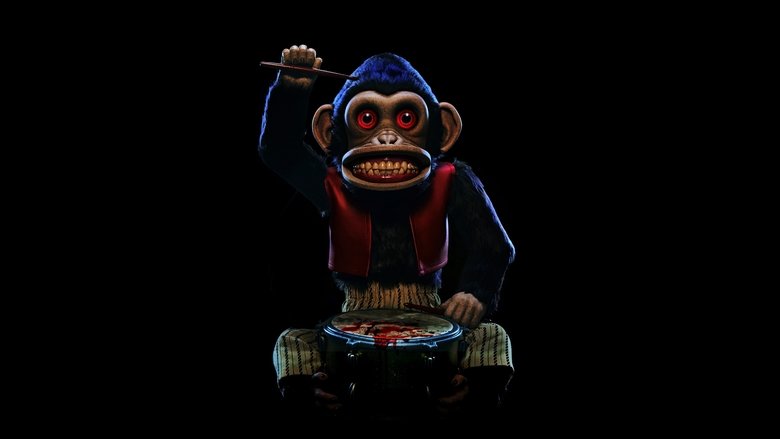
🎬 The Monkey (2025)
Based on short story
Osgood Perkins’s 2025 adaptation of Stephen King’s “The Monkey” takes a sharp left turn from its source material, transforming a brooding meditation on guilt and inevitability into a pitch-black supernatural comedy. Where King’s 1980 short story followed Hal Shelburn’s solitary, decades-long struggle against a cursed cymbal-banging toy, Perkins reimagines the tale as a twisted sibling rivalry, casting Theo James in a dual role as twin brothers Hal and Bill. This fundamental change shifts the story’s emotional core from internal dread to external conflict, as the brothers’ shared childhood trauma festers into adult resentment, with the monkey serving as both catalyst and referee for their lethal family drama.
The film’s tonal reinvention is its most audacious departure. King’s story is a masterclass in slow-building psychological horror, where the monkey’s sporadic, unpredictable activations create an atmosphere of helpless inevitability. Perkins, however, leans into the absurdity of the premise, orchestrating death scenes that are less tragic than grotesquely comedic — a harpoon gun disembowelment at an antiques shop, a hibachi chef accidentally decapitating a babysitter. This Rube Goldberg approach to mortality, produced by horror heavyweights James Wan and Jason Blum, embraces a grindhouse sensibility that has divided critics but found an appreciative audience, grossing nearly $69 million against a modest $10–11 million budget.
The adaptation also expands the monkey’s mythology, giving it a more active and almost mischievous agency. In the short story, the toy is a silent, enigmatic omen; in the film, it becomes a chaotic force capable of triggering chain reactions of widespread destruction, culminating in a finale where its uncontrolled drumming wreaks havoc across an entire town. While purists may balk at the shift from quiet dread to splatter-comedy spectacle, the film’s exploration of fate and family trauma remains surprisingly faithful to King’s thematic concerns, simply dressed in a louder, bloodier, and more irreverent costume.

The Monkey is a horror short story by Stephen King, first published in 1980 as a promotional booklet included with the November issue of Gallery magazine. It was significantly revised and reprinted in King's 1985 short story collection Skeleton Crew. The tale centers on a wind-up cymbal-banging monkey toy that mysteriously activates at irregular intervals, each time coinciding with a gruesome and freakish death of someone close to the protagonist, Hal Shelburn. Spanning Hal's childhood to adulthood, the story explores his futile attempts to destroy or dispose of the cursed toy, which persistently reappears, bringing death and dread wherever it goes.
King masterfully builds tension through the unpredictable activations of the monkey, blending supernatural horror with psychological terror as Hal grapples with guilt, fear, and the inescapable curse. The story exemplifies King's skill in transforming everyday objects into instruments of malevolent fate, delving into themes of mortality, inevitability, and the horrors lurking in childhood innocence. Its inclusion in Skeleton Crew solidified its place among King's most chilling shorter works, contributing to his reputation for crafting compact yet profoundly unsettling narratives.