📺 JoJo's Bizarre Adventure (2012)
Based on manga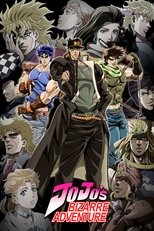
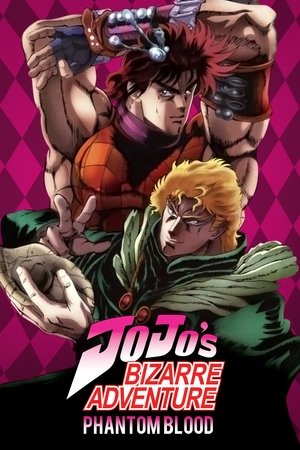
The 2012 anime adaptation of JoJo's Bizarre Adventure, produced by the then-newly formed studio David Production, was a watershed moment for the franchise. For years, the manga's hyper-stylized world was considered unadaptable due to its intricate art and flamboyant poses, but this series proved the skeptics wrong by treating Hirohiko Araki's panels as a sacred storyboard. The first season boldly tackled the entire Phantom Blood arc in a tight nine episodes, a pacing decision that streamlined the gothic melodrama of Jonathan Joestar and Dio Brando's rivalry while preserving its operatic emotional core. This compression meant some minor manga scenes were lost, but it allowed the adaptation to quickly pivot to the more dynamic and fan-favorite Battle Tendency arc, introducing the trickster hero Joseph Joestar and the ancient menace of the Pillar Men.
The adaptation's greatest triumph was its visual and auditory identity. It translated Araki's distinctive, fashion-inspired linework into fluid animation, punctuated by onomatopoeic sound effects that literally appeared on screen in vibrant, manga-style text. The use of shifting, non-literal color palettes for characters and environments—a technique directly inspired by Araki's own cover illustrations—became a signature of the series, turning every fight into a psychedelic spectacle. This was paired with an unforgettable soundtrack, most notably the 'Roundabout' ending theme by Yes, which became a viral meme for its perfectly timed cliffhanger cues, introducing a new generation to 1970s progressive rock.
While the 2012 series was a massive critical and commercial success that launched the JoJo renaissance in the West, it did make some notable alterations. The most infamous was the heavy censorship of gore during its initial Japanese broadcast, particularly in the Phantom Blood arc, where scenes of dismemberment and vampiric violence were obscured by stark black shadows. This was later corrected for the Blu-ray release, which restored the uncut brutality. The adaptation also amplified the series' inherent campiness, leaning fully into the dramatic 'JoJo poses' and delivering lines with a theatrical gravitas that, while faithful to the manga's spirit, gave the anime a uniquely self-aware and memeable flavor that defined its cultural footprint for years to come.

JoJo's Bizarre Adventure is a Japanese manga series written and illustrated by Hirohiko Araki. It was first serialized in Shueisha's Weekly Shōnen Jump magazine in 1987, before transferring to the monthly seinen magazine Ultra Jump in 2005. The series is divided into distinct story arcs, each following a different member of the Joestar family across generations, all of whom possess a star-shaped birthmark and can be identified by the recurring "JoJo" nickname.
The first arc, Phantom Blood, is set in 1880s England and introduces the series' core conflict. It follows Jonathan Joestar, a young aristocrat, as he battles his adoptive brother Dio Brando, who becomes a powerful vampire using an ancient stone mask. The story blends gothic horror, martial arts, and supernatural elements, establishing the themes of family legacy, honor, and the struggle between good and evil that would define the entire series.
Araki's work is renowned for its distinctive art style, which has evolved significantly over the decades, drawing inspiration from classical sculpture, high fashion, and Western pop culture. The series is also famous for its creative battle system, which later introduces "Stands" — psychic manifestations of a character's fighting spirit with unique abilities. JoJo's Bizarre Adventure has become one of the best-selling manga series in history, with over 120 million copies in circulation, and has spawned a massive multimedia franchise including multiple anime adaptations, video games, novels, and films.