📺 The Finder (2012)
Part of Bones Franchise
The Finder is a short-lived American procedural drama that aired on Fox in 2012, serving as a spin-off of the long-running series Bones. The backdoor pilot aired as a season six episode of Bones in April 2011, introducing viewers to Walter Sherman, a quirky former military policeman with an almost supernatural ability to locate missing people and objects. The character and premise were loosely adapted from Richard Greener's The Locator novel series, which began with The Knowland Retribution in 2006. Creator Hart Hanson transplanted the literary character from the world of Vietnam-era intelligence into a post-Iraq War setting, giving Walter a traumatic brain injury from an IED explosion as the origin of his unique gift.
The series starred Geoff Stults as Major Walter Sherman, a U.S. Army veteran whose injury left him paranoid and eccentric but also endowed him with an uncanny talent for seeing patterns and connections that others miss. Michael Clarke Duncan co-starred as Leo Knox, Walter's philosophical friend and legal advisor, in what would become one of the actor's final television roles before his death in September 2012. The show attempted to capture the same blend of procedural investigation and character-driven humor that made Bones successful, with Walter's unconventional methods frequently clashing with more traditional law enforcement approaches.
Despite the built-in audience from its Bones connection, The Finder struggled to find its footing and was cancelled by Fox after a single season of thirteen episodes. The series moved from its original Thursday night slot to Fridays midway through its run, a scheduling change that often signals a network's waning confidence. While it never achieved the cultural footprint of its parent show, The Finder remains an interesting footnote in television history as an attempt to expand the Bones universe through a character whose literary origins predate the franchise itself.

The Locator is a series of mystery thriller novels written by Richard Greener. The series follows Walter Sherman, a reclusive and highly skilled tracker known as "the Locator," who honed his abilities during the Vietnam War. Operating from a base in the Caribbean, Sherman uses his unique talents to find people and things that others cannot, often taking on cases that lead him into dangerous and complex situations.
The first book in the series, The Knowland Retribution, was published in 2006. It is a suspense-revenge thriller involving tainted meat, corporate greed, and a colorful cast of characters including a bartender with a mysterious past and a feisty New York Times obituary writer. The story takes readers from the Caribbean to New York, Atlanta, New Mexico, and the Mississippi backwoods.
A second novel, The Lacey Confession, continued the adventures of Walter Sherman. The books are known for their intricate plotting, topical themes, and the compelling, unconventional protagonist at their center. The series garnered enough attention to be loosely adapted into a television series.

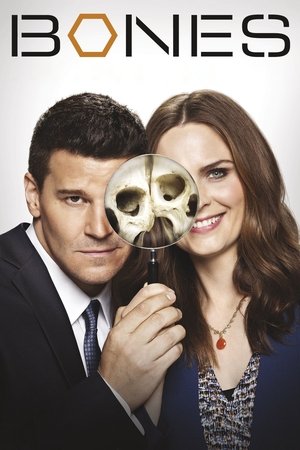
The Bones collection is a small television universe built around the long-running forensic crime drama *Bones*. Created by Hart Hanson and inspired by the work of real-life forensic anthropologist Kathy Reichs, the series premiered in 2005 and became a defining procedural of the 2000s and 2010s. Its intellectual core lies in the partnership between the hyper-rational Dr. Temperance "Bones" Brennan and the intuitive FBI agent Seeley Booth, a dynamic that explores the tension between cold logic and gut instinct. Over twelve seasons, the show evolved from a case-of-the-week format into a character-driven saga about found family, faith, and the messy intersection of science and emotion.The collection expanded narratively through a backdoor pilot, resulting in the spin-off series *The Finder*. This lighter, more whimsical procedural transplanted the core formula—an eccentric genius paired with pragmatic law enforcement—to a Florida setting, swapping forensic anthropology for a unique talent for locating lost objects and people. Though short-lived, *The Finder* demonstrated the flexibility of the central theme: an oddball expert finding their place in the world through solving puzzles.Culturally, the collection made forensic science accessible and appealing to a broad audience, inspiring interest in forensic anthropology careers. It navigated significant on-screen shifts, including the central couple’s marriage and children, without losing narrative momentum. The enduring legacy of the Bones collection is its affirmation that human connection is the ultimate mystery and solution, a sentiment that resonated deeply with viewers and cemented its status as a beloved procedural of its era.