🎬 Batman: The Long Halloween, Part Two (2021)
Part of Batman: The Long Halloween
Batman: The Long Halloween, Part Two is the second half of a two-part animated adaptation of Jeph Loeb and Tim Sale's iconic 1996-1997 DC Comics limited series. Released in 2021, this direct-to-video film concludes the sprawling noir mystery that began in Part One, as Batman, Commissioner Gordon, and a rapidly unraveling Harvey Dent close in on the Holiday killer. The decision to split the adaptation into two features was a wise one, allowing the creative team to preserve much of the graphic novel's dense plotting and atmospheric pacing rather than rushing through the year-long investigation.
The film picks up in the back half of the "Long Halloween," with the Holiday murders continuing to decimate the Falcone crime family on each major holiday. As the body count rises, the alliance between Gotham's three crusaders frays. Harvey Dent's transformation into Two-Face is the emotional centerpiece of this second part, and the film devotes significant time to his deteriorating mental state and the strain on his marriage to Gilda. The voice cast, led by Jensen Ackles as Batman and Josh Duhamel as Harvey Dent, delivers strong performances that ground the operatic material. The late Naya Rivera gives a sultry, confident turn as Catwoman in one of her final roles.
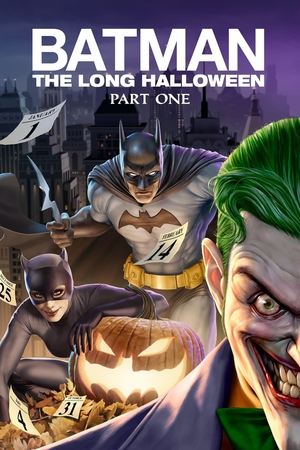
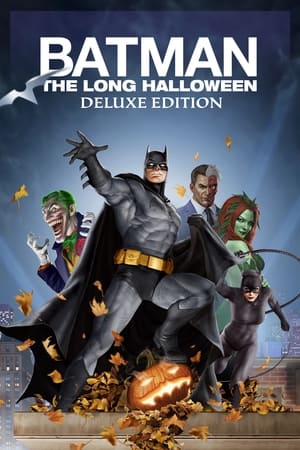
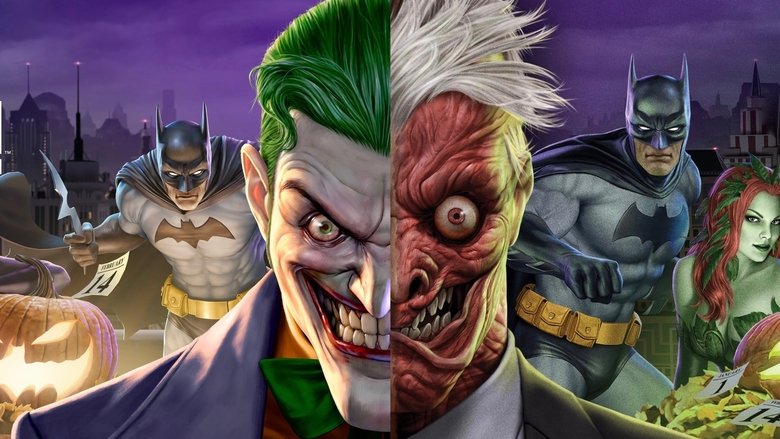
Visually, the film makes a conscious effort to evoke Tim Sale's distinctive art style, with watercolor-textured backgrounds and character designs that echo the source material's less angular, more rounded aesthetic. The title cards are particularly striking, directly referencing the graphic novel's chapter headings. While the animation doesn't fully capture the stark, high-contrast shading that made the comic so visually arresting, the stylistic departure from DC's standard house animation style is a welcome nod to fans of the original work. The film also expands on certain subplots, giving more screen time to Catwoman's motivations and the Gordon family's home life, though not all of these additions land with equal success.
As the conclusion to a two-part saga, Batman: The Long Halloween, Part Two brings the mystery to a satisfying close while honoring the tragic arc of Harvey Dent that made the original comic such a landmark. The film is part of the "Batman: The Long Halloween Collection" alongside Part One, and together they represent one of the more faithful and ambitious animated adaptations of a Batman storyline in recent years. For fans of the graphic novel, the two-part structure allows the story room to breathe, and for newcomers, it offers a moody, character-driven entry point into the darker corners of Gotham City.
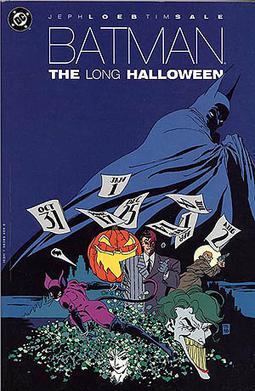
Batman: The Long Halloween is a 13-issue American comic book limited series written by Jeph Loeb and illustrated by Tim Sale, published by DC Comics from 1996 to 1997. Set during the early years of Batman's career, the story unfolds as a sprawling, noir-infused mystery that spans an entire year in Gotham City. A serial killer known only as "Holiday" murders members of the Falcone crime family on major holidays, beginning with Halloween. Batman, Police Commissioner James Gordon, and District Attorney Harvey Dent form an uneasy alliance to bring the killer to justice, but the investigation strains their trust in one another and pushes each man toward his own breaking point.
The series is widely regarded as one of the definitive Batman stories, celebrated for its intricate plotting, moody artwork, and deep exploration of the transition from organized crime to the rise of costumed "freaks" in Gotham's underworld. Tim Sale's distinctive, shadow-heavy art style and Jeph Loeb's character-driven writing give the book a timeless, cinematic quality. The story also serves as a spiritual successor to Loeb and Sale's earlier collaboration, Batman: Haunted Knight, and is set in the same continuity as their later work, Batman: Dark Victory, which continues the narrative threads left dangling at the end of The Long Halloween.
Central to the story is the tragic arc of Harvey Dent, whose descent into becoming the villain Two-Face is portrayed with Shakespearean gravity. The series also features a vast rogues' gallery of Batman villains, including Catwoman, the Joker, Poison Ivy, the Riddler, Scarecrow, and Mad Hatter, each woven into the mystery in clever and surprising ways. The identity of the Holiday killer remains a closely guarded secret until the final issue, and the revelation has become one of the most discussed and debated twists in Batman lore.
The Long Halloween has had a lasting influence on Batman media beyond comics. Its tone, structure, and thematic focus on the fall of Harvey Dent heavily inspired Christopher Nolan's film The Dark Knight, and elements of the story have been adapted into animated films, video games, and other DC projects. The series remains a perennial bestseller in collected editions and is frequently recommended as an essential starting point for readers new to Batman comics.
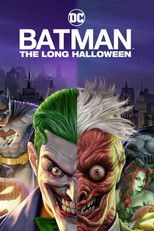
A two-part animated film series adapting the acclaimed DC Comics limited series. The story follows Batman as he hunts a mysterious serial killer named Holiday, who commits murders on holidays, while also tracking the escalating war between Gotham City's crime families and its emerging supervillains. The adaptation captures the noir-inspired mystery and character-driven drama of the source material, exploring the transition of Gotham's underworld from traditional organized crime to the rise of costumed criminals. The series is notable for its faithful visual style, complex whodunit narrative, and its focus on Batman's detective skills.