📺 Dexter: New Blood (2021)
Part of Dexter Franchise
Dexter: New Blood is a ten-episode Showtime miniseries that serves as a direct sequel to the original Dexter series (2006–2013), itself based on Jeff Lindsay's novel Darkly Dreaming Dexter. Set a decade after the polarizing series finale, it finds Dexter Morgan living under the alias Jim Lindsay in the snowy small town of Iron Lake, New York, where he works at a wilderness gear store and maintains a relationship with the local police chief, Angela Bishop. The return of his now-teenage son Harrison, along with the reappearance of his deceased sister Debra as a sardonic inner voice, threatens to reignite the 'Dark Passenger' he has tried to suppress.
The miniseries brings back Michael C. Hall as Dexter and Jennifer Carpenter as Debra, while introducing new characters played by Jack Alcott, Julia Jones, and Clancy Brown. Showrunner Clyde Phillips, who left the original series after season four, returned to craft a conclusion that many fans felt was more satisfying. The show expands the mythology by exploring Dexter's internal conflict and the possibility of his son inheriting his homicidal tendencies, all while a local mystery involving missing women forces Dexter to confront his old urges.
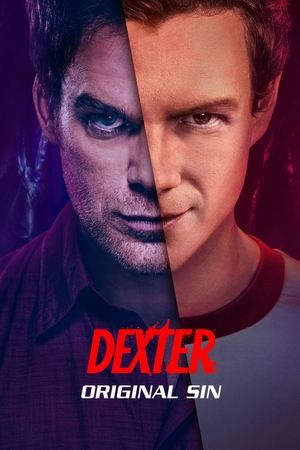
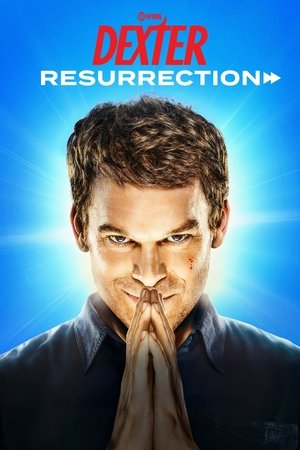
New Blood was praised for its atmosphere, Hall's performance, and its willingness to course-correct the original ending. It also bridges the franchise into additional stories: the frame story of the prequel series Dexter: Original Sin (2024) picks up moments after New Blood's final scene, and a direct sequel, Dexter: Resurrection, is set to continue the saga. As both a continuation of a beloved antihero's journey and a new chapter drawing from Lindsay's novelistic world, the miniseries demonstrates how Dexter's dark legacy endures.

Darkly Dreaming Dexter is a 2004 crime novel by Jeff Lindsay, the first in his Dexter series. It introduces Dexter Morgan, a blood-spatter analyst for the Miami Metro Police Department who moonlights as a serial killer, targeting only other murderers according to a strict moral code. The novel is narrated in Dexter's darkly humorous, detached voice, revealing his inner struggle with his 'Dark Passenger' and his relationships with his sister Deborah and his girlfriend Rita. The story follows Dexter as he investigates a series of elaborately staged murders that seem to be calling out to him personally, leading him to question his own nature and the possibility of a companion.
Published by Doubleday, the book received critical acclaim for its original premise and voice, winning the 2005 Dilys Award and being nominated for a Macavity Award. It spawned a series of sequels, including Dearly Devoted Dexter and Dexter in the Dark, and established Dexter Morgan as a memorable antihero in contemporary crime fiction. The novel's unique blend of horror, humor, and psychological insight made it a bestseller and led to a major television adaptation that expanded the character's reach worldwide.

The Dexter collection is a television saga centered on Dexter Morgan, a forensic blood-spatter analyst for the Miami Metro Police Department who leads a secret life as a vigilante serial killer. The narrative explores his struggle to balance his monstrous impulses with the performance of a normal life, guided by a strict moral code instilled by his adoptive father, Harry. This code dictates that Dexter only target other murderers who have evaded justice, creating a darkly compelling meditation on justice, identity, and the masks people wear. The original series, which premiered in 2006, became a cultural phenomenon, praised for its psychological suspense, gallows humor, and Michael C. Hall’s chillingly charismatic performance, leaving an indelible mark on the Peak TV landscape.
After the controversial conclusion of the original run, the saga was revived with the limited series *Dexter: New Blood*, which confronted the consequences of Dexter’s self-imposed exile and the inescapable nature of his darkness. This revival re-engaged a passionate fanbase and opened the door for an expanded narrative universe. The collection then deepened its mythology with *Dexter: Original Sin*, a prequel exploring the formative years of a younger Dexter, tracing the origins of his pathology and his early, clumsy attempts to implement the Code under the watchful eye of his father. The forthcoming *Dexter: Resurrection* promises to push the story into bold new territory, challenging the very notion of finality for a character whose relationship with death is deeply unconventional.
Together, these interlocking chapters weave a complex generational saga that transcends the typical crime procedural, probing the dark heart of the American psyche through the lens of a killer who desperately yearns for connection. The collection’s enduring power lies in its ability to seduce the audience into uncomfortable empathy, forcing viewers to cheer for a predator while constantly questioning the nature of evil and whether redemption is possible for someone fundamentally wired for destruction. By expanding backward and forward in time, the Dexter universe has evolved into a rich tapestry of cause and effect, examining how trauma is inherited, how masks eventually crack, and how the past is never truly buried.