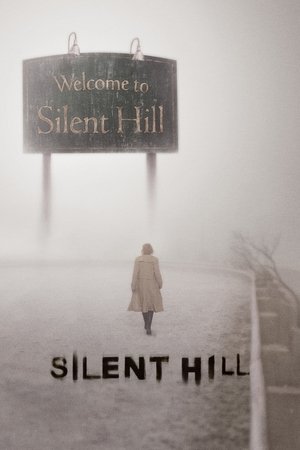
🎬 Silent Hill: Revelation 3D (2012)
Part of Silent Hill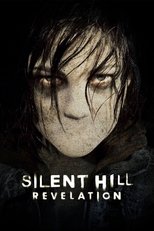
Silent Hill: Revelation 3D is a 2012 supernatural horror film written and directed by M. J. Bassett, serving as a direct sequel to the 2006 film Silent Hill. It is the second installment in the Silent Hill film series and loosely adapts the 2003 video game Silent Hill 3, the third entry in Konami's acclaimed survival horror franchise. The film follows Heather Mason, played by Adelaide Clemens, who discovers on the eve of her eighteenth birthday that her identity is a fabrication. Haunted by nightmarish visions and pursued by dark forces, she is drawn to the fog-shrouded town of Silent Hill, where she must confront the cult known as the Order and uncover the truth about her origins.
The film incorporates key elements from Silent Hill 3, including the protagonist Heather, the shopping mall opening, and the cult's attempt to use her as a vessel for their god. However, it diverges significantly from the game's plot to function as a sequel to the first film, bringing back characters like Harry Mason (Sean Bean) and incorporating the film series' established mythology. The movie was shot natively in 3D using RED Epic cameras, with production taking place in Canada. Despite a modest budget of around $20 million, the filmmakers aimed to capture the oppressive atmosphere and grotesque creature designs that defined the games, including the iconic Pyramid Head and the monstrous nurses.
Development on a Silent Hill sequel began shortly after the first film's release, with original director Christophe Gans and writer Roger Avary initially attached. After Gans departed and Avary faced legal troubles, the project stalled for several years before Bassett took over in 2010. The film was released theatrically in October 2012 and grossed over $55 million worldwide, but received largely negative reviews from critics who criticized its script, pacing, and over-reliance on 3D gimmicks. Despite the reception, it remains a notable attempt to translate the dense, psychological horror of the Silent Hill games to the big screen, and it has found a modest cult following among fans of the franchise.

Silent Hill 3 is a 2003 survival horror video game developed by Konami's Team Silent and published by Konami for the PlayStation 2. It is the third installment in the Silent Hill series and a direct sequel to the first Silent Hill game. The story follows Heather Mason, a teenager who becomes entangled in the machinations of the town's cult, which seeks to revive a malevolent deity. As she navigates environments that shift between a foggy, abandoned reality and a nightmarish, blood-soaked Otherworld, Heather uncovers dark secrets about her own past and her connection to the town of Silent Hill.
The game was developed almost simultaneously with Silent Hill 4: The Room, and was originally planned as a rail shooter before returning to the series' classic survival horror formula. Influences included the psychological horror film Jacob's Ladder and the works of Stephen King. Silent Hill 3 was praised for its atmospheric environments, detailed graphics, and haunting audio design, as well as its continuation of the cult-centered narrative from the first game.
Upon release, Silent Hill 3 sold over 300,000 copies by November 2003 and received strong critical acclaim, though some reviewers noted its relatively short length and occasionally awkward camera angles. A Windows port followed later that year, and a remastered high-definition version was included in the Silent Hill HD Collection for PlayStation 3 and Xbox 360 in 2012. The game remains a fan favorite for its intense psychological horror and its protagonist, Heather, who is regarded as one of the most compelling characters in the series.
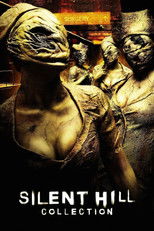
The Silent Hill film series is a collection of horror films based on the acclaimed survival horror video game franchise by Konami. Translating the games' signature psychological terror and oppressive atmosphere to the screen, the series centers on the fog-enshrouded, abandoned town of Silent Hill, a shifting purgatory that manifests the guilt, trauma, and inner demons of those drawn into it. The films blend visceral body horror with a deeply symbolic narrative style, favoring creeping dread and moral ambiguity over conventional jump scares. Drawing visual inspiration from real-world locations like the underground coal fire in Centralia, Pennsylvania, the series grounds its supernatural elements in a tangible, decaying reality, creating a world where the boundary between nightmare and waking life is constantly blurred. The first installment arrived in 2006, followed by a sequel in 2012, with a third film announced for 2026, marking a return to the series' roots with involvement from the original game's director, Christophe Gans. While not a sprawling franchise, the series has maintained a dedicated following by prioritizing atmospheric storytelling and the exploration of complex, often tragic, character journeys over simple monster-driven plots. Its legacy lies in its commitment to the source material's unique brand of horror, offering a cinematic experience that values psychological unraveling and haunting imagery, and it continues to serve as a bridge between interactive gaming and filmic storytelling for fans of the genre.