🎬 Superman: Doomsday (2007)
Based on comic
Superman: Doomsday is a 2007 direct-to-video animated film that adapts one of the most famous comic book storylines ever published: DC Comics' "The Death of Superman." Released as the inaugural entry in the DC Universe Animated Original Movies line, the film takes the sprawling 1992–1993 crossover event and condenses it into a tight 75-minute feature, focusing primarily on the raw, emotional core of the story—the fatal confrontation between the Man of Steel and the unstoppable monster known as Doomsday.
The film streamlines the source material significantly. While the original comic event spanned multiple titles and included the "Funeral for a Friend" and "Reign of the Supermen!" arcs, Superman: Doomsday concentrates on the immediate lead-up to the battle, the fight itself, and its immediate aftermath. It introduces a more personal conflict for Lois Lane, who is frustrated by Superman's refusal to reveal his secret identity, adding a layer of romantic tension that was less central in the comics. The film also takes creative liberties with the supporting cast, most notably by having Lex Luthor personally kill his assistant Mercy Graves to cover up LexCorp's role in unearthing Doomsday—a darker turn for the animated Luthor.
Visually, the film adopts a streamlined, angular art style distinct from the classic DC Animated Universe designs of Bruce Timm. The voice cast features Adam Baldwin as Superman, Anne Heche as Lois Lane, and James Marsters as Lex Luthor, bringing a grittier, more cinematic tone to the material. The fight choreography between Superman and Doomsday is notably more brutal than typical animated superhero fare, with the film earning a PG-13 rating for its intense action violence—a deliberate choice to signal that this was a more mature take on the character aimed at older fans.
Upon release, Superman: Doomsday received generally positive reviews from critics, who praised its ambition and emotional weight while noting the necessary compression of the source material. It proved commercially successful, earning approximately $10 million in home media sales against a $3.5 million budget, and successfully launched the DC Universe Animated Original Movies line that would go on to produce dozens of acclaimed adaptations. The story of Superman's death would later be revisited in live-action form in 2016's Batman v Superman: Dawn of Justice, but this 2007 animated feature remains the most direct and faithful screen translation of the iconic comic event.
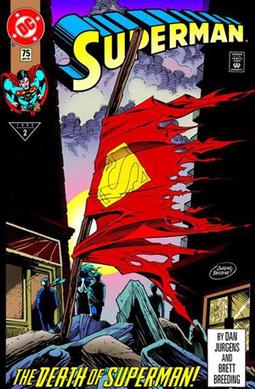
"The Death of Superman" is a landmark 1992–1993 crossover storyline published by DC Comics across its Superman-related titles, including Superman, Action Comics, The Adventures of Superman, and Superman: The Man of Steel. Conceived by editor Mike Carlin and writers Dan Jurgens, Roger Stern, Louise Simonson, Jerry Ordway, and Karl Kesel, the event was born from a postponed wedding storyline for Clark Kent and Lois Lane. When Jerry Ordway jokingly suggested killing the hero, the team realized it could re-emphasize Superman's importance to a world that had begun to take him for granted.
The story is structured in three major arcs: "Doomsday!", "Funeral for a Friend", and "Reign of the Supermen!". The first arc introduces Doomsday, a mysterious, gray-skinned behemoth of pure destruction who tears across America toward Metropolis, effortlessly defeating the Justice League before engaging Superman in a brutal, city-wide brawl. The fight ends with both combatants delivering fatal blows, and Superman dying in Lois Lane's arms. The event became a global media phenomenon, with the sealed polybagged issue of Superman #75 selling millions of copies and sparking debates about the commercialisation of comic book death.
The storyline's cultural impact was immense, proving that comic book events could capture mainstream attention. It led to the introduction of four replacement Supermen—the Cyborg Superman, the Eradicator, Superboy, and Steel—before the genuine article's eventual return. "The Death of Superman" has been reprinted in multiple collected editions and remains one of the best-selling and most influential comic book events of all time, shaping how superhero deaths are handled across the industry.