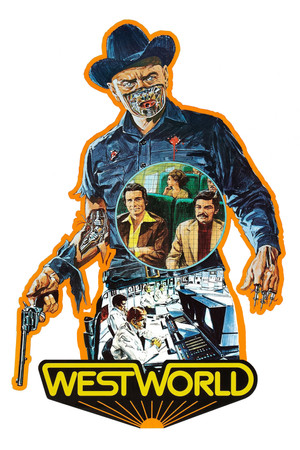
📺 Westworld (2016)
Remake
The HBO series Westworld, which aired from 2016 to 2022, is a remake and expansion of Michael Crichton's 1973 film of the same name. While the original film focused on a single malfunctioning android gunslinger terrorizing guests, the series dramatically expands the scope, exploring the consciousness of the hosts, the ethics of their creation, and the consequences of their awakening. Created by Jonathan Nolan and Lisa Joy, the show delves deep into the nature of reality, memory, and free will, turning the park into a complex philosophical playground.
Unlike the film's straightforward thriller narrative, the series weaves multiple timelines and perspectives, centering on characters like Dolores Abernathy (Evan Rachel Wood) and Maeve Millay (Thandiwe Newton), who evolve from programmed hosts into revolutionary figures. The show also introduces the park's creators, Dr. Robert Ford (Anthony Hopkins) and Bernard Lowe (Jeffrey Wright), adding layers of intrigue about the park's true purpose. The series ran for four seasons, expanding beyond the park into the real world and exploring a future dominated by AI, before being canceled in 2022.
Key changes from the 1973 film include a much larger ensemble cast, a deeper focus on the hosts' inner lives, and a serialized narrative that spans years. The series also incorporates elements from the 1976 sequel Futureworld, such as the broader Delos corporation and its other parks. Despite its critical acclaim and strong initial ratings, the show's complex storytelling and later seasons divided audiences. Nevertheless, Westworld stands as a landmark television achievement, praised for its ambition, visual effects, and philosophical depth, while paying homage to Crichton's original vision of technology's potential for both wonder and destruction.