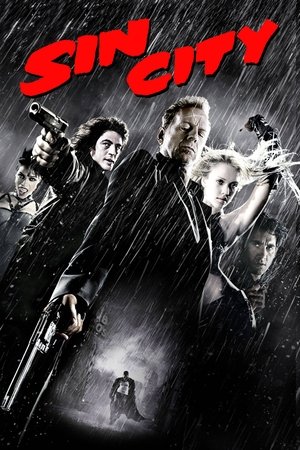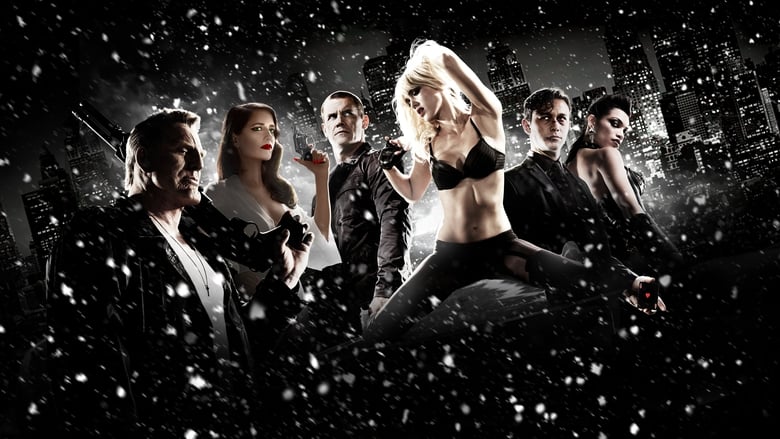
🎬 Sin City: A Dame to Kill For (2014)
Part of Sin City
Arriving nearly a decade after Robert Rodriguez and Frank Miller’s groundbreaking digital translation of Basin City, Sin City: A Dame to Kill For faced the unenviable task of recapturing lightning in a bottle. The 2014 sequel dives headfirst into the source material’s most celebrated arc, adapting Miller’s second Sin City yarn with a near-religious fidelity to its panels. Josh Brolin steps into the battered face of Dwight McCarthy, a role previously inhabited by Clive Owen in the 2005 film, a casting shift necessitated by the prequel nature of the central story. This recasting becomes a fascinating meta-layer to the adaptation, as the film uses heavy prosthetic makeup to transform Brolin into the Dwight we see before the radical facial reconstruction that turns him into Owen’s version, directly visualizing a plot point only described in the comics.
The film’s structure expands beyond a straightforward adaptation by weaving in two original tales penned by Miller exclusively for the screen. “The Long Bad Night” introduces Joseph Gordon-Levitt as a cocky gambler who takes on the corrupt Senator Roark, a storyline that feels like a lost Sin City yarn, pulsing with the same doomed fatalism. The other, “Nancy’s Last Dance,” serves as a direct sequel to That Yellow Bastard, following a scarred and unhinged Nancy Callahan as she plots revenge against the now-spectral Senator, with Marv acting as her unstoppable angel of death. This segment takes the biggest departure from the comics’ timeline, allowing Jessica Alba to evolve Nancy from a victimized dancer into a crossbow-wielding avenger, a character arc the original graphic novels never provided.
Visually, the film doubles down on the first movie’s revolutionary green-screen aesthetic, pushing further into 3D to make Miller’s stark inks and selective color splashes literally leap off the page. Eva Green’s casting as the titular dame, Ava Lord, is a masterstroke of adaptation; she embodies the lethal femme fatale so completely that she seems to have stepped directly out of Miller’s stylized negative space, her blood-red lips and emerald eyes becoming the only color in a world of shadow. However, the long gap between films dulled the original’s novelty. Where the 2005 film felt like a seismic shift in comic-book movie language, A Dame to Kill For arrived in a landscape already saturated with hyper-stylized violence, causing many critics to dismiss it as a visually stunning but emotionally hollow retread.
Despite its ambitious expansion of the mythology, the sequel became a notorious box-office bomb, failing to recoup its $65 million budget. The commercial failure effectively buried plans for future installments, leaving the adaptation as a fascinating, flawed coda. It stands as a testament to the double-edged sword of directorial fidelity: a film so slavishly devoted to replicating the exact framing and dialogue of its source material that it simultaneously functions as the purest comic-book translation ever made and a stark reminder that what feels revolutionary on the page can sometimes feel like a beautiful, static diorama on screen.

Sin City is a noir comics series written and illustrated by American cartoonist Frank Miller. It was first published by Dark Horse Comics starting with the three-issue miniseries The Hard Goodbye in 1991. The series is set in Basin City, a fictional metropolis overrun by crime and corruption, and features interconnected stories told through the perspectives of hardened protagonists like Marv, Dwight McCarthy, and Hartigan. Each tale delves into themes of vengeance, redemption, loyalty, and moral ambiguity amid extreme violence, with stark black-and-white artwork punctuated by selective splashes of color.
The series comprises multiple graphic novels, including The Hard Goodbye, A Dame to Kill For (1993), The Big Fat Kill (1994), That Yellow Bastard (1996), Family Values (1997), and others collected in volumes like Booze, Broads & Bullets. Miller's innovative style, inspired by classic film noir and pulp fiction, employs high-contrast shadows, exaggerated perspectives, and sparse dialogue to create a gritty, cinematic atmosphere. Sin City has been praised for revitalizing the crime comics genre, influencing modern graphic storytelling, and achieving commercial success with over a million copies sold.
The Sin City film series is a neo-noir crime anthology adapted from Frank Miller's acclaimed graphic novel series of the same name. Originating in the mid-2000s, the collection translates Miller's distinctive black-and-white comic book aesthetic into a groundbreaking cinematic experience. The stories are set in the fictional, perpetually rain-soaked metropolis of Basin City, a place defined by its rampant corruption, moral ambiguity, and brutal underworld. The series is renowned for its innovative visual style, which heavily utilizes high-contrast lighting, practical effects, and digital compositing to recreate the look of a living comic book, a technique that was highly influential upon its debut.
At its core, the collection explores timeless themes of vengeance, redemption, and the blurred lines between heroism and monstrosity. Each narrative thread operates as a standalone tale within a shared universe, focusing on flawed protagonists who navigate a world where justice is often served through extreme violence. The anthology structure allows for a diverse ensemble of characters and storylines, each contributing to the overarching atmosphere of a city that is as much a character as the people who inhabit it.
Culturally, the series left a lasting impact on modern genre filmmaking by proving that graphic novel adaptations could transcend traditional animation or straightforward live-action conversions. The first film, co-directed by Robert Rodriguez and Frank Miller, was a critical and commercial success that pushed the boundaries of digital filmmaking. A long-awaited sequel arrived nearly a decade later, continuing the visual and narrative style but failing to recapture the same level of acclaim. Despite its limited number of entries, the Sin City collection remains celebrated for its uncompromising tone, stylized direction, and faithful homage to its source material, securing its place as a distinctive and influential work in the neo-noir genre.