📺 NCIS (2003)
Part of JAG / NCIS Franchise
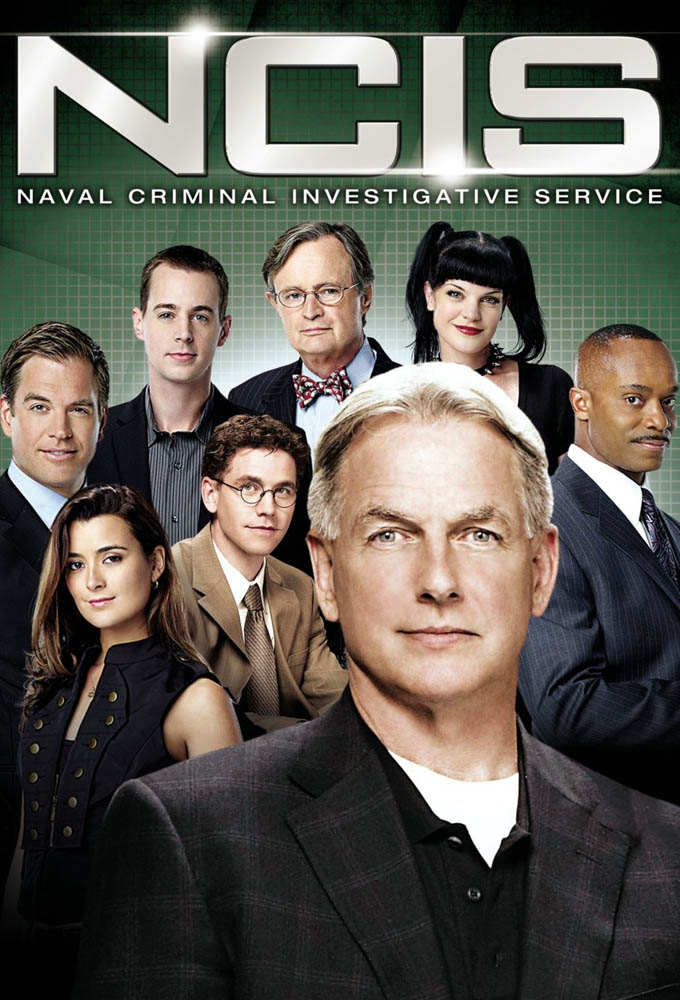
NCIS is the flagship series of a sprawling television franchise, but its origins are humbler than its eventual dominance suggests. The show began as a backdoor pilot, with the characters and concept introduced in two episodes of the legal drama JAG during its eighth season. Premiering in the fall of 2003, the series initially carried the somewhat redundant title Navy NCIS before streamlining its name. It focuses on a team of special agents from the Naval Criminal Investigative Service, led by the gruff but brilliant Leroy Jethro Gibbs, as they investigate crimes involving Navy and Marine Corps personnel.
Though its first two seasons saw only modest ratings, a dedicated audience built steadily, transforming NCIS into a ratings juggernaut. By its tenth season, it had become the most-watched television series in the United States, a feat that cemented its place in pop culture. The show's blend of procedural casework, forensic science, and the quirky, often familial dynamics between characters like Tony DiNozzo, Abby Sciuto, and Dr. Donald "Ducky" Mallard proved to be a durable formula that resonated with a broad viewership.
The success of the mothership series spawned a full-fledged franchise. A two-part episode in the sixth season introduced the team in Los Angeles, leading directly to the spin-off NCIS: Los Angeles. This model was repeated successfully during the eleventh season, which served as the launching pad for NCIS: New Orleans. As of 2025, NCIS stands as one of the longest-running scripted prime-time series in American television history, a testament to its unlikely journey from a JAG spin-off to a cultural institution.
The JAG/NCIS universe is a sprawling television franchise that originated with the military legal drama *JAG* in 1995. Created by Donald P. Bellisario, *JAG* focused on the cases and personal lives of officers in the Navy's Judge Advocate General's Corps, blending courtroom tension with action and patriotic themes. Though it found its footing after a network switch, the series became a quiet success and, more importantly, the foundation for an interconnected world of federal investigations. The franchise's true expansion began with a two-part backdoor pilot in *JAG*'s eighth season, which introduced the agents of the Naval Criminal Investigative Service, leading to the launch of *NCIS* in 2003. This spinoff shifted the focus from legal proceedings to crime scene investigation within the military, establishing a distinct identity that would become the core of the franchise.\n\nFrom this origin, the collection has grown into a global procedural phenomenon, encompassing multiple series set across the United States and abroad. *NCIS* itself became a ratings juggernaut, celebrated for its blend of forensic science, witty character dynamics, and long-form storytelling. Its success spawned a wave of spinoffs, each with a unique flavor: *NCIS: Los Angeles* delved into high-stakes undercover operations and counterterrorism; *NCIS: New Orleans* infused the formula with the city's rich musical culture and local politics; *NCIS: Hawai'i* broke new ground with a female lead in a strategically vital Pacific setting; and *NCIS: Sydney* marked the franchise's first international co-production, merging American and Australian law enforcement. The universe has further expanded with prequels like *NCIS: Origins*, exploring the early career of a central character, and character-driven continuations such as *NCIS: Tony & Ziva*, which follows beloved figures beyond their original series.\n\nThematically, the franchise consistently explores duty, sacrifice, and the formation of a chosen family among those who serve. It balances a reliable case-of-the-week structure with serialized arcs involving elusive adversaries, personal tragedies, and evolving relationships, creating a comforting yet engaging viewing experience. The shows collectively portray patriotism and service through the lens of deeply human, often flawed characters, resonating with a broad international audience. Over decades, the JAG/NCIS universe has become a landmark of episodic television, demonstrating the enduring appeal of character-driven procedurals and the narrative potential of a shared universe built from a single backdoor pilot.