📺 Birds of Prey (2002)
Based on comic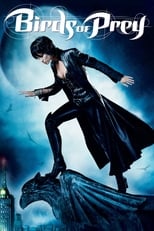
Arriving on The WB in the fall of 2002, the "Birds of Prey" television series took a bold and highly specific approach to adapting the DC Comics property, crafting a Gotham City defined by a profound absence. Developed by Laeta Kalogridis, the show was not a direct translation of the comic's espionage-tinged partnership between Oracle and Black Canary, but rather a radical reimagining that placed the legacy of Batman at its melancholic core. Set in a "New Gotham" years after the Dark Knight has mysteriously vanished, the series positions Barbara Gordon (Dina Meyer) as Oracle, a brilliant hacker and mentor who has already been paralyzed by the Joker, and introduces Helena Kyle (Ashley Scott) as the Huntress, a metahuman with feline agility who is secretly the daughter of Batman and Catwoman. This central parentage twist, a complete departure from the comics' Helena Bertinelli, immediately grounded the show's mythology in the cinematic world of Tim Burton's "Batman Returns," a connection the network heavily leaned into for promotion.
The series' relationship with its source material was one of atmospheric and thematic inspiration rather than faithful recreation. While the comic book "Birds of Prey" was celebrated for its tight focus on female friendship, tactical competence, and globe-trotting missions, the television adaptation was a more melodramatic, early-2000s WB drama, complete with a villain-of-the-week structure, a moody rock soundtrack, and a heavy dose of romantic tension. The third lead, Dinah Redmond (Rachel Skarsten), was a teenage runaway with burgeoning psychic powers, a far cry from the seasoned martial artist Black Canary of the comics, who would only appear in a flashback cameo. This choice to make Dinah a young, inexperienced recruit fundamentally altered the team's dynamic, shifting it from a partnership of equals to a mentor-student relationship that prioritized origin stories over established camaraderie.
Visually and tonally, the show was a fascinating artifact of its time, blending a noir aesthetic with a self-conscious coolness. The pilot famously incorporated repainted Batsuits from the Burton and Schumacher films and used footage of Michael Keaton and Michelle Pfeiffer in its trailers to explicitly tether itself to a beloved cinematic legacy, even commissioning a TV Guide cover with that art style before cancellation. Despite a record-breaking premiere that drew 7.6 million viewers, the series struggled to maintain its audience, and its ambitious, serialized mythology was cut short after only thirteen episodes. While it never reached the cultural longevity of its source material, the 2002 "Birds of Prey" remains a curious and ambitious footnote in superhero television history, a show that dared to ask what happens to a city—and its heroines—when the hero who defined them simply walks away.

The Birds of Prey are a superhero team appearing in American comic books published by DC Comics. Created by writer Chuck Dixon, the team first appeared in the one-shot Black Canary/Oracle: Birds of Prey #1 (January 1996). The original concept centered on a partnership between Black Canary (Dinah Lance) and Barbara Gordon, who at the time had adopted the crime-fighting identity Oracle after being paralyzed. Over the years, the team expanded to include other heroines such as Huntress (Helena Bertinelli), Lady Blackhawk, and later Harley Quinn.
The series is known for its focus on female-led action and espionage-themed storytelling, often operating outside the direct supervision of larger teams like the Justice League. The Birds of Prey have been featured in multiple ongoing series, miniseries, and one-shots, with notable runs by writers Gail Simone and Kelly Thompson. The team's dynamic emphasizes strong character relationships, tactical skill, and the overcoming of personal trauma.
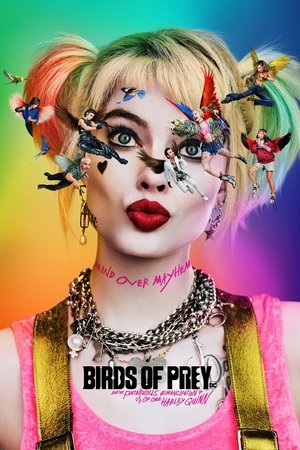
As one of DC's most prominent all-female superhero teams, the Birds of Prey have become a symbol of female empowerment in comics. The property has been adapted into other media, including a live-action television series in 2002 and a feature film in 2020, cementing its place in popular culture beyond the printed page.