🎬 The Virgin Suicides (2000)
Based on novel
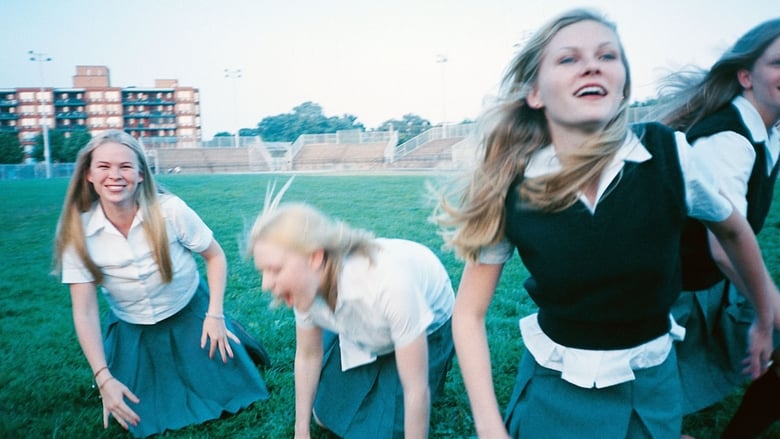
Sofia Coppola made one of the most assured directorial debuts in modern cinema with The Virgin Suicides, her 1999 adaptation of Jeffrey Eugenides's acclaimed 1993 novel. The film faithfully captures the book's dreamy, melancholic tone while imprinting it with Coppola's now-signature aesthetic: soft-focus visuals, a meticulous period soundtrack, and an almost tactile sense of teenage longing and ennui. Set in 1975 Grosse Pointe, Michigan, the story is recounted by a chorus of neighborhood boys who, as grown men, remain haunted by the memory of the five beautiful, doomed Lisbon sisters.
The casting was instrumental to the film's success. Kirsten Dunst, as the rebellious and sensual Lux Lisbon, delivered a star-making performance that began a long-running creative partnership with Coppola. James Woods and Kathleen Turner played the girls' bewildered, repressive parents, while Josh Hartnett made an early impression as Trip Fontaine, the heartthrob whose brief romance with Lux precipitates the family's final, fatal unraveling. The film's gauzy cinematography and the iconic, ethereal score by French duo Air combined to create an atmosphere that is at once nostalgic and suffocating, perfectly mirroring the boys' flawed, romanticized memories.
Coppola made subtle but significant changes in adapting the novel. While Eugenides's book leans heavily on the collective male narration and the theme of memory's distortion, the film grants the Lisbon sisters more visual presence and interiority, even as they remain fundamentally unknowable. The screenplay trims some of the novel's darker humor and stream-of-consciousness digressions, instead focusing on a more linear, visually driven narrative. Coppola also shifted the emphasis from the boys' adult reflections to the immediacy of the girls' experience, a choice that divided some purists but ultimately gave the film its own distinct identity.
Premiering at Cannes in 1999 and released theatrically in 2000, The Virgin Suicides received largely positive reviews and has since grown into a bona fide cult classic. It is now recognized not only as a sensitive literary adaptation but as a foundational text of early-2000s indie cinema, influencing a wave of aesthetically driven, emotionally opaque coming-of-age films. The collaboration between Coppola and Dunst would continue with Marie Antoinette and The Beguiled, but The Virgin Suicides remains their most beloved joint effort—a film that, like the boys' memories, lingers long after the story ends.

The Virgin Suicides is the debut novel by American author Jeffrey Eugenides, published in 1993. Set in the mid-1970s in the affluent Detroit suburb of Grosse Pointe, Michigan, the story is narrated collectively by a group of anonymous neighborhood boys who, decades later, remain haunted by the five enigmatic Lisbon sisters: Therese, Mary, Lux, Bonnie, and Cecilia, ranging in age from 13 to 17. The narrative unfolds as a meticulous, almost forensic reconstruction of the sisters’ cloistered lives under the strict, overprotective watch of their Catholic parents, exploring the inexorable tragedy that befalls them through a series of mysterious suicides.
Eugenides employs a distinctive first-person plural voice, blending adolescent longing, voyeurism, and adult hindsight to create a dreamlike, elegiac tone. The boys’ obsessive quest to understand the girls’ inner lives becomes a meditation on memory, obsession, and the fundamental unknowability of others. The novel delves into themes of adolescence, sexual repression, suburban ennui, and the opacity of female experience, drawing on elements of Greek tragedy and American realism to craft a modern myth of doomed youth.
The first chapter appeared in The Paris Review in 1990 and won the 1991 Aga Khan Prize for Fiction, signaling the arrival of a major new literary talent. Hailed for its lyrical prose and psychological depth, The Virgin Suicides established Eugenides as a significant voice in contemporary fiction and quickly became a modern classic, influencing discussions on youth culture, family dynamics, and the male gaze in literature.